Click the flash player below to listen to or the mic to download an mp3 copy of this BA Radio commentary.
Title VII of the Civil Rights Act still lives, despite the U.S. Supreme Court's reversal of then Federal Appeals Court decision against white firefighters in New Haven, Connecticut. Another federal court has found discrimination in testing applicants for the New York City Fire Department. The New York test was filled with firefighting trivia questions that have little to do with the actual job.
Courts Again Confront Racism in Firefighter Hiring
A Black Agenda Radio commentary by Glen Ford
“A Federal District Court ruled that Blacks and Hispanics were discriminated against in two entrance exams for the New York City Fire Department.”
When Supreme Court nominee Sonia Sotomayor testified before the Senate Judiciary Committee, New Haven firefighters arrayed themselves in rows of seats in the audience, like full-dress uniformed rebukes to her legal judgment. The white and one Hispanic firemen were meant as visual testimony to the claim that white men have become victims of so-called “reverse discrimination.” The Supreme Court had earlier knocked down Sotomayor’s ruling, as an appellate judge, that the City of New Haven was justified in getting rid of a promotions test that had flunked every Black fireman that took it.
Some right-wingers may have wishfully thought that Title VII of the Civil Rights Act was dead – that it was no longer a legal safeguard against tests that resulted in disproportionately bad outcomes for Blacks. They were wrong. Last week, a Federal District Court ruled that Blacks and Hispanics were discriminated against in two entrance exams for the New York City Fire Department. The judge ruled that the tests, administered in 1999 and 2002, not only disproportionately failed non-white applicants, but did so by asking questions that had little or nothing to do with fighting fires.
The tests were not quite as bad as the old Jim Crow voting test question, “How many bubbles in a bar of soap?” – but many of the questions were nearly as irrelevant. According to one constitutional law professor, the New York test was similar to others in big cities around the country, dealing with arcane firefighting details that only the children and grandchildren of firefighters would be familiar with – in other words, a kind of trivia for the families of firemen. Which is just the kind of test a bunch of white guys who want to put their relatives on the public payroll, would put together.
“The New York tests were designed to favor members of firefighting families.”
Title VII of the Civil Rights Act is still in effect – at least until its next confrontation with the right-wingers at the U.S. Supreme Court. The legal reasoning goes like this: if a test results in a disproportionate number of failures among Blacks or Hispanics, then it must be shown that the skills and knowledge being tested are necessary for doing the job. If not, then the test amounts to illegal discrimination.
The New York test was written and multiple-choice. The judge in the case found that multiple-choice tests could measure only about half the skills necessary to fight fires. The city’s own firefighting experts believe that oral comprehension and oral expression are the most important skills for firefighters on the scene, but the tests did not measure these oral skills.
Clearly, the New York tests were designed to favor members of firefighting families, steeped in the lore and trivia of the profession, over otherwise qualified applicants, many of them Black and Hispanic.
Police and fire departments have remained disproportionately white, not because whites are inherently better at fighting fires and crime, but because the hiring and promotion systems have been rigged in their favor. The Civil Rights Act was designed to un-rig the system. That’s not reverse discrimination, that’s justice.

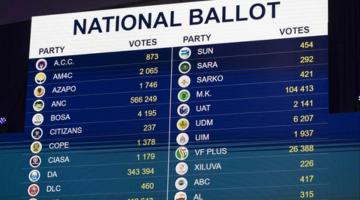 Lefika Chetty joins us to discuss the recent elections in South Africa, and the state of politics in the country.
 We're joined by Dorethea Franklin and Anjana Malhotra to discuss a lawsuit against the City of Buffalo challenging unconstitutional and racially discriminatory traffic enforcement practices by the…
 Donald Trump is often portrayed as the worst president of all time and now his criminal conviction has made him the butt of many jokes. But his legal troubles may not prevent him from winning again.…
 Revisiting a powerful account of the psychology of colonialism and neocolonialism by Haiti’s Jean Price-Mars.
 A Belly of the Beast documentary follows Afro-Cuban journalist Liz Oliva Fernández as she explores the Cuban American community and its relation to the long-running embargo on her country.


