"The decline of the overall American economy promises to submerge African Americans into a depression."
During this Black history month the nation and the world anxiously watch the living Black history that is taking place with the first African American president. Yet at this very same moment the future of Black America is in an exceedingly precarious condition. State of the Dream 2009: The Silent Depression, a recent report by the Institute for Policy Studies and United For A Fair Economy, highlights how the current economic recession impacts the racial wealth divide in this country.
As the United States delves further into a serious long-term recession, African Americans are facing the challenge of coming from a 7 year silent recession into a depression for disenfranchised communities that includes most African Americans. Between 2000 and 2007, before the country was officially in a recession, Black employment decreased by 2.4% and saw their incomes decline by 2.9%. Between 2000 and 2005 the median family income of African Americans decreased and decreased more steeply than that for whites or Latinos. To a large extent, African Americans never emerged from the 2001 recession. With Blacks having 15 cents of every dollar of white wealth and nearly 30% of Black households having zero to negative net worth, the decline of the overall American economy promises to submerge African Americans into a depression.
"To a large extent, African Americans never emerged from the 2001 recession."
What is a depression? A depression is a long-term and severe recession. It is already clear that African Americans have been through a long-term recession. Let us look at the severity. The unemployment rate for African Americans is already in the double digits 11.2% and is expected to increase to 20% or more. It is estimated that a deep national recession which increasingly looks like what the national economy is going through will decrease the Black middle class by a staggering 33%. The nation is well on its way to its most severe recession since the Great depression and African Americans are faced with even greater economic challenges.
As the election has shown Americans are looking for change we can believe in. We can find examples of such policy change in Great Britain. Britain like the United States is one of the most unequal industrialized nations in the world and recently has taken steps to address this. In 2002 Britain implemented the Child Trust Fund. This program allocates start up savings funds for families with the birth of a child. It is an attempt to assist and develop more of a wealth building society which is a change greatly needed in the United States. Britain, a wealthy country with the greatest decline in income inequality and poverty since 2000, is also in the midst of discussing a proposal called the "social mobility white paper" to make all government funds and programs focus on decreasing inequality.
"A deep national recession will decrease the Black middle class by a staggering 33%."
This comprehensive approach is also necessary in the United States. As President Obama orchestrates mass government investment to help the economy recover he must make a centerpiece of this plan to close economic inequality of all groups. President Obama has the opportunity to not just be a significant piece of Black history but more importantly and with the support of the US congress has the opportunity to bridge economic inequality and in doing so make racial inequality a piece of Black history.
Dedrick Muhammad and Michael Brown can be contacted through the Institute for Policy Studies.

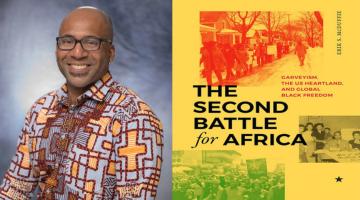 This week’s featured author is Erik S. McDuffie. McDuffie is Associate Professor of African American Studies and History at the University of Illinois, Urbana-Champaign. His book is The Second Battle…
 "Poem For The Great Dr. Freeman (My ’19 Lemlich Nominee)" is the latest from BAR's Poet-in-Residence.
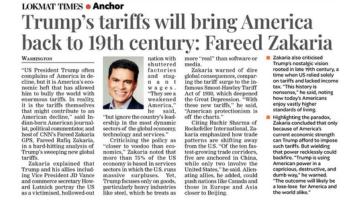 Corporate media peddle the myth of a pre-Trump economic golden age, but for working-class Americans, especially Black families, the struggle began long before he took office.
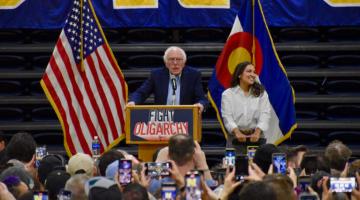 Lenin called out Kautsky’s fake socialism more than a century ago—today, Bernie and AOC are playing the same game, trading radical change for liberal theatrics.
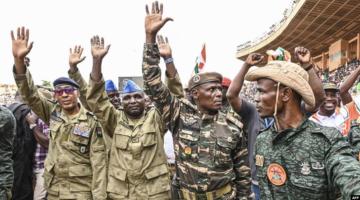 African Command's (AFRICOM) heavy-handed tactics in Africa have backfired, exposing U.S. arrogance and fueling a wave of resistance. As Sahel nations reject neocolonial bullying, Washington’s…


