 by Sikivu Hutchinson
It’s not easy being a Black atheist, “partly due to the fact that the history of African American civil and human rights resistance is heavily steeped in Judeo-Christian religious dogma.” If you’re a woman, it’s worse. “While black male non-believers are given more leeway to be heretics, black women who openly profess atheist views are deemed especially traitorous, having abandoned their family role as purveyors of cultural and religious tradition.” Church dogma exerts a warping influence on the culture. “In these (black) communities,” notes one Black writer, “you find more tolerance towards gangbangers, drug addicts, and prostitutes, who pray to God for forgiveness than for honest productive citizens who deny the existence of God.”
“Out of the Closet”: Black Atheists
by Sikivu Hutchinson
“The history of African American civil and human rights resistance is heavily steeped in Judeo-Christian religious dogma.”
In some black communities it’s akin to donning a white sheet and a Confederate Flag. In others it’s ostensibly tolerated yet whispered about, branded culturally incorrect and bad form if not outright sacrilege. For black atheists like myself, proclaiming one’s non-belief amidst genial wishes to “have a blessed day” is never easy in the seemingly innocuous context of casual chit chat between black folk. Yet, according to the New York Times, a small but growing segment of the American population, galvanized by the hyper-evangelical climate of the Republican Pleistocene, have begun organizing nationwide and becoming more vocal about their atheism. Although African Americans are not visible in the “movement” some are easing away from religion.
For black atheists, actively breaking with religious tradition is an even graver rejection than that of white intellectuals electrified by the “pew-storming” rhetoric of atheist gurus like Christopher Hitchens or Richard Dawkins. This is partly due to the fact that the history of African American civil and human rights resistance is heavily steeped in Judeo-Christian religious dogma.Despite the White Anglo Saxon Protestant religious justification for slavery and domestic terrorism, African Americans converted to Christianity and utilized it as a source of succor, community and spiritual redemption.
No matter one’s actual deeds, life path or personal mores, to be unquestioningly religious in some quarters is to be inoculated from criticism. Noting this historical irony in his blog “The Black Atheist,” Wrath James White states, “In these (black) communities you find more tolerance towards gangbangers, drug addicts, and prostitutes, who pray to God for forgiveness than for honest productive citizens who deny the existence of God.” For Wright, this “is one of the most embarrassing elements of Black culture, our zealous embrace of the God of our kidnappers, murderers, slave masters and oppressors.”
“Proclaiming one’s non-belief amidst genial wishes to ‘have a blessed day’ is never easy.”
While there have been critical appraisals of African American adoption of Christianity within the context of European conquest and racial slavery, few propose atheism as a corrective. Indeed, atheism would seem to fly in the face of a cultural ethos that frames earthly pain and suffering as a crucible for achieving rewards in the afterlife. In the midst of extreme brutality religious faith can either be seen as a means to mental health, or, as Karl Marx put it more bluntly, an opiate.
In this sense contemporary black religiosity is the legacy of a culturally specific survival strategy. Many black secular community-based organizations still look to the black church as a coalition partner and resource. Disturbingly, the church is often uncritically perceived as the “backbone” of the black community. However, as the debate over California’s Proposition 8 demonstrated, the notion that there is a monolithic “marching in lockstep” black community is terminally outdated. On issues of gender and sexual orientation, the overwhelming opposition of many prominent black churches to granting civil rights to partnered African American gays and lesbians is morally indefensible. When it comes to attitudes about traditional gender roles, gender-based assumptions about black female religiosity are double-edged. While black male non-believers are given more leeway to be heretics, black women who openly profess atheist views are deemed especially traitorous, having abandoned their family role as purveyors of cultural and religious tradition. Images of black women faithfully shuttling their children to church and socializing them into Christianity are a prominent part of mainstream black culture. If being black and being Christian are synonymous, then being black, female and religious (whatever the denomination) is practically compulsory. Black women with children who don’t fall in line, who raise their children as atheists, may find their race credentials revoked.
“Black women who openly profess atheist views are deemed especially traitorous.”
On the national level the contradictions between American secularism and religion have produced a schizoid tension in the U.S., whereby religious fundamentalism and intolerance for secular thought have become the norm. When it’s practiced in the non-Western world Americans routinely brand this kind of propaganda as backward and extremist. Yet, in this, the most swaggeringly “liberal humanist” of all nations, “coming out” as an atheist in a culture that parades religious dogma as a substitute for true morality may be one of the final ideological frontiers for African Americans.
Sikivu Hutchinson is the editor of blackfemlens.org and a commentator for KPFK 90.7 FM. She can be contacted at sikivu@blackfemlens.org

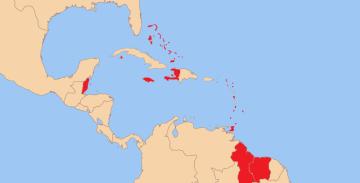 The author asks CARICOM member states to support the Haitian people in their struggle for sovereignty.
 Colombia's new president is popular with the people but beset by enemies. It is a common situation where the popular vote is not indicative of who really holds political power.
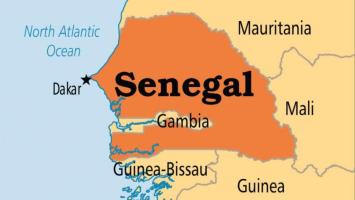 At least 16 people were killed after protests broke out in Senegal following the sentencing of leading opposition figure Ousmane Sonko to two years in prison. Mass public unrest has grown against…
 Uganda and Rwanda began their incursions into the Democratic Republic of Congo 23 years ago. Full reparations to victims have not been paid and the two invader countries still act with impunity.
 Tunde Osazua is Outreach Coordinator for Black Alliance for Peace and a civil society representative in the UN Permanent Forum on People of African D


