U.S. Corporate Media Propaganda Machine
A Black Agenda Radio commentary by Glen Ford
"FAIR's analysis shows the lengths the corporate media will go in prostituting itself to Washington's political agenda."
When the subject is Venezuela and its president, Hugo Chavez, the most prestigious U.S. newspapers most often fail to rise above the level of rank propaganda. That's the finding of a study by the progressive watchdog group Fairness and Accuracy in Reporting - or FAIR, for short. FAIR found that the New York Times, the Washington Post, the Los Angeles Times and the Miami Herald use their editorial pages to put Venezuela in a negative human rights light, while glossing over Latin America's worst human rights abuser, Colombia, Washington's close ally. All four newspapers distorted the comparative human rights records of Colombia and Venezuela, although the New York Times was the least bad. FAIR's analysis shows the lengths the corporate media will go in prostituting itself to Washington's political agenda - which, under President Bush, has been regime change in Venezuela. Colombia, the world capital of cocaine and stomping ground for private and government death squads, is the third largest recipient of U.S. aid, after Israel and Egypt.
U.S. newspapers cannot even manage to get righteously upset when their own profession is under murderous assault. Colombia is described as "by far the most dangerous country in Latin America for journalists," with 40 reporters murdered since 1992. Only Iraq, Algeria and Russia are more dangerous places to be reporters than Colombia, yet the Big Four U.S. newspapers heap negative coverage on neighboring Venezuela, where the press is not only relatively free, but most of it actively opposes the government of President Hugo Chavez. No one in Venezuela lives in fear of government-connected death squads. Yet Colombia, the nation that is favored by the United States and its corporate media, is known as "the murder capital of the world for trade unionists." In the last two decades, as many as 4,000 labor union activists have been murdered by Colombian death squads in the service of the U.S.-backed government or corporations, including Coco-Cola and other American-based multi-nationals. The new U.S. Attorney General, Eric Holder, while in private practice defended Chiquita Banana's employment of private death squads against union and peasant organizers in Colombia. Since 1996, Colombian death squads have murdered at least 13,000 people.
"The U.S. press is a monoculture of lies of omission and commission that serves the same people that control the U.S. government."
Colombia is a killing field, a human rights nightmare, while Venezuela has conducted the fairest internationally observed elections in the western hemisphere. But that's not the impression one gets from reading U.S. newspapers.
America's corporate media come in many flavors and packages, but virtually all of them spew the same line, which not coincidentally also reflects the official position of the United States government. The U.S. so-called free press is in reality the world's most effective propaganda machine - a monoculture of lies of omission and commission that serves the same people that control the U.S. government. In its Latin American coverage, the U.S. press is also racist, in practice opposing the rising tide of non-white power that is spreading across the continent, inspired by Venezuela and Bolivia. As the saying goes, don't believe everything you read in the newspapers. Especially if the story's about Venezuela or Colombia.
For Black Agenda Radio, I'm Glen Ford.
BAR executive editor Glen Ford can be contacted at Glen.Ford@BlackAgendaReport.com.

 The Trump administration is dismantling USAID, intending to absorb its mission into the State Department. USAID's engagement with Haiti demonstrates the insidious nature of the agency and how…
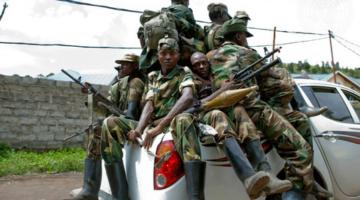 Rwanda’s brutal assault on Goma has unleashed more agony for the Congolese, who are already traumatized by three decades of war.
 Donald Trump recently made several statements declaring his intent to commit a full-scale ethnic cleansing of Palestine's Gaza Strip. However, this idea, like many others, may be unfeasible and…
 This week, we speak to a journalist about the recent fires in Los Angeles County that destroyed the lives and homes of many, including a Black community located in Altadena. First, we get an update…
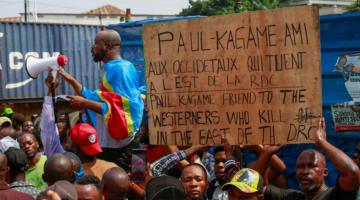 Maurice Carney is Executive Director of Friends of the Congo . He joins us from Washington to provide an update on the crisis in Congo. Since he last appeared on Black Agenda Radio the capital city…


