“The aim of the obstructionists is to prevent the return of New Orleans’ previous population”
New Orleans – especially Black New Orleans – remains a stunted version of its pre-Katrina self because of the twisted, intentions of those who rule the region and the nation. This racist vision of what America and its cities should look like – a vision that is averse to the physical presence of Black and poor people – is at war with the most fundamental imperatives of economic growth and social justice.
The dream of a reconstructed New Orleans, in which the 30 percent of the population that is still in exile would return to a city replenished with jobs, affordable housing, quality education and functional public services, is totally at odds with the scaled down, whitened up, gentrified and antiseptic New Orleans that corporate planners envision. Determined that their racist model prevail, these national and regional rulers have deliberately thwarted rebuilding of basic local infrastructures, effectively sabotaging the city’s recovery. Such is the inescapable truth that emerges from the seeming chaos of post-Katrina New Orleans and the supposed pervasive incompetence of government agencies at every level.
There is method to this madness. The aim of the obstructionists is to prevent the return of New Orleans’ previous population – to make the city unlivable for those without money for as long as it takes, until the former residents give up hope of every coming back. That is why, three and a half years after Katrina, New Orleans languishes in a dismembered state, like a patient on an operating table with his insides exposed and vital organs disconnected – while the doctors and nurses mill around doing nothing. Clearly, somebody has an interest in that patient never walking out of the room, alive.
“The city’s population growth has stalled at a little over 70 percent of pre-Katrina levels. Most of the missing are Black”
Only deliberate sabotage of even the most basic recovery efforts can explain the failure to spend billions in dollars of moneys allocated for reconstruction. The powers-that-be had no problem forging quickly ahead with the destruction of public housing, but they have allowed private rents to increase by close to 50 percent. Two-bedroom apartments that rented for less than $700 before the hurricane hit in 2005, now go for almost $1000 a month. Most Blacks in New Orleans were renters. The powers-that-be are making sure there is no place for them to return to. The school system has been smashed into a jigsaw of pieces, none connected to the other. Health care festers at Third World levels.
It is a mistake to view New Orleans as the victim of incompetence. The political servants of the rich have done an exceedingly good job of ensuring that the only New Orleans that emerges from the muck of Katrina, will be a smaller, whiter, more affluent version preferred by the corporate classes and their hired hands at think tanks like the Washington-based Brookings Institute. Brookings has been keeping tabs on the New Orleans saga, and on the whole, likes how things are going. The city’s population growth has stalled at a little over 70 percent of pre-Katrina levels. Most of the missing are Black. But Amy Liu, co-author of a Brookings Institute report on New Orleans, says a smaller city is a good thing. Liu thinks the city needs time to recover the capacity to accommodate a larger population. But what she and the other corporate planners really mean is: first, let’s make sure the poor Blacks don’t come back. Then later, we’ll build a city fit for white, affluent habitation. Then they’ll muster the competence to spend the money to create the “new” New Orleans.
For Black Agenda Radio, I’m Glen Ford. On the web, go to www.BlackAgendaReport.com.
BAR executive editor Glen Ford can be contacted at Glen.Ford@BlackAgendaReport.com.

 Growing socialist and people's democratic projects, as in China and Bolivia, must be seen as examples of how revolutionary forces in the United States can build a system of governance.
 A reported rift between Trump and Netanyahu continues to widen ahead of the US president's first visit to West Asia since regaining power.
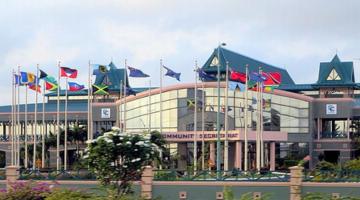 A forward-looking critique of African and Caribbean collaborations embodied in the Africa-Caribbean Community (CARICOM) Summit.
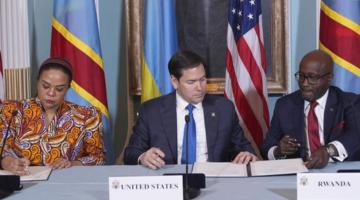 The United States' role in Central Africa has resulted in regional war and mass casualties.
 In this week’s segment, we discuss the 80th anniversary of victory in Europe in World War II, and the disinformation that centers on the U.S.'s role and dismisses the pivotal Soviet role in that…


