U.S. Business Says No Mas to Cuba Embargo
A Black Agenda Radio commentary by Glen Ford
For a downloadable MP3 of this commentary, click here to visit our archive page.
"In a sense, the United
States is embargoing itself."
If Barack Obama continues the trade embargo against Cuba,
it won't be because American corporations made him do it.
Last month only two members of the United Nations
supported the U.S. trade embargo against Cuba. One was Israel, the other the
tiny island nation of Palau. On this issue, the U.S. is all but totally
isolated from the rest of humanity. The 47-year-old embargo has even lost the
support of the American business class. The National Foreign Trade Council and
eleven business associations last week declared their support for "the complete
removal of all trade and travel restrictions on Cuba." The corporate chieftains
called on President-Elect Obama to "take
steps to end nearly 50 years of [U.S.] isolation from Cuba and the Cuban
people."
Note the language. U.S. Big Business is telling Barack
Obama that it is the United States that needs to end its "isolation from Cuba
and the Cuban people" - not the other way around. The American business class
is tired of being the guys on the outside, as they observe Cuba's expanding
ties with nations and peoples all over the planet. Uncle Sam is the odd man
out. Corporate America fears "U.S. policies threaten to make the United States
virtually irrelevant to the future of Cuba."
Irrelevant - and lighter in the pocketbook. The embargo
costs U.S. companies more than a billion dollars a year in sales. Their
accountants are projecting these losses forward for "another generation" if
Washington doesn't reverse its self-imposed isolation.
"The embargo against
Cuba has resulted in diminished opportunities for American businesses elsewhere
in the world."
Some hidden costs to U.S. business flow from the legal
complications the embargo creates in dealing with foreign companies that do
business with Cuba. In effect, the embargo against Cuba has resulted in
diminished opportunities for American businesses elsewhere in the world. That's
why the U.S. Chamber of Commerce, the American Farm Bureau Federation, and the
Business Roundtable are all calling on Barack Obama to release them from
the constraints of the embargo. They have realized that, in a sense, the United
States is embargoing itself.
The only concentrated center of intense pro-embargo
sentiment that still survives is among South Florida Cuban Americans - and
recent surveys show only half of them want to keep the economic blockade
going. The U.S. has failed utterly in its two-generations-long attempt to
strangle the Cuban Revolution.
Since the founding of the Republic, United States
governments have always coveted Cuba, first as a tropical outpost of slavery.
The Cuban struggle for independence from Spain was interrupted in 1898, when
the Americans became the masters. U.S. capitalists and gangsters - who are
actually the same people - turned the
island into the whorehouse of the Caribbean in the final years before the
triumph of the Revolution, in 1959.
Nearly fifty years later, Cuba's determination to be free of
foreign dictates has broken the back of the U.S. embargo. Barack Obama can end
the embargo madness. After that, he can evacuate Guantanamo Bay and give it
back to its rightful Cuban owners.
For Black Agenda Radio, I'm Glen Ford.
BAR executive editor Glen Ford can be contacted
at Glen.Ford@BlackAgendaReport.com.

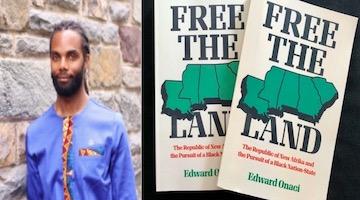 The desire for US citizenship was never the sole consideration of African and African-descended people.
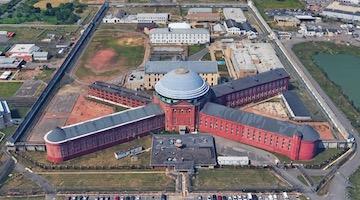 In 1990, Lawrence Bell was 14, orphaned and living in an abandoned house when three Camden cops pressured him to sign a confession of murder.
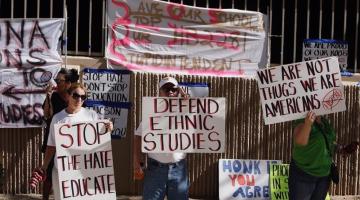 The US university is marked by the dominance of intellectual white liberalism in tension and complicity with conservative nationalism and neoliberalism.
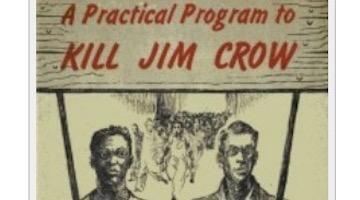 Alabama Communists helped lay the foundation for the organized civil rights movement that emerged in the late 1940s and early ’50s.
 Prison and police abolition were key to the thinking of many midcentury civil rights activists.


