Harlem:
The Last Frontier
by Shannon Joyce Prince
"Whites do not have the
right to colonize Harlem."
Timothy Williams' September 7th New York Times article, "In
an Evolving Harlem, Newcomers Try to Fit In" presents a point of view
disturbing in its unconscious reiteration of colonial tropes portraying white
gentrifiers in allegedly racist, sexist, criminal (read: barbaric) Harlem as
Dr. Livingstones for the new millennium.
To the New York Times, the
hostility faced by whites in Harlem, as though poor and non-white people who
have no power to determine where whites can or cannot live are serious
victimizers, is more important than the hostility non-whites face while in
predominantly white spaces or the more profound problems of restrictive
covenants, credit and housing discrimination, and redlining. Harlem residents can protest impotently
against whites, but it is only whites who have the power to deny
non-whites access to housing, good school districts, and other real estate
related benefits.
Williams' narrative highlights the racist and sexist
epithets some whites have suffered in Harlem (remarks that I agree are entirely
inappropriate) while ignoring that in predominantly white spaces non-white
people also face racist and sexist slurs, being followed by shop owners,
treated with disdain by waiters, and threatened with harassment or even
violence by the police. At my very first
day of class at Dartmouth, which is located in Hanover, New Hampshire (87%
white, less than 2% black, median household income $72,000) in my Introduction
to an African American Studies course, my professor asked the black young men
in the class how many had faced police harassment since arriving at
college. Every single black guy in the
course had been harassed by the Hanover police just during the brief period of
orientation. The assumption that black
men are dangerous is both racist and sexist, yet black women are not
spared. My friend's African American
aunt was driving her Mercedes Benz when a white woman proceeded to cut her off
in traffic and call her a "black b***h."
The kind of harassment Williams' implies is lower class and black is
also middle and upper class and white.
"It is only whites who
have the power to deny non-whites access to housing."
The white new-Harlemites Williams profiles have an attitude
of entitlement and imperialism mixed with a little historical ignorance. The desire of non-white people to have
non-white spaces where their religious, cultural, or commercial enterprises
dominate isn't the same as the desire of whites to live in white-only
communities. While whites may believe
that, as one gentrifier claims, "...I realize the city changes. I don't feel guilty," cities don't simply
change. White flight, city planning,
disinvestment, highway building, tax laws and encouraging the movement of businesses
to the suburbs, and housing loans and equity historically given only to whites
creates non-white neighborhoods. But
such neighborhoods have flourished against all odds, creating artistic
treasures and special traditions. To
black Harlem in particular we owe the Harlem Renaissance, the development of
jazz and swing, countless theatre groups, the Harlem Boys Choir, the Apollo
Theatre, the Cotton Club, and the Savoy Ballroom. It was white power and non-white disenfranchisement that created
non-white neighborhoods and it is white power that allows whites to return,
drawn by low rents or pleasing aesthetics without concern for those they
displace or the consequences of rising rents and loss of non-white havens. But white might doesn't make white
right.
The imperial attitude of gentrifiers is further exemplified
by white disapproval of sidewalk barbecue parties and even, ludicrously, the
high number of churches in Harlem.
While whites may or may not have the right to live in Harlem, they do
not have the right to colonize Harlem, to move in and try to squelch cultural
traditions. After all, do non-whites
move into white neighborhoods calling for an end to farmers markets and music
festivals? Non-whites are expected to
respect the aesthetics and traditions of white neighborhoods they integrate,
yet whites are not compelled to reciprocate.
Would the whites, such as those in the article, who are claiming Harlem
is lacking and in need of such things as Thai restaurants also see Chinatown as
lacking for not having Thai food? Would
they, like whites in Soho, oppose soul food restaurants such as Lola is Soul?
Finally Williams, white Harlemites, and whites at large
fixate on crime in white communities, while, as I have written
elsewhere, "according to the Center for Disease Control white young people
are over twice as likely than black young people to drive drunk, a third more
likely to carry a weapon, three times more likely to binge drink, and twice to
four times more likely (depending on the drug) to use cocaine, coke, inhalants,
steroids, hallucinogens, and methamphetamines.
They are also more likely to sell drugs than urban students." Despite these facts, the New York Times would never publish an
article about non-whites moving into white suburbs and being shocked by the
prolific crime and drug use.
Ultimately, the New
York Times article is an example of the kinds of stories that are seen to
merit attention and, conversely, the types of stories our society can tacitly
ignore. As white anti-racist activist
Tim Wise points out, "In fact, one study by the Urban Institute found that if
where people lived were solely a matter of their ability to pay (in other
words, if factors like racism didn't play an independent role, above and beyond
mere finances), fewer than one percent of African Americans would live
in communities where they were the majority."
Surely this type of systemic racism which is unavoidable for blacks and
other non-whites is more newsworthy that the solely personal racism whites
choose to face when they decide, among a range of other options, to live in
Harlem.
Ms. Prince can be contacted
at Shannon.J.Prince@Dartmouth.EDUThis e-mail address is being protected from
spam bots, you need JavaScript enabled to view it.

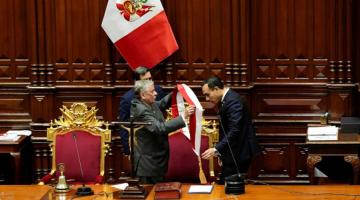 Peru's congress has perfected the art of the constitutional coup, disposing of presidents the moment their usefulness expires. The removal of Dina Boluarte continues a decades-long strategy to…
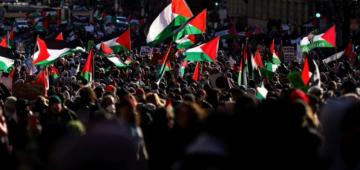 When established institutions refuse to respond in the face of genocide, the mandate for justice falls to the people. This tribunal is a global grassroots movement taking the international law into…
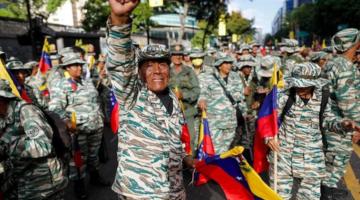 We condemn U.S. lawlessness in Our Americas and call for multinational intervention to guarantee a ‘Zone of Peace’.
 Trump Administration officials have frequently invoked the Monroe Doctrine, explaining the aggression toward Latin America.
 The liberation of Palestine is, above all, a world-building project.


