Black Agenda Radio for Week of March 27, 2017
(This is the full one hour show containing the 3 interviews below.)
U.S. Becomes Ungovernable, Elites Blame it on Russians
U.S. rulers are experiencing a “crisis of political governance, a meltdown of the political system,” due to the “collapse of the parties of the duopoly,” said Dr. Anthony Monteiro, the Philadelphia-based Duboisian scholar. The policies and practice of both parties “became antagonistic to the minimal expectations of the masses. ”The elite didn’t see it coming,” said Monteiro. “In order to reestablish their legitimacy, they have to say that the Russians hacked the election and are threatening western ‘democracy,’ itself.” The real crisis is “their inability to govern the country.”
Washington’s “Humanitarian” Military Doctrine Based on a Lie
It is a crime in Rwanda to point out that Hutus were massacred by Tutsis, as well as the reverse, during the bloodbath of 1994, or even to refer to the events as the “Rwandan genocide,” explained Ann Garrison, an Oakland, California-based journalist and frequent contributor to Black Agenda Report. The United States backs the regime’s narrative, that it was a one-sided genocide against Tutsis, because “the ideological infrastructure of ‘humanitarian war’ is that” the U.S. failed to intervene in Rwanda, and “therefore we have to bomb Syria, Libya, etc,” said Garrison. However, the U.S. did intervene in Rwanda in 1994 -- to prevent international efforts to halt the violence, in order to insure that the U.S. favorite, the Tutsi warlord Paul Kagame, would win the war.
“There is a Storm a’Coming: Repression Breeds Revolutionary Resistance”
That’s the title of an essay by Khalfani Malik Khaldun, published by Prison Radio. Khaldun is an inmate of Wabash Valley prison in southern Indiana, and an activist in the prison abolition movement. “The condition of imprisonment is tantamount to enslavement,” he writes. “When prison crafts start walking off their jobs, or refuse to be agents of prison exploitation, the movement is winning. When we can improve our lines of communication from state prison to federal prison, to move as one, we are winning.” And, “when social media can be taken advantage of to promote a prison wide national protest, we are winning.”
Black Agenda Radio on the Progressive Radio Network is hosted by Glen Ford and Nellie Bailey. A new edition of the program airs every Monday at 11:00am ET on PRN. Length: one hour.

 "Find me another 11,780 votes?" is the latest from BAR's Poet-in-Residence.
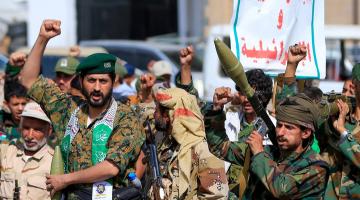 The Yemeni attack involved dozens of ballistic missiles and drones, targeting sites from which Saudi warplanes took off to strike Yemen.
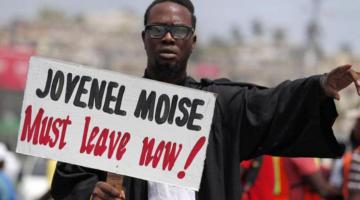 Responsibility for Haiti's deteriorating conditions does not rest on the Haitian masses. A population does not rise up spontaneously but depends on political movements and organizations to build it.
 The AfD's landslide in Saxony-Anhalt reflects real working-class anger at the war and the arms buildup, but the party redirects that anger toward migrants and leaves the capitalist system that caused…
 “DHS needs to be dismantled and held accountable for this complete inhumanity,” said Rep. Pramila Jayapal.


