A Black Agenda Radio commentary by executive editor Glen Ford Banks in Baltimore “have condemned the Black sections of town to a death spiral of social and physical deterioration” as a matter of corporate policy, while continuing to issue mortgages that stabilize low income white neighborhoods in the city. The banks are the most important institutional players in the Black dispersal and white gentrification process: “When Black neighborhoods are killed, the banks make a killing.”
Baltimore Study Sheds Light on Bankers’ Scheme To Expel Blacks from the City A Black Agenda Radio commentary by executive editor Glen Ford “ Some neighborhoods will live, and some will die, to be born again as gentrified communities.”
A new study of bank lending practices in Baltimore shows that whites get twice the number of mortgage loans as Blacks do, even though Blacks outnumber whites two to one in the city. Baltimore is 64 percent Black, with a quarter of its population living below the poverty line. However, the study found that the banks continue to issue mortgages in some low income neighborhoods – the ones where white people live. Yes, Baltimore still has some poor neighborhoods where whites are the majority, and if you live in one of them, you are far more likely to get a mortgage from the bank. But, if you live in a neighborhood that’s 80 percent Black or more, your chances for a mortgage are a much slimmer.
So, what are the Lords of Capital really up to? The data shows that the banks are willing to put money into low-income neighborhoods that still have large white populations, but will do nothing to stabilize low-income communities where Blacks predominate. The implications are quite clear, but the National Community Reinvestment Coalition , which seeks to draw public and private investment into the cities, and which commissioned the study, doesn’t seem to get it. They issued a statement, warning that failure to provide credit to prospective inner city homeowners will cause their neighborhoods to “continue to deteriorate” – as if the banks don’t know that!
“They know exactly what they are doing.”
The bankers are perfectly aware of the consequences of their lending policies. Some neighborhoods will live, and some will die, to be born again as gentrified communities valued at many times the previous worth of the land and buildings. When Black neighborhoods are killed, the banks make a killing. The banks have other plans for Baltimore’s remaining white low income neighborhoods. White folks always get different treatment; that’s part of the privilege.
For the time being, the banks have decided to keep those poor white enclaves stable, through the magic of mortgage money. But, the bankers have condemned the Black sections of town to a death spiral of social and physical deterioration. They know exactly what they are doing: inflicting the maximum social pain on Black people, in anticipation of fantastic financial gains for bank shareholders after the Blacks are forced to disperse.
In a white supremacist society like the United States, the very presence of Black people lowers property values – not because of anything within Black people’s control, but because of white people’s behavior in the marketplace. The banks are the most important institutional participants in the white supremacist marketplace and profit the most from it. Baltimore is what it has become, mostly because of the banks, who also had a lot to do with deindustrialization and the collapse of the blue collar job market in the Baltimores of the nation.
There’s a lesson here, but one that groups like the National Community Reinvestment Coalition will never learn. They spend much of their time trying to get bankers to do the right thing – which is an absolute impossibility – when the real task at hand is to get rid of the banking class and nationalize the banks so that we can make rational investments of the people’s money in jobs and housing for the folks who live in places like Baltimore.
For Black Agenda Radio, I’m Glen Ford. On the web, go to BlackAgendaReport.com.

 The push by white farmers to enlist Donald Trump in a compensation battle over Zimbabwean land is a brazen, neo-colonial plot to undo African liberation history.
 The imperial assault on Iran is punishment for the crime of sovereignty, a protracted siege that oppressed nations worldwide recognize as a weapon threatening their own future.
 In this week’s segment, we talk about human rights and citizenship and the Trump administration's persecution of Haitian immigrants. We begin with a discussion of the need to protect the 14th…
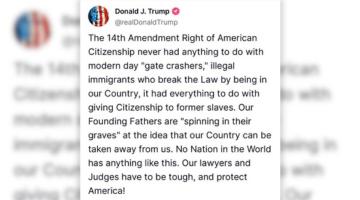 Donald Trump's executive order challenging birthright citizenship also endangers the 14th Amendment guarantees of due process and equal protection. DaMareo Cooper is co-executive director of Popular…
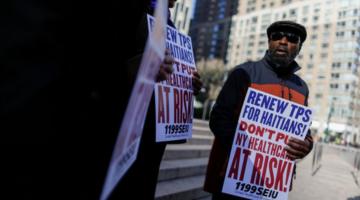 Trump's attacks on immigrants have focused on Haitians. Temporary Protected Status (TPS) may end for 350,000 people, and even those scheduled to be sworn in as citizens are now being denied. Abraham…


