A Black Agenda Radio commentary by executive editor Glen Ford
Black progress in the United States – the kind you can measure in numbers – is a myth. A new study confirms that Blacks have been steadily falling further behind whites in wealth for the past 30 years – which means the Great Black Regression has lasted about twice as long as the brief period of progress in the wake of the Sixties. Short of a revolution, Blacks will never achieve parity with whites.
Thirty Years of Black Economic Regression
A Black Agenda Radio commentary by executive editor Glen Ford
“Black households have been falling further and further behind whites since at least 1984, when Ronal Reagan was in office.”
President Obama almost always speaks well – but he hardly ever speaks the truth. Obama’s main theme at this month’s Selma commemoration was that you’d have to be crazy not to realize that conditions of life for Black folks are improving in America. In reality, however, Blacks have been losing ground compared to whites for at least three decades. In other words, Black economic progress is a myth.
A new study by Brandeis University and the Demos think tank shows that the typical Black household now possesses just six percent of the wealth of the median white household. The white household is worth a little over $110,000, compared to a median Black household wealth of just over $7,000. The racial wealth gap is virtually unchanged from a similar Brandeis study conducted back in 2010 , which showed the typical white household was twenty times richer than its Black counterpart.
The two studies, conducted five years apart, both conclude that the historical public policies of the United States created the wealth gap – beginning with slavery – and that only racially-targeted public policies can hope to overcome these disparities. But of course, President Obama said categorically, in his first 100 days in office, that he opposes racially targeted government programs. He said “a rising tide lifts all boats.” But Black boats have been sinking for the past 30 years. The 2010 Brandeis study showed Black households have been falling further and further behind whites since at least 1984, when Ronal Reagan was in office. Reagan also liked to say that a rising tide lifts all boats.
“Blacks and Latinos get much lower returns on their investments in education than whites do.”
There is another myth, that there exists a large and growing, upwardly mobile cohort of Black people who are rapidly closing the gap with their white peers. Such people do exist, but they are not statistically significant. The Brandeis 2010 report showed that upper income Blacks fell even farther behind their white peers than lower income Blacks during the Great Recession.
The latest Brandeis study also thoroughly undermines the long-held notion that education is the key to Black economic progress. The numbers show that Blacks and Latinos get much lower returns on their investments in education than whites do. For every $1 of wealth that accrues to Black households because someone earned a college degree, the typical white household accrues $11.49. That means white people are rewarded far more for their educational achievements. Therefore, even if Blacks caught up with whites in college graduation rates, they would continue to fall further and further behind, economically.
The 2015 report projects that, if Black home ownership could be made to rise to the same level as whites, the racial wealth gap would narrow somewhat. But of course, that can’t possibly happen unless the U.S. reverses 200 years of history by instituting racially-targeted, pro-Black policies at every level of society, and keeps those policies in effect for generations.
One more little detail: you’d have to get rid of capitalism, which is the Mother of All Economic Disparities.
For Black Agenda Radio, I’m Glen Ford. On the web, go to BlackAgendaReport.com, and sign up for our email notifications of new issues, each Wednesday.
BAR executive editor Glen Ford can be contacted at Glen.Ford@BlackAgendaReport.com. Download this file by clicking here .

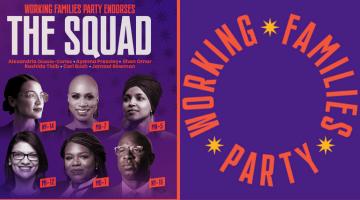 The Working Families Party presents itself as a political party that works for the interest of working class people. However, the party behaves more like a sheepdog for the Democratic party.
 In this week’s segment we discuss the continued genocide in Gaza despite the ceasefire agreement between Israel and Hamas.
 Darren Mack is co-founder and co-director of Freedom Agenda, an organization devoted to decarceration and system transformation, including
 Dilara Sengul is a member of “A Thousand Youth for Palestine”, an organization based in Turkey that is a member of the International Coalition to Stop Genocide in Palestine. She joins us to discuss…
 Participants in an International Working Women's Day webinar explain the importance of the day in building international solidarity.



