A Black Agenda Radio commentary by Glen Ford
Got an urge to protest the most obnoxious Republican presidential contenders, or demonstrate at the NATO meeting, in Chicago? Consult your legal counsel, because the rules have been changed, with no debate in either House of Congress. Legislation awaiting the president’s signature packs prison terms for protesting too closely to people guarded by the Secret Service or at a National Security Event Zone.
Strangling Civil Liberties, One Twist at a Time
A Black Agenda Radio commentary by Glen Ford
“Anyone who is caught ‘trespassing’ in the Zone, whether they knew it was restricted or not, is liable for felony prosecution.”
There is a constituency for the right to assemble and protest in this country, but it appears as if that constituency has very little representation in the U.S. Congress. The Senate unanimously passed a law that has significant ramifications for the Occupy movement or anyone else that wants to exercise their First Amendment rights. H.R. 347
The bill makes it a federal crime punishable by a year in prison for “trespassing” on places where someone under protection of the Secret Service is also present, and up to ten years if a weapon is involved, or someone is seriously injured. The restrictions cover not just the president, but also presidential candidates and foreign dignitaries and heads of state. The new version of the law makes protesters subject to felony prosecution even if they were unaware that people protected by the Secret Service were in the area. Rather than demonstrators freely congregating to protest the presence of their least favored presidential politicians, or to loudly demand that visiting foreign leaders go back home, would-be protesters would be best-advised by their lawyers to stay as far away as possible or face a long stretch in prison. Surely, that stands the right to peacefully assemble on its head.
“The only No votes came from Tea Party Republicans.”
Even more ominously, the new law allows the Department of Homeland Security to designate whole areas as part of a so-called National Security Event Zone, off limits to protest. The United National Anti-War Coalition and others that are planning to demonstrate at the meeting of NATO nations, in Chicago, in late May, will almost certainly be confronted with, not only Mayor Rahm Emanuel’s aggressive protest containment policies, but a Homeland Security declaration putting large areas under a federal protective bubble, with even more serious criminal consequences. In the real, often chaotic whirl of mass outdoor protest, with police pushing crowds from place to place, and protesters trying to make themselves heard, large numbers of demonstrators could find themselves in a federal no-go zone. Under the old rules, the harshest penalties could be imposed only on those who “willfully” crossed into a National Security Event Zone. The new Trespass Bill omits the word “willfully,” so that anyone who is caught “trespassing” in the Zone, whether they knew it was restricted or not, is liable for felony prosecution. This brings to mind the mass arrests of Occupy demonstrators on Brooklyn Bridge, last year. Many in the crowd thought they were being escorted across the bridge by police, and were not willfully trespassing. Under the federal bill, lack of willfulness is no excuse.
What is more disturbing than the potential Bill of Rights-eroding aspects of the legislation, is the Congress’s cavalier attitude towards civil liberties. There was no debate. The only No votes came from Tea Party Republicans. Democrats behaved as if nothing important was happening, just as when President Bill Clinton first came up with the idea National Security Event Zones – where the public, by law, has nothing to say.
For Black Agenda Radio, I’m Glen Ford. On the web, go to BlackAgendaReport.com.
BAR executive editor Glen Ford can be contacted at Glen.Ford@BlackAgendaReport.com .

 Washington's economic war has left Cuba with no good options, and the current reforms are best understood as a defensive maneuver to protect sovereignty rather than a concession to capitalism.
 A one-year-old baby was shot dead by police, but the press reaches for passive language to shield the police and their barbaric actions.
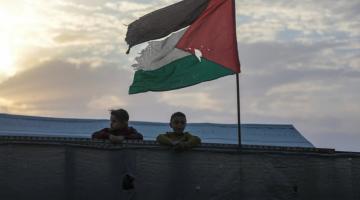 Gaza proposals obtained by Drop Site show Trump’s board attempting to force a Palestinian surrender that Israel could not achieve in war.
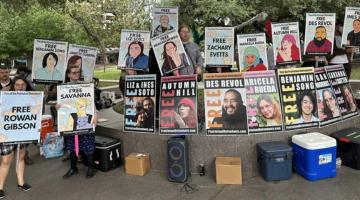 Anti-ICE activists received lengthy prison terms — including a 100-year sentence — in the first major trial of the NSPM-7 era.
 In this week’s segment, we discuss the increase in racist mob violence against Black and brown immigrants in Britain. First, we have a discussion of housing policy in New York, and why low and…


