"The Deep South white vote for Obama was generally not too different than that in Alabama, where nearly nine out of ten whites turned out for McCain." We're sorry but the audio of this BA Radio commentary is no longer available.
Don't Exaggerate Election Impact in Dixie
A Black Agenda Radio commentary by Glen Ford
"In Alabama nearly nine out of ten whites turned out for McCain."
Detailed analysis of the presidential election of 2008 is still far from completed, but the mythology surrounding the race has already emerged, full blown. With every new telling of the election story, the impression is reinforced that white America has performed a complete about-face, and that what we used to think about race no longer applies.
It is true that, nationally and in many regions, Barack Obama did better among whites than the two white Democratic presidential candidates that preceded him: John Kerry and Al Gore. But only 43 percent of whites supported Obama, nationally. In the South, less than a third of whites voted across the color line. In Alabama and other Deep South states, whites voted for John McCain in even greater numbers than for Bush in 2004. The Deep South white vote for Obama was generally not too different than that in Alabama, where nearly nine out of ten whites turned out for McCain, according to an analysis by the New York Times. This is certainly not a sea change in terms of white southern attitudes, a fact that should not be lost in all the celebrations heralding a "new day" for race relations in America. At the epicenter of America's racial conflict - the Deep South - it's still yesterday.
In Virginia, where Obama won 53 percent of the vote, and North Carolina, where he squeaked through by a hair, it seems clear that an influx of whites from elsewhere in the country has altered the political lay of the land - a demographic development with impact for the foreseeable future. Florida has long been a largely non-southern state, in terms of political geography.
"The stars cannot be expected to align so favorably for any Democrat, Black or white, in the future."
Everywhere, the huge and near-universal Black turnout for Obama had the effect of making some southern states appear more "liberal" than they really are. It would be a serious mistake to overstate the significance of Barack Obama's performance in Dixie, either by exaggerating what changes did occur in white voting patterns, or by projecting the 2008 results into the future. This was the year of a very unique presidential candidacy by a Black man of singular skills, including an ability to convince significant numbers of whites, nationally, that he is quite different than most other Black people. It was the year that $4 gasoline called into question the viability of the American suburban way of life, and of a financial meltdown intimately associated in the public mind with the Republican Party. By all rights, the GOP's candidate shouldn't have stood a chance. Yet John McCain did quite respectably, especially given that he was far outspent by the Democrat. The stars cannot be expected to align so favorably for any Democrat, Black or white, in the future. And to the extent that the (white) youth vote was influenced by Obama's celebrity persona - a factor not to be dismissed in this "American Idol" era - this year's election cannot be replicated.
For very different reasons, huge numbers of Blacks and whites - and virtually all of the corporate media - are eager to proclaim that America was re-born on November 4. African Americans, especially, may regret having encouraged whites, most of whom did not vote for Obama, in the belief that the election proves that the legacy of slavery and Jim Crow is no longer a major factor in American life. In fact, race loomed very large in the election, itself.
For Black Agenda Radio, I'm Glen Ford.
BAR executive editor Glen Ford can be contacted at Glen.Ford@BlackAgendaReport.com.

 In this week’s segment, we discuss a military attack carried out by Western-backed insurgents against the African nation Mali and the imperialist attempt to destabilize the Alliance of Sahel States.…
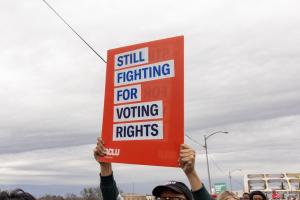 The Supreme Court ruling in the case Louisiana v. Callais eliminated a majority Black congressional district in the state of Louisiana and put such districts at risk across the country. Alanah Odoms…
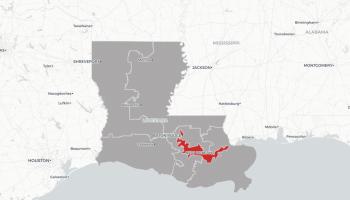 C.C. Campbell Rock is a New Orleans-based journalist. She recently wrote Louisiana v Callais: They Stole Black Power Again" for the site Black Source Media. She discusses the recent Supreme Court…
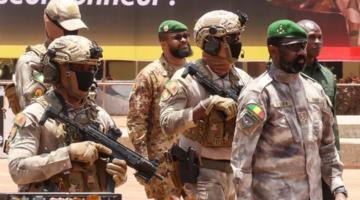 On April 25th, the West African nation Mali experienced a coordinated attack carried out by Western-backed proxy forces seeking to undermine the Alliance of Sahel States confederation. Abayomi…
 From the 1870 15th Amendment to the Voting Rights Act of 1965, voting rights for Black people have proven to be ephemeral. Laws can be unenforced or gutted altogether. Black people’s rights must be…


