A Black Agenda Radio commentary by Glen Ford
Click the flash player below to listen to or the mic to download an mp3 copy of this BA Radio commentary.
By all standards of international diplomacy, last week's White House “State” visit by Zimbabwean Prime Minister Morgan Tsvangirai was bizarre. President Obama praised one-half of Zimbabwe's “Unity” government, while denouncing the other half, President Robert Mugabe. Obama has continued George Bush's sanctions against Zimbabwe, but gifted Tsvangirai with $75 million for public purposes – causing Tsvangirai to appear to be “a petty agent for the Americans.”
Bwana Obama, with Trinkets for Zimbabwe
A Black Agenda Radio commentary by Glen Ford
“U.S. policy in Africa, since President Eisenhower’s time, has been to create chaos wherever the Americans cannot exert control.”
The habits of imperialism are so ingrained in the behavior of U.S. governments, as to be automatic, instinctive. The half-African U.S. president, Barack Obama, doubtless thought he was doing Zimbabwe a special favor by entertaining Prime Minister Morgan Tsvangirai at the White House while badmouthing his partner in power, Robert Mugabe. Every diplomat ever born understands that such behavior constitutes serious interference in the internal affairs of another, sovereign nation. But the United States has never felt constrained by the norms of international diplomacy, especially in its dealings with Black nations. U.S. policy in Africa, since President Eisenhower’s time, has been to create chaos wherever the Americans cannot exert control. That’s as much President Obama’s policy, as it was his predecessors.
In the case of Zimbabwe, Obama’s policy is identical to George Bush’s. Immediately upon assuming office, Obama extended Bush’s executive order sanctions against Zimbabwe. These are peculiar sanctions, in that they name Robert Mugabe and other specific members of his government and political circles. This, of course, is not diplomacy by any stretch of the imagination. Rather, it is the politics of regime change, whereby the U.S. seeks to shape foreign governments to its own liking. Obama has taken this imperial mutilation of diplomacy a step further, giving an audience and a $75 million gift to one half of Zimbabwe’s Unity Government, while denouncing and virtually outlawing the other half, Robert Mugabe.
“By acting as a conduit for U.S. money, he becomes a petty agent for the Americans.”
For the United States, the doctrine of non-interference in the internal affairs of other nations does not exist. Not that this is news to anybody on the planet. Arrogance is to the U.S. as stink is to the skunk. But there are consequences to this behavior that may redound to the detriment of Americans’ favored Zimbabwean, Morgan Tsvangirai. By acting as a conduit for U.S. money, he becomes a petty agent for the Americans. By basking in the glow of the Oval Office, he aligns himself with the foreign power that threatens to keep torturing Zimbabwe until the country comes up with a government to the Americans’ liking.
Africans that have no sense of self-respect may decide that Morgan Tsvangirai is the man for them, since he brings U.S. money, albeit with endless strings attached. But those Africans, in Zimbabwe and elsewhere, who strive for independence and self-determination will see Tsvangirai and his ilk as stooges of imperialism – opponents of African dignity and the very concept of nationhood.
President Obama is a rank imperialist. Only the most arrogant overlord would announce, as Obama did following Tsvangirai’s visit, that, in his opinion, “President Mugabe has not acted…in the best interests of the Zimbabwean people.” Who is he to say? It is not an American president's place to pass such public judgements on other people's governments. Then Obama sent Tsvangirai off with a $75 million tip, like a good boy. Maybe we ought to call the president “Bwana Obama.” He takes the White Man’s Burden very seriously. For Black Agenda Radio, I’m Glen Ford. On the web, go to www.BlackAgendaReport.com.

 Cuba is facing severe energy shortages as US sanctions restrict fuel imports. The Russian shipment now heading to the island will help a nation struggling to maintain vital services for its citizens.
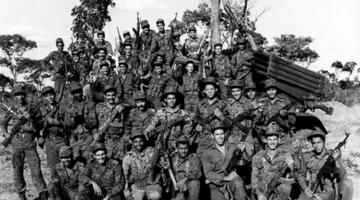 Campbell explains how Cuban military and medical interventions have been decisive in the liberation of African peoples from colonial domination.
 In this week’s segment, we hear from an author who has documented how coroners cover up deaths in police custody. We also present a discussion about LeBron James, Spike Lee, and Zionist influence in…
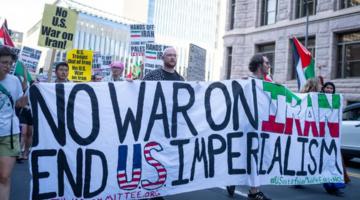 All signs indicate that a US attack on Iran is imminent. The Trump administration sent an aircraft carrier group to the region, and another is on the way.
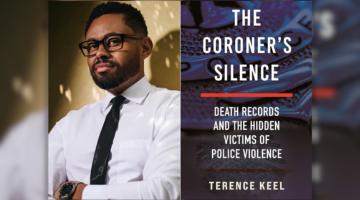 In his book, "The Coroner’s Silence: Death Records and the Hidden Victims of Police Violence," Dr. Terence Keel investigates how coroners and medical examiners omit key information about police…


