A Black Agenda Radio commentary by Glen Ford
Corporations – and President Obama – are betting that hunger for jobs will trump all else to make Blacks allies of nuclear power. Nuclear energy promoters worked on the same assumption 30 years ago – but that was before the blossoming of the environmental justice movement.
The Jobs Scam: Selling Blacks on Nuclear Power
A Black Agenda Radio commentary by Glen Ford
“Nuclear power corporations to believe that Blacks will be far more enthusiastic than whites about any industrial scheme that holds out the hope of jobs.”
The nuclear power industry will soon launch a major propaganda campaign in Black America, hyping atomic energy as a jobs program. I’ve seen it all before, up close, more than 30 years ago, when the Westinghouse Corporation became a regular advertiser on the syndicated television news interview program I co-owned and hosted, America’s Black Forum. That was back in 1978, a year before the near-meltdown at Three Mile Island. The Pittsburgh-based nuclear power corporation had just completed a study that showed African Americans were more interested in jobs, and less concerned about environmental issues, than whites. Westinghouse’s executives figured that jobs-hungry Black folks would serve as a counter-point to the long-haired white kids and tree-huggers that the media caricatured as the core of the environmental movement. We should note that the data in Westinghouse’s survey did not say that Blacks were friendlier to nuclear power than whites – only that they cared more about jobs, as a logical consequence of having fewer of them. The idea was to convince Blacks that nukes = jobs, and that words like “environment” and “ecology” had nothing to do with them. So, with great hopes of political success, Westinghouse bought advertising - lots of it – on my show and other Black-oriented media around the country.
1978 was also the year that the modern environmental justice movement began, under the godfathership of Dr. Robert Bullard, a Black environmental sociologist who was documenting how America dumps its industrial and other unwanted wastes disproportionately in Black neighborhoods. Dr. Bullard’s data provided the objective evidence that proved the crucial link between environmental issues and social justice.
“Westinghouse’s executives figured that jobs-hungry Black folks would serve as a counter-point to the long-haired white kids and tree-huggers that the media caricatured as the core of the environmental movement.”
As far as Dr. Bullard is concerned, the racial politics of nuclear power is no different than the politics of other industrial hazards; it’s easier to dump them in Black neighborhoods. And now, as
thirty years ago, Black unemployment remains roughly twice the rate of whites, leading nuclear power corporations to believe that Blacks will be far more enthusiastic than whites about any industrial scheme that holds out the hope of jobs.
With President Obama's blessing and more than $8 billion dollars in guaranteed public money, the nuclear power folks plan to build two new plants in majority Black and desperately poor Burke County, Georgia, where cancer rates are far higher than surrounding regions and jobs are still scarce for Blacks even though nuclear plants have been located there since the 1950s. In an article in the Huffington Post, Dr. Robert Bullard told Black Agenda Report's Bruce Dixon that Black communities on the fencelines of nuclear plants “don't get the jobs. They get pollution and more poverty. And they get sick.”
But corporate promoters are already re-revving their propaganda machines to sell Blacks on nuclear power with the same jobs-creation argument they pushed three decades ago. Nuclear companies have been flying Black and brown delegations to visit happy neighborhoods around power plants in France. The Black press is onboard, too, because that's where the advertising dollars are, and because the Black president says that nukes mean jobs. For Black Agenda Radio, I'm Glen Ford. On the web, go to www.BlackAgendaReport.com.
BAR executive editor Glen Ford can be contacted at Glen.Ford@BlackAgendaReport.com.

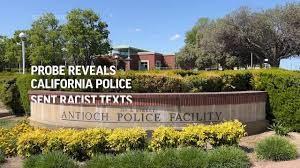 Little Rock Antioch’s RICO blu klux klan (For Franklin, the Families, and Antioch’s Fightback)
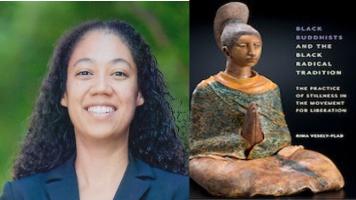 This week’s featured author is Rima Vesely-Flad.
![How Joe Biden and The Democratic Party’s Climate Agenda Increases Environmental Racism More Than It Reduces Emissions [A Three Part Series]](/sites/default/files/styles/nc_thumb/public/2023-09/cancer%20alley%20protest.jpg.jpeg?itok=kOK48inx) The environmental benefits of Biden's Inflation Reduction Act are non-existent for Black and other marginalized communities.
The environmental benefits of Biden's Inflation Reduction Act are non-existent for Black and other marginalized communities. There are Arab governments going along with the U.S. push to normalize relations with Israel. But people throughout the region are adamantly opposed to such treachery, as the now suspended Foreign…
 Nothing is sacred under capitalism. Even hip hop, the genre which spoke to Black politics and culture is now just another commodity.


