A Black Agenda Radio commentary by Glen Ford
It is as if Americans have lost the very language of social justice. The Congressional Black Caucus, finally in a mood to confront the White House on the jobs issue, find themselves having to explain that legislators have a “moral obligation” to fight for their constituents' interests. Meanwhile, “President Obama treats every appeal for attention to Black unemployment as if it is an unreasonable, or even illegal, demand.”
What Part of “We Need Jobs” Does Obama Not Get?
A Black Agenda Radio commentary by Glen Ford
“The nation's first Black president bristles at every suggestion that gross racial inequalities call for executive and legislative action.”
There is no greater testimony to the vast amount of ground Black America has lost over the past three decades, than the Congressional Black Caucus’s recent press conference on the need for jobs and elementary fairness in the current economic crisis. Caucus chairperson Barbara Lee began with a brief outline of the long-standing – and, in some cases, worsening – economic disparities that afflict African Americans, facts that are well known to the White House and congressional leadership, to whom the Caucus’s appeal was directed. The Black lawmakers found it necessary to point out that they are “morally obligated to address these systemic inequalities” – obligations that President Obama has categorically rejected on numerous occasions, invoking the rich man’s slogan, “A rising tide lifts all boats.”
A generation ago, such reactionary nonsense would have been met with wholesale denunciation in Black political circles. But as we begin the second decade of the 21st century, a Black Democrat in the White House can get away with speaking like Ronald Reagan, while Black members of Congress are compelled to present moral justification for seeking redress of economic injustices.
Forty years ago, a Republican president, Richard Nixon, would have felt quite comfortable agreeing with the Black Caucus' concerns about economic fairness. Yet today, the nation's first Black president bristles at every suggestion that gross racial inequalities call for executive and legislative action.
“As we begin the second decade of the 21st century, a Black Democrat in the White House can get away with speaking like Ronald Reagan.”
So great is the weight of decades of right wing assaults on the very idea of economic parity among the races, Black congresspeople feel the need to repeatedly emphasize that they are not proposing racial formulas for job creation, but programs based on need – on the principle that those who have been harmed the most, should be targeted for greater assistance.
“We’re not talking about race,” said chairperson Barbara Lee. “We’re talking about the hardest hit.” And in fact, the United States Congress has never funded a program to create “Black” jobs, but rather, they have created jobs in urban America and jobs for residents of areas with high levels of poverty.
President Obama treats every appeal for attention to Black unemployment as if it is an unreasonable, or even illegal, demand. To be blunt, he sounds just like those professional white racists that make their livings claiming Blacks seek new and special privileges, when nothing could be further from the truth. The Black Caucus proposes to bring back jobs programs from the Seventies. Detroit's Carolyn Kirkpatrick would like to see the rebirth of the Comprehensive Employment and Training Act – CETA – and Representative John Conyers would reinvigorate the Humphrey-Hawkins Full Employment Act, which has been on the books, but unfunded, for over 30 years. No one is talking about reinventing the wheel, in jobs creation. For two generations, during every election cycle, Blacks have demanded a Marshal Plan to combat unemployment in the cities, where it just so happens that most Black people live. Every election cycle, that is, until the last one, when Black politicians made no demands whatsoever on candidate Barack Obama. Black America is now paying the cost of giving Obama a free pass.
BAR executive editor Glen Ford can be contacted at Glen.Ford@BlackAgendaReport.com.

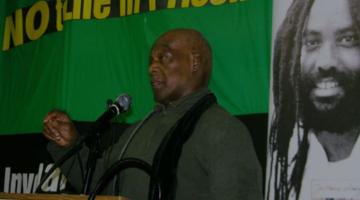 Ralph Poynter was a pioneer in the fight against white supremacy, oppression, and injustice around the world. His voice and presence cannot be replicated.
 Anti-Black racism and Zionism are two cornerstones of Harvard’s flawed foundation. We should mourn Claudine Gay’s tenure at Harvard because she was both a victim and an agent of white supremacy.
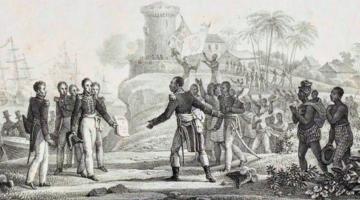 After Haiti gained independence in 1804 following a slave revolt, France threatened to invade and re-enslave the Haitian people if they did not pay compensation to French slave owners for their lost…
 Civilian democratic forces are demanding inclusion in proposed discussions in Djibouti.
 Thandisizwe Chimurenga is the author of the new book, Some of Us Are Brave, Volume I : Interviews and Conversations with Sistas on Life, Art and Struggle.


