A Black Agenda Radio commentary by columnist Jared A. Ball, Ph.D.
Post-racialism and race neutrality are fantasies; the Oscar Grant killing and trial, and the Black reaction to the verdict, are real. And so is the pervasive rage that is a characteristic - a "property" - of being Black in America.
The Oscar Grant Verdict: A Rage In Black America
by BAR columnist Jared A. Ball, Ph.D.
"It is this being Black in America, which as a matter of national state policy, defines Black people, limits Black people, oppresses Black people, that consciously or not draws the deepest ire from Black people."
There is a rage in Black America. It is righteous. It is justified. It is unrequited. It is a rage at being Black in America that has existed ever since there has been Black in America. After hearing of the pitifully soft verdict handed down by the all white jury in the Oscar Grant murder trial I thought again of this rage. And I remembered reading a few years ago one scholar's survey of Black history and his being intrigued by "the extent to which African Americans have fantasized about political violence - specifically, violent revolt" as a matter of political "instrument" or "catharsis." He surveyed a swath of Black writing which in poem, novel or political statement included many references to what some Europeans have called "divine violence." Frederick Douglas, DuBois, Langston Hughes, Ida B. Wells, Robert Williams, Sonya Sanchez and Jeru the Damaja were all referenced as having at one time or another, in one way or another, described acts of violence as just, even necessary. He quoted Nikki Giovanni's lines, "What can I, a poor black woman do to destroy America? This is the question, with appropriate variations, being asked in every black heart. There is one answer-I can kill. There is one compromise-I can protect those who kill. There is one cop-out-I can encourage others to kill. There are no other ways."
I remember being at a hip-hop show featuring Dead Prez and Rebel Diaz where it was first announced that Lovelle Mixon had killed 4 cops in Oakland California. I remember how it was reported and received as a response to Oscar Grant's killing and how this brought the very diverse crowd to increased heights of rebellious exuberance. I saw this fervor again on display again in the pre-verdict documentary on Grant Operation Small Axe featuring Oakland's grassroots embedded journalist JR of Block Report Radio. I see it in the post-verdict reports and online videos. And I saw it again at a recent showing of Small Axe in Washington, D.C. A crowd had gathered to watch the documentary which happened to coincide with the verdict coming down and the post-screening discussion went immediately to these feelings of rage and those fantasies of violent revolt.
"Black writing contains many references to what some Europeans have called 'divine violence.'"
This rage even carried most in the room to almost happily accept the powerful contradiction raised by a sister who drew attention to the fact that while many were respectful of Mixon's act few seemed to know or be concerned with the fact that he was suspected of several rapes of young women and girls in the community. This was why the police were after him in the first place. It was similar to the contradiction raised at a recent rally for Aiyanna Jones in Detroit where another sister drew attention to the fact that too many are angry at the police when Black men kill far more Black people than law enforcement.
But these apparent contradictions are, to me at least, explained by the fundamental rage at being Black in America. It is this being Black in America, which as a matter of national state policy, defines Black people, limits Black people, oppresses Black people, that consciously or not draws the deepest ire from Black people. None were excusing rape or murder committed by Black people. But none were forgetting the fundamentality of our rage against the very nature of the state's relationship to Black people. Malcolm X once said that simply being Black in America "radicalizes you." We hope so because it certainly does continue to enrage.
And in just a clip of our Brother Amari's brilliant remake of Scott-Heron's Whitey on the Moon we continue to hear that rage in the face of popular contradictions: "Up Lovelle Mixon! Up Mark Essex!
Up the mighty BPP! Understand white justice is a lie. And appeals won't get us free.
So while we sit and shout and complain and cry.
For something we'll never see. Just remember this one last thing:
Lebron is headed to Miami."

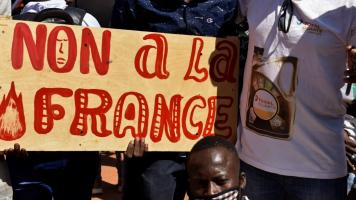 Economic Community of West African States (ECOWAS) has threatened military intervention if deposed President Mohamed Bazoum is not restored in a week. Bazoum was overthrown in a coup by officers…
 Reaction to the coup in Niger is a litmus test which determines who is truly supportive of self-determination for African nations.
 The people of Peru continue to demand the end of the coup government and the return of their elected president to office.
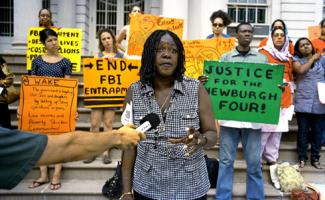 The U.S. embarked on a spree of entrapments in the post-9/11 years. Informants were used against gullible and vulnerable people, most of them Black, in order to secure spurious convictions and…
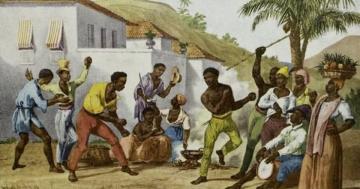 Jesús “Chucho” García is an intellectual and activist, and the author of several books, including Afrovenezolanidad e inclusión en el Proceso Bolivariano [Afro-Venezuelanness and Inclusion…


