When a new international order came into being with the organization of the United Nations in 1945, African people proposed their own visions for the post war world.
As World War II came to a violent and shuddering end in 1945, plans were drawn up for a new international order, ostensibly to maintain peace and global security while promoting global economic development. The United Nations was at the center of these plans. Its structure and organization were created after a series of meetings culminating in the signing of the first UN charter, by some fifty nations, in San Francisco on 26 June 1945. African people were largely absent from these conversations. Only Haiti, Liberia, Ethiopia, and Egypt were present in San Francisco. The rest of the African world remained under the thumbs of their white European colonial masters and were denied a voice in the discussions shaping the new world order.
This did not mean, however, that African people did not speak, that they did not petition for their rights or propose their own vision for the emerging, post-war order. One such proposal came from Harold Moody and the League of Colored Peoples. Moody, a Jamaica-born doctor, had formed the League of Colored People in London in 1931 to advocate for the welfare and rights of Black people, primarily in Great Britain. The League was less radical than George Padmore and T. Ras Makonnen’s Pan-African Federation, and it did not have the Federation’s militant, internationalist visions. Yet the two organizations and its members maintained a friendly relationship. Although Moody did not participate in the Fifth Pan-African Conference, held in Manchester in 1945, both CLR James and Jomo Kenyatta were early members of the League, and Padmore was a signatory to the League’s April, 1945 manifesto for the United Nations.
The manifesto, reprinted below, was titled “Africa in the Post-War World.” It provides reader with a clear reminder of why the United Nations was formed – and why an alliance was forged between the US, England, and the Soviet Union to end the war: to not only defeat “Hitlerite Germany” and eliminate Nazism and fascism but to create a lasting and sustainable peace by removing the “political, economic and social causes of war,” including “the theory of the master race against inferior races.” The manifesto argues that since African people were critical for the defeat of Nazism and fascism – fighting and dying in battlefields in North Africa, Germany, etc. – we should be able to claim that sovereignty and self-determination heralded in the Atlantic charter and other documents and proclamations. Moreover, if the point of the war was to eliminate fascism, then the fascist regimes of Spain and Portugal should be eliminated from Africa. Signed by Black welfare organizations in England and by trade union leaders of the Gold Coast Nigeria, British Guiana, and Gambia, the Manifesto closed with six demands for economic and educational development, the end of racial discrimination, and beginnings of a path towards decolonization and self-government. Yet at the heart of these demands, is the recognition that they would not be fulfilled without a commitment to the end of militarism and war and by the promotion of a durable peace.
Africa in the Post-War World: Manifesto for Presentation to the United Nations Conference, San Francisco, April 1945
Promulgated and supported by The League of Coloured Peoples in co-operation with West African Students' Union (London), International African Service Bureau (London), Negro Association (Manchester), Negro Welfare Centre (Liverpool, and Manchester), Coloured Men's Institute (East London), and endorsed by the following Colonial Trade Union Leaders on behalf of their unions:
J. S. Annan, Gold Coast Trade Unions.
T. A. Bankole, President, Nigerian T.U.C.
H. N. Critchlow, British Guiana Trade Unions.
J. A. Garha-Jahumpa, Secretary, Gambia T.U.C.
The decisions of the historic Crimea Conference represent the consolidation of the alliance of the three great powers, Great Britain, the United States of America and the Union of Soviet Socialist Republics in the final phase of the war of liberation against Hitlerite Germany. They demonstrate the unity and singleness of purpose of the anti-fascist powers to “destroy German militarism and Nazism and to ensure that Germany will never again be able to disturb the peace of the world.” The decisions aim also at the prevention of any future aggression and at the removal of the political, economic and social causes of war with the close and continuing collaboration of all peace-loving peoples.
By their Declaration the leaders of the three Governments have reaffirmed their faith in the principles of the Atlantic Charter, their pledge in the Declaration by the United Nations and their determination to build in co-operation with other peace-loving nations a world order dedicated to a secure and lasting peace which will “afford assurance that all men in all the lands may live out their lives in freedom from fear and want.”
The dawn of a new epoch in world relations is thus breaking. Only on the basis of the unity of purpose and of action which has made victory in the war possible for the United Nations can the highest aspiration of humanity--a secure and lasting peace--be realised.
Establishment of an international organisation.
The decision regarding the establishment of an International Organisation confirms and consolidates the decisions of the United Nations already reached at Teheran, Bretton Woods, Dumbarton Oaks and Hot Springs to provide the framework of future world security and prosperity. The problems of mankind are now recognised as the concern of the entire world.
Over large areas of the world millions of people live in poverty, disease, squalor and ignorance. Their continued low standards of life constitute a serious threat to the standards of people everywhere and represent a powerful challenge to the financial and technological resources of the more advanced nations joined together in collaboration to promote world prosperity and the happiness of mankind.
The vast continent of Africa with its 160 million inhabitants and immense though undeveloped resources in mineral, forest and agricultural wealth must command the attention of the international organisation. The rapid economic development, industrialisation and the advancement of the social standards of Africa must form an integral part of any plan to build world prosperity.
United Nations must free themselves of the evils against which they are fighting.
Africa is a land of varied political forms, economic interests and social and cultural standards. This is complicated by the fact that among the powers with imperial possessions in Africa are fascist Spain and fascist Portugal. It is further complicated by the colour-bar laws and practices obtaining within the territories of some of the United Nations themselves, notably the Union of South Africa. The United Nations are pledged to secure in addition to the military defeat of fascism, the eradication of its moral and political manifestations, chief of which is the theory of the master race against inferior races. If the principles for which we fight do not apply only to Europe, then it is the duty of the United Nations to eliminate the influence of the Spanish and Portuguese fascist regimes and to remove from their own territories those theories and practices for the destruction of which Africans have died on many battlefields. In this way alone can true international collaboration and planning for the future of Africa proceed in conditions free from conflict and favourable to such collaboration.
Recommendations.
In the belief that it is the eager desire of the United Nations to begin with the least possible delay the solution of these problems, we recommend:
- That the International Organisation should immediately adopt policies and set up all necessary machinery to secure the uniform and rapid development of the economic, social and cultural life of the African peoples.
- That guided by the principle of equal rights for all men and recognising that the success of any scheme will depend on the measure to which Africans themselves participate, steps should be taken for the provision of maximum opportunity for such participation at all levels of administration.
The present inferior political, economic and social status of tile African peoples militates against the achievement of harmonious co-operation among the peoples of the world. International co-operation demands the abolition of every kind of discrimination on account of colour, race and creed wherever such discrimination exist.
- The present system of exploitation by which the bulk of the wealth produced in Africa goes to enrich foreign monopoly firms and individuals must be replaced by systematic planning and development whereby in the first place the Africans themselves shall be the principal beneficiaries of the wealth produced, then an equal opportunity shall be afforded to all nations in the exchange of products. In this regard an international council representative of producer and consumer interests should be established within the framework of the International Organisation for the stabilisation of commodity prices at levels ensuring reasonable returns to producers and maximum satisfaction to consumers.
- Simultaneously with economic development progressive steps should be taken to associate Africans with the management of their own affairs with a view toward the achievement of full self-government within a definite time limit, as in the case of the Philippine Commonwealth.
- The eradication of mass illiteracy calls for energetic measures no less sustained than those which aim at the ending of poverty, disease and squalor. The greater the spread of education for both children and adults the greater will be the pace of advancement of the peoples as a whole. That it is possible to eradicate mass illiteracy within a short space of time is proved by the experience of Soviet Central Asia, where 20 years ago there was a very small percentage of illiteracy, but where now illiteracy has been practically abolished and universities flourish.
- The former Italian colonies now under military rule shall have the same treatment as the rest of the African territories and shall be given every assistance in development along with these other territories on the road to full-self-government.
African peoples earned right to benefit by new concept
We believe that the African peoples by their contribution in manpower and material resources in the war against fascism; by their service in Ethiopia, East Africa, the Western Desert, Italy and in the Battle of Germany; and by their service in Burma in the eastern war against Japan, have earned the right to expect that they shall benefit as a result of the new concept of international co-operation which has been acquired in the course of the grim ordeal of the war of liberation against fascism.
(Signed by) Harold A. Moody, George Padmore, K. A. Chunchie,J. S. Annan, H. N. Critchlow, Samson Morris, R. W. Beoku-Betts, T.A. Bankole, K. A. Korsah, J. A. Garba-Jahumpa, C. B. Clarke.
***
League of Coloured Peoples. Manifesto on Africa in the Post-War World: for presentation to the United Nations Conference, San Francisco, April 1945. The Manifesto was also printed in Communist theoretician R. Palme Dutt’s The Labour Monthly (May, 1945).




 In this week’s segment, we discuss U.S. control over Venezuela and its resources, and the Venezuelan people's response to their loss of sovereignty. But we begin with a report on the police killing…
 Our guest is attorney Jaribu Hill, executive director of the Mississippi Workers Center for Human Rights. She reports on the police killing of 1-year old Kohen Wiley in Senatobia, Mississippi and on…
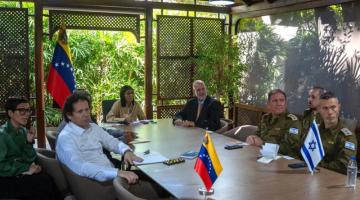 On January 3, 2026, the U.S. conducted a military attack against Venezuela and kidnapped president Nicolas Maduro and his wife, First Combatant Cilia Flores. Since that time interim president Delcy…
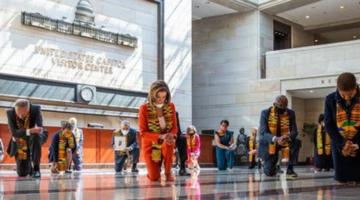 The democrats’ backtracking on what they dismissively refer to as “wokeness” is the newest iteration of their political trickery as once again they give the appearance of supporting what they…
 “The Burnham dictatorship crept up upon Guyanese people like a thief in the night.”


