by Danny Haiphong
Mumia Abu Jamal has spoken Truth to Power since his teen days in the Black Panther Party, then as a crusading radio newsman and, since 1981, as a political prisoner. Historian and activist Johanna Fernandez is editor of Writing on the Wall, a compilation of Abu Jamal’s essays. Mumia is “locked in a steel cage because of the US Empire's need to repress the memory, ideology, and practice of the Black Liberation movement that he helped lead.”
Johanna Fernandez Speaks on the Revolution and Counter Revolution that Mumia Abu-Jamal Embodies
by Danny Haiphong
“Fernandez urges readers to see mass incarceration as a ruling class project, one rooted in the repression of the Black Liberation Movement.”
Revolutionary scholar and activist Johanna Fernandez presented a new compilation of political prisoner Mumia Abu-Jamal's writings entitled Writing on the Wall in Cambridge, Massachusetts, on April 27th. The text was edited and introduced by Fernandez herself. Writing on the Wall's collection of essays sends a concrete message. Mumia's writings speak of the atrocities of war, racism, and class warfare. More importantly, Fernandez gives voice to the critical link between the repression of the Black revolutionary movement of the 1960s and the subsequent rise of the Mass Black Incarceration State.
Writing on the Wall offers an in-depth look into Mumia’s theoretical and political genius. His essays, similar to his radio journalism, speak to the root causes of oppression. As the recent attempt to pass a law to silence him in 2014 following his commencement speech at Goddard College indicates, Mumia's words alone are a threat to the US social order. An Empire that operates to enrich the few at the material and spiritual expense of the many cannot allow someone like Mumia to live in peace. Ever since Mumia Abu-Jamal took a revolutionary path, his days have been numbered.
The connection between the rise of Mass Black incarceration and the suppression of the Black revolution is embodied in Mumia's case. Mumia Abu-Jamal was a member of the Black Panther Party in Philadelphia. It was with the Black Panther Party that Mumia honed his journalism skills in service of the liberation of oppressed people. For this, Mumia Abu-Jamal became a target of the FBI's COINTELPRO operations. The main purpose of COINTELPRO was to neutralize the leadership of the Black Panther Party and allied forces, which the US government called the "greatest threat to the internal security of the country."
“Mumia’s words along are a threat to the US social order.”
The campaign to eliminate the Black Panther Party led to that fateful night in 1981 when Mumia Abu-Jamal was shot by Philadelphia police and then given a death sentence for the supposed murder of police officer Daniel Faulkner. Mumia spent three decades on death row before the global movement to free him forced his transfer to general population. Mumia Abu-Jamal is still serving a life sentence in prison without parole. His health is also on the decline. Mumia was recently diagnosed with Hepatitis C and has been consistently denied proper medical treatment for the potentially deadly disease.
Fernandez's introduction to Writing on the Wall explains how the struggle to free Mumia Abu-Jamal is intimately connected to the development of mass incarceration. Mumia's case and the many like his are a manifestation of state repression of the Black Liberation movement. The US government's repression of the Black liberation movement laid the technical, economic, and political foundations for mass incarceration. In 1968, the Johnson administration passed a crime bill that expanded military aid to the police and legalized the practice of stop and frisk. In 1996, the Clinton administration passed a law that eliminated the right of habeas corpus for Death Row inmates. The law was famously called the "Mumia Law" because it was signed by the widow of Daniel Faulkner.
These developments helped spur what many simply call mass incarceration. However, mass incarceration must be seen within the context of revolution and counter revolution. The revolution that Mumia Abu-Jamal attempted to build outside of prison walls was met with an all out war by the US government. This war weakened the revolutionary movement of the time and occurred just prior to US capitalism's terminal decline. Capitalism's race to the bottom, largely brought about by the transition to finance capital and the cost of technology dragging down the profit rate, threw the Black working class into a permanent state of unemployment and instability. Luckily for the Empire's capitalist class, the combination of technological advances and the state tactics employed to destroy the Black liberation movement laid the basis for the expansion of the prison state.
“The US government's repression of the Black liberation movement laid the technical, economic, and political foundations for mass incarceration.”
Over four decades later, the damage of mass incarceration is as clear as Mumia's journalistic prose. Fifty percent of all US prisoners were unemployed prior to incarceration and forty percent identify as Black American. One out of every eight prisoners globally is Black. Yet a purely economic analysis of mass incarceration is inadequate. Mumia Abu-Jamal and the numerous revolutionaries behind prison walls are not merely the victims of dead-end capitalist economics. They are behind the walls because they fought and organized a revolutionary challenge to the very conditions that spurred mass incarceration in the first place.
Fernandez urges readers to see mass incarceration as a ruling class project, one rooted in the repression of the Black Liberation Movement. This gives the best chance for the insurgent movements of the current period to learn the critical lessons embodied in Mumia Abu-Jamal's case. The counterrevolution waged by the US government in response to the Black liberation movement greatly diminishes the importance of guilt or innocence when it comes to the plight of US political prisoners. Mumia Abu-Jamal does not languish in prison because of a wrongful conviction. He continues to serve time locked in a steel cage because of the US Empire's need to repress the memory, ideology, and practice of the Black Liberation movement that he helped, and still helps, lead.
Mumia's commentary in Writing on the Wall reflects both the personal ideological journey of a political prisoner and the development of his revolutionary praxis behind prison walls. As editor, Johanna Fernandez represents the best of such revolutionary praxis from the outside. Her work to free Mumia and build a revolutionary movement in the US capable of bringing a transition of power from the oppressor to the oppressed should be emulated by all who see themselves as part of a radical movement. Purchase Writing on the Wall. Spread Mumia's revolutionary message far and wide as we work to free him and all political prisoners.
Danny Haiphong is an Asian activist and political analyst in the Boston area. He can be reached at wakeupriseup1990@gmail.com.

 April Goggans is an organizer with Black Lives Matter in Washington DC. After years of FOIA requests she has been granted a hearing to determine if the Metropolitan Police Department are required to…
 Worldwide outrage over the killing of Soweto youth protesting on June 16, 1976 was a turning point in South African history. But the end of apartheid was not the end of racist oppression or corporate…
 The U.S. excluded Cuba, Nicaragua and Venezuela from the recent Summit of the Americas held in Los Angeles. While there was widespread condemnation against the U.S., only six heads of state had the…
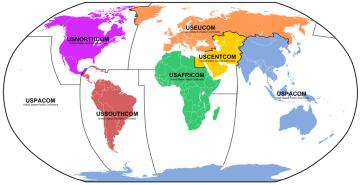 The latest Black Alliance for Peace AFRICOM Watch Bulletin provides analysis of the U.S. Southern Command and includes an interview with Ahjamu Uni, organizer with the All African People's…
 Democrats and republicans alike supported a bil to "counter malign Russian influence in Africa." Such legislation is reminiscent of the worst days of the cold war. Now a member of the Congressional…


