An inmate in the custody of the Department of Corrections. (Brian Lyman/Alabama Reflector)
The lawsuit against Alabama state officials, agencies, local governments, and private companies for their involvement in the prison labor program continues. Prisoners now must fight a wave of motions to dismiss.
Originally published in Alabama Reflector.
Incarcerated individuals in Alabama have filed a 214-page response opposing a motion to dismiss their lawsuit accusing state prisons of using slave labor.
The case involves multiple claims against state officials, private employers and local governments alleging Alabama’s prison labor program system is a form of modern-day slavery. Each defendant filed motions to dismiss the lawsuit, claiming that counsel for plaintiffs did not state a legal claim in the lawsuit.
“Despite Defendants’ strenuous efforts to dispute Plaintiffs’ well-founded allegations—a strategy that cannot justify dismissal of Plaintiffs’ claims at this juncture—and to preclude the Court from evaluating the sufficiency of Plaintiffs’ claims on the merits, Plaintiffs have stated viable claims against all Defendants, and the motions to dismiss should be denied,” counsel for the plaintiff wrote in the response to defendants’ motions to dismiss.
Defendants argued in their motion to dismiss that plaintiffs failed to “exhaust administrative remedies” under the Prison Litigation Reform Act (PLRA), meaning inmates must try to resolve their complaint through the prison’s grievances procedures.
Plaintiffs argue that the PLRA does not bar their claims under the Trafficking Victims Protection Act (TVPA), the Racketeer Influenced and Corrupt Organizations Act (RICO), and the First Amendment because their claims, rooted in federal law, fall outside the limits of the PLRA, which limits federal court authority over state law compliance.
The inmates claim they were coerced into labor through threats and physical restraint, arguing that state officials and employers benefited from this forced labor in violation of the TVPA. They refute arguments that the TVPA does not apply to state actors and maintain their right to bring these claims.
“The TVPA is written broadly to address trafficking wherever and by whomever it may occur, making clear that Congress did not intend to offer a safe harbor to those who engage in trafficking,” lawyers for plaintiffs stated in the filing.
The plaintiffs also allege a pattern of racketeering activity under RICO, involving forced labor practices. They provide detailed allegations against each defendant “by forming and maintaining a labor-trafficking enterprise for the purpose of benefiting from the unlawful forced labor of Coerced Labor Individual Plaintiffs and other incarcerated workers.”
State constitutional claims are also made, with plaintiffs seeking injunctive relief against local governments and private employers. They argue that parole policies violate the Ex Post Facto Clause by retroactively increasing punishment.
Racial discrimination claims under the Equal Protection Clause are also included, alleging that Black parole candidates were treated less favorably than white counterparts.
Substantive due process rights, the KKK Act, and First Amendment violations are also included in the filing. Plaintiffs claimed that state officials used arbitrary power and retaliated against inmates for speaking out against prison conditions. They also claim some defendants financially benefited from illegal labor practices without fair compensation to the workers.
Defendants have until July 31 to respond, after which time the judge will decide if the case gets dismissed.
Alander Rocha is a journalist based in Montgomery, and he reports on government, policy and healthcare. He previously worked for KFF Health News and the Red & Black, Georgia's student newspaper. He is a Tulane and Georgia alumnus with a two-year stint in the U.S. Peace Corps.


 U.S. militarization of the Caribbean stands in the way of achieving peace in the region.
 Eritrean President Isaias Afwerki delivered this speech during the nation's 33rd Independence Day ceremony.
 The Haitian Presidential Transitional Council continues to prepare for the illegal occupation by meeting with the United Nations Integrated Office in Haiti (BINUH).
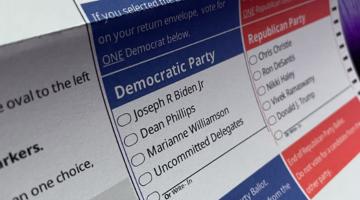 The Uncommitted Movement is the means through which voters across the country are resisting forced complicity in genocide and making it clear to the Democratic Party that their positions are not as…
 This week, we discuss the International Criminal Court's decision to pursue arrest warrants for Israeli government leadership and the 2024 U.S. presidential election. But first, we hear from a…


