African people in the U.S. must consolidate their myriad organizations into a united front. A U.S. revolution is impossible without first building local alliances among Black radical organizations around internal decolonization, sovereignty, and self-determination.
It is undeniable that African (aka Black) people must be organized. This is why it is not unusual to hear, “Organize! We must organize!” as a slogan and in the rhetoric of African student, labor, and nationalist movements. Oppression breeds resistance, and the only genuine resistance to systemic and state oppression is the organization of the oppressed. If unity presupposes organization, then individuals must be organized to be in fact united. And if in fact there is strength in such unity, then logic also holds that the broader and more consolidated the unity, the greater the strength.
The enemies of humanity are powerful. They are so because they are tightly organized through the state, wielding massive resources to maintain their position. It then also stands to reason that the myriad of organizations that make up our movement must find a way to transcend whatever differences we may have in order to unite. African people must be in organizations and those organizations must consolidate into a united front; an organization of organizations. This logic is inescapable.
What does it actually mean to be a united front? And what does it mean for the purposes of a revolutionary transformation in the U.S?
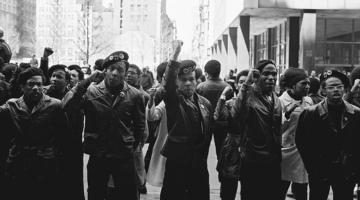
Attempts in Black Radical history to form united fronts should be the topics of collective study. In 1969, the Black Panther Party convened a conference in Oakland in an attempt to start the United Front Against Fascism. The Black Workers Congress was a radical Marxist-Leninist organization founded on December 12, 1970, and born from the Detroit-based League of Revolutionary Black Workers to unite Black worker caucuses and Revolutionary Union Movements across the U.S. The African Liberation Support Committee (ALSC) grew out of the first African Liberation Day held in the U.S. in the early 1970s. Black activists and Pan-Africanists formed the ALSC to build solidarity with anticolonial struggles on the African continent. The collective study and discussion of the successes, failures, and internal dynamics of these efforts, with careful consideration for the distinct time periods between then and now, will fortify efforts to carry on the unfinished missions.
Globally united fronts have played invaluable strategic roles in movements for decolonization and liberation. In colonized or occupied nations, single-class or narrow ideological parties rarely had the strength to oust a dominant imperial power. United fronts allowed diverse social and economic groups to pool their numbers, resources, and geographic reach under a shared anti-colonial banner. In Asia, Africa, and Latin America, united fronts -- evolving eventually into "popular fronts" -- transformed local rebellions or student protests into mass national liberation struggles. Some examples include the Kuomintang-CCP alliances in China or broad multi-class national liberation fronts such as Algeria’s Front de Libération Nationale, or FLN and Cuba’s 26th of July Movement.
Revolutionary movements against capitalism used united fronts to fight alongside non-communist or nationalist forces against the common ruling class enemy -- such as imperialism or fascism -- while trying to maintain their independent organization and political identity.
Taking into account the specific conditions of settler colonialism within the U.S., it must be accepted that a core contradiction is not only between the capitalist class and the working class but also between Eurocentric white supremacist domination and those internally colonized within the U.S.; the indigenous people of North America who have had their land stolen and the Africans who were stolen from their land. Therefore, there must be a process that broadly unites Black/African radical organizations in the U.S. around internal decolonization, sovereignty, and self-determination. Such a united front is not merely a temporary tactic, but a necessary historical bloc capable of representing the interests of Africans in a U.S. path to socialism.
There can be no revolution in the U.S. without the consolidation of Black / African and solidarity organizations first on the local level into coordinated struggle, grounded in internationalist, anti-imperialist work that lays the foundations for alternative forms of governance that can contest for power and legitimacy. It is local alliances that must be the bedrock of anything broader. We must start where we are and build upon what we have. To put it more concretely, the role of revolutionary African organizations is to bring the African (Black) working class to the forefront of the liberation movement by raising mass consciousness. Mass consciousness can only be raised through strategic campaigns and programs that involve the people in the building of a new society. This is done by strategies that ultimately place the oppressed, the Black working class as agents in the process to alter their material conditions; a process that stands in stark contrast to their experiences with the capitalist settler colonial state.
African / Black radical organizations should heed this wisdom of the revolutionary leader of Guinea-Bissau, Amílcar Cabral:
"Always bear in mind that the people are not fighting for ideas, for the things in anyone's head. They are fighting to win material benefits, to live better and in peace, to see their lives go forward, to guarantee the future of their children.”
Conditions are more ripe today than they were in the 1970s and 1980s to win over the African working class to the ideals and principles of socialism. Candidates for office are using the banner of democratic socialism to win elections. In the U.S., democratic socialism is a political and economic viewpoint that believes the power large corporations have over the economy, the state, and public life can be put into the hands of ordinary people through the enactment and implementation of government policies. In other words, it does not discard capitalism. But capitalism, the dictatorship of the bourgeoisie, cannot be reformed away, and socialism cannot be built using capitalism’s decaying foundations. The ruling class has and will always change its own rules and framework before allowing it to be used to take their power. It is this propensity that leads to fascism.
Because of capitalism’s insatiable need to increase profits and wealth for the ruling class at the expense of people and the planet, the living conditions of the working class have become increasingly unbearable – particularly for the non-white working class. The trajectory of neoliberalism presents a dialectic that is both a threat and an opportunity for Black radical organizations with the mission of liberating Black people. The system makes circumstances dire for the people and, in turn, those circumstances make it easier to expose the system for what it is.
While time is of the essence, there are, however, no shortcuts to winning our self-determination and liberation from the imperialist racial capitalism of the U.S. It cannot be done simply by presenting information and analysis (theory). Theory and analysis must be complemented by actions, the work of seizing the materials and devising the means for us to survive and live in collective dignity (practice). The formations, the organizations that emerge from these localized efforts and strategies, must then consolidate and culminate across geographic boundaries into a united front capable of becoming a formidable challenge to the enemy system against humanity.
This is revolutionary praxis.
Netfa Freeman is an organizer in Pan-African Community Action (PACA) and on the Coordinating Committee of the Black Alliance for Peace. Netfa is also co-host/producer of the WPFW radio show Voices With Vision.

 “The President of the United States is more/ the President of my country/ than the President of my country.”
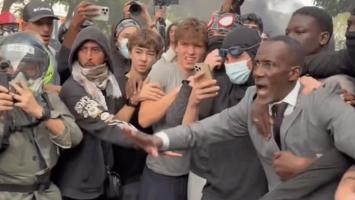 Marco Rubio's speeches invoking a shared Western civilization are part of the ideological consolidation of fascism, mobilizing white racial solidarity to defend a declining capitalist order.
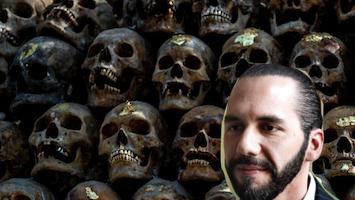 Nayib Bukele, El Salvador’s president, joins Erik Prince, the US, and the UN to kill more Haitians.
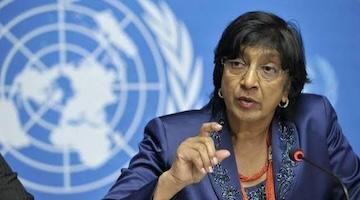 Navi Pillay’s participation in the International Criminal Tribunal for Rwanda (ICTR) should have disqualified her for consideration for the Nobel or any other peace prize.
 The media uses vague language to protect billionaires from judgment and pressures people to pursue change through polite, respectable channels. The result is that readers become spectators of…



