On Friday, April 29, 2022, USLBA hosted a meeting with U.S. officials and U.S. corporate executives to discuss the implementation of the Global Fragility Act in Libya to "prevent conflict and promote stability". Photo: The U.S.-Libya Business Association
The Global Fragility Act is a mechanism through which the US gives itself the authority to utilize soft power in Africa through organizations like USAID. The act places a specific focus on Libya, which was destroyed by the U.S., and N.A.T.O. Using the management of aid infrastructure, USAID supports U.S. imperialist aims in maintaining instability and dominance over the country.
The U.S. Agency for International Development (USAID) is presented as an agency to assist or "aid" in the positive development of Libya—and other African states—but in reality supports the same imperialist agenda that drove the 2011 military assault that destroyed Libya’s social and political fabric. The regime change operation in Libya, especially following the 2011 NATO overthrow of Muammar Gaddafi, left the country in a state of perpetual chaos and factionalism. This instability serves as fertile ground for the expansion of U.S. influence through soft power mechanisms like the U.S. Agency for International Development (USAID), which, despite its humanitarian facade, works in concert with broader U.S. imperial objectives, as outlined in the Global Fragility Act (GFA), through which Libya is a “priority partner” country. .
USAID’s work in Libya began in 2011, just after the brutal overthrow of Gaddafi, and it has since operated in alignment with broader U.S. military and political goals. The GFA, signed into law in 2019, provides a framework for this kind of meddling, claiming to promote "conflict prevention" and "stability" in so-called fragile states like Libya. Yet, this Act, much like USAID’s activities, is designed to maintain U.S. hegemony rather than genuinely support Libyan sovereignty. By focusing on "fragility," the GFA reframes U.S. interference as necessary and benevolent, while continuing to undermine Libya’s potential for self-determination.
A May, 2023 USAID report highlights the limited awareness Libyan citizens have of USAID’s activities, with only about 13 percent of surveyed Libyans having any knowledge of its work. The report emphasizes that those who are aware of USAID tend to view its political and economic impact positively, a correlation that reinforces the power of U.S. soft power to shape public perception. However, the motivations behind USAID’s work in Libya must be critically examined, particularly in the context of the Global Fragility Act and U.S. efforts to maintain control over Libya’s vast oil resources.
The low level of awareness of USAID in Libya is not surprising, considering the agency’s activities are often masked by a narrative of development and humanitarian assistance. What is less visible is the role USAID plays in supporting the same imperialist framework that AFRICOM and other U.S. military structures enforce. USAID embeds itself in Libya’s reconstruction process, positioning itself as an indispensable actor in Libya’s future, by selecting and creating Libyan civil society organizations and institutions[1] [2] [3] to carry out this work. In Haiti, another ”priority country” for the U.S. through the Global Fragility Act, the plan is to use 250 civil society organizations picked/created by the USAID to influence public policy and decision making. It is not about empowering Libyans or fostering genuine stability—it’s about securing U.S. influence in a strategically vital, oil-rich region under the guise of development.
Yet, the same report reveals the deep skepticism many Libyans hold toward USAID, driven by perceptions of corruption, cultural incompatibility, and doubts about the true motivations behind U.S. involvement in their country. This skepticism is well-founded. USAID’s role in Libya is not neutral; it is part of the broader U.S. imperial strategy to control and exploit Libya’s resources, while preventing any form of governance that could challenge U.S. or Western interests.
The connection between USAID and the Global Fragility Act is crucial in understanding how U.S. foreign policy operates in Libya. The GFA seeks to create long-term, sustained involvement in "fragile" regions, under the pretext of preventing conflict and promoting stability. This is done by connecting the Department of Defense, the State Department, the Treasury Department, and USAID. But in reality, this sustained involvement is about ensuring that U.S. geopolitical and economic interests are protected. In Libya, this means maintaining control over oil production and thwarting the influence of rival powers like Russia and China.
The recent meetings between a Libyan ministerial delegation and U.S. officials in Washington further underscore how deeply intertwined U.S. interests are with Libya’s oil and energy sectors. These discussions, presented as efforts to strengthen international partnerships and foster economic development, serve U.S. geopolitical and economic agendas. The delegation, which included Libya’s ministers of oil and transportation, met with high-ranking U.S. officials such as National Security Advisor for North Africa David Linfield and U.S. Deputy Secretary of State for Africa and the Middle East Joshua Falls. These meetings centered around the return of U.S. companies to Libya, particularly in the oil and gas sectors, and the development of infrastructure—areas critical to U.S. strategic interests.
Libya’s collapse into factionalism and civil war is a direct consequence of U.S. and NATO destabilization, and the ongoing presence of USAID and AFRICOM only serves to prolong this chaos for imperial gain. The fact that USAID’s visibility is low among Libyans suggests that the U.S. is operating behind a veil of so-called development while continuing to extract Libya’s wealth and suppress any genuine attempts at sovereignty. The Global Fragility Act provides the framework for this exploitation, allowing the U.S. to rebrand its imperial machinations as humanitarianism.
As we scrutinize USAID’s role in Libya, it becomes clear that development aid is being weaponized to serve imperial interests. The campaign to shut down AFRICOM and remove U.S. forces from Africa is intimately tied to dismantling the soft power mechanisms, like USAID, that sustain imperialism. The Global Fragility Act is not a path to peace or stability for Libya—it is a tool designed to ensure the continued exploitation of Libya’s resources and the suppression of its people’s right to self-determination.
Libyans have seen firsthand the destruction wrought by U.S. intervention, and their skepticism toward USAID reflects a clear understanding that Western involvement is not for their benefit. As the campaign against AFRICOM and U.S. imperialism gains momentum, we must expose the role of agencies like USAID in facilitating these crimes. The struggle for African liberation depends not only on resisting military domination but also on challenging the soft power structures that reinforce imperialism under the banner of development.
Tunde Osazua is a member of the Black Alliance for Peace’s Africa Team and the Steering Committee of the International Campaign to Free Kamau Sadiki.

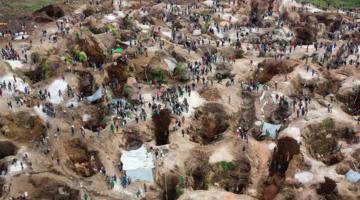 The war-torn country has accused the US-based global tech giant of war crimes, forgery and deception by using illegally extracted and smuggled minerals in its products.
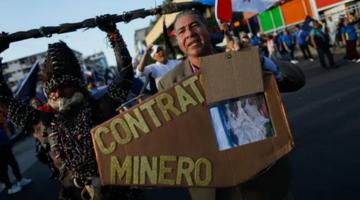 Before beginning his term in office, president-elect Donald Trump already proclaimed his intention to seize the Panama Canal. Understanding the importance of the canal and the history of…
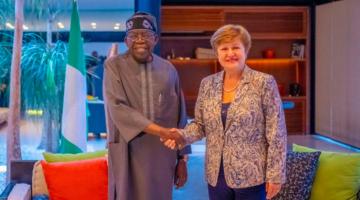 After dozens died in stampedes, Nigerian President Bola Tinubu remarked, “We should just get on with it.” Tinubu’s IMF-prescribed policies have more than doubled food prices in the country,…
 Ajamu Baraka was a guest on the SOBH program on Press TV. He discussed his history of political organizing and activism, human rights, and the importance of the Black Radical Peace Tradition.
 We talk about the killing of Robert Brooks by prison corrections officers and the need to close Rikers Island. We also discuss a recent Cuban conference dedicated to ending racism in that country.


