President Lyndon Johnson signs Voting Rights Act of 1965 as Martin Luther KIng and others look on. Yoichi Okamoto, Public domain, via Wikimedia Commons
From the 1870 15th Amendment to the Voting Rights Act of 1965, voting rights for Black people have proven to be ephemeral. Laws can be unenforced or gutted altogether. Black people’s rights must be defended by mass popular action.
The recent Supreme Court of the United States (SCOTUS) decision in the case of Louisiana v. Callais is but the latest example of a direct attack on Black people by the state. This decision is the last nail in the coffin of the Voting Rights Act, and in the aftermath of this blow, there is deep anger, fear, and confusion felt by millions of people. While those feelings are both righteous and understandable, it is still frustrating to watch as some of the fake friends who could have prevented this outcome shed fake tears alongside those who are actually being victimized. The problem is not just that racist and reactionary forces are ascendant, but that they are ascendant in part because two-faced liberals give them cover in the kind of performances that are usually reserved for professional wrestling’s dramas of fake villains and fake heroes.
The Voting Rights Act (VRA) of 1965 was indeed landmark legislation, but it is most important to point out that this victory was borne of years of struggle and a mass movement that forced a presidential administration and Congress to provide some remedies for injustice and discrimination against Black people in the electoral system. The movement that brought the VRA is seen as a high-water mark in Black history, but its true value is not well understood, and the VRA itself is wrongly viewed as having come about because of the goodwill of a “good for Black people” president. There is precious little discussion of the struggles that actually brought it about and that were needed in order to maintain it.
The hard-fought successes were under attack almost immediately, and the white right wing was determined to stop any further progress from taking place. Decades of political reaction and backlash soon followed. SCOTUS has been steadily chipping away at the Voting Rights Act in recent years and, in the 2013 Shelby County v. Holder decision, declared “pre-clearance” to be unconstitutional. The pre-clearance provision required states like Louisiana, with histories of discriminatory practices, to get approval from the Justice Department or federal courts before making any changes to voting processes. In the 2026 Callais case, SCOTUS ruled that congressional district lines drawn to ensure representation for “minority” populations are also unconstitutional and therefore are no longer allowed as a discrimination remedy. The impact was immediate, as the republican governor of Louisiana is seeking to stop a primary election process that has already begun.
Obviously, there are many reasons for the Callais decision to be opposed. The plaintiff in the case, Phillip Callais, is a Trumpian clone who speaks of elections as being “rigged” if they don’t go his way. Callais was among those in attendance at the January 6, 2021, riot at the Capitol that was intended to stop the certification of the 2020 election. He described that day’s events as “... not the total chaos as the news will lead you to believe.”
While it is easy to point fingers at Trump supporters and see them as the cause of every ill, they should not be the only targets of condemnation. The allegedly less reactionary Democratic Party refused to fight for legislation that would have preserved the pre-clearance provisions, and ultimately, the Black congressional districts brought into being in the VRA. The reality is that a toothless VRA will mean that Louisiana and other states will no longer have majority Black congressional districts, bringing about a return to the post-Reconstruction era known as the nadir, the low point, when brief victories were brutally crushed. The 15th Amendment to the Constitution, ratified in 1870, allegedly guaranteed the right to vote: “The right of citizens of the United States to vote shall not be denied or abridged by the United States or by any State on account of race, color, or previous condition of servitude.” Had it been defended, there would have been no need for the VRA in 1965.
In fact, there are many low points for Black people in the U.S. Enslavement, the destruction of Reconstruction, and Jim Crow segregation were a continuum of low points. The post-Civil Rights era brought on new defeats, such as the Southern Strategy and a mass incarceration regime meant to ensure that Black liberation remained restricted to legal remedies, which would also be under attack at opportune moments.
Anger is rightly directed at the Supreme Court, but expressions of shock and surprise should be treated as well-meaning but useless wishful thinking. This same court recently said that racial profiling is legal. In the case of Noem v. Vazquez Perdomo, a majority of the justices said that race, language, and occupation were permissible grounds for immigration enforcement officers to “briefly” stop and detain anyone they wanted, without showing probable cause. Justice Kavanagh was the only one to actually put on paper a defense of this ruling and now has the misfortune of being called the father of the “Kavanagh Stop.” The court codified and protected the very concept of white supremacy, and the outcome in the Callais case should have been expected.
Nor is it surprising that the democrats, erroneously viewed as the heroes in the VRA story, hide behind platitudes and fake outrage after doing nothing to protect voting rights as they allegedly wanted to do. The John Lewis Voting Rights Act would have restored preclearance and was passed in Congress in 2022.
Enter senators Joe Manchin and Krysten Sinema, who, while in office, were the Democratic Party’s favorite fake villains. They could be counted on to ensure that nothing democratic voters wanted ever saw the light of day when they sided with republicans and protected the filibuster, an undemocratic measure which can require supermajorities, filibuster-proof majorities in the Senate in order for legislation to be passed. The Build Back Better bill and the John Lewis Voting Rights Act fell victim to the smoke and mirrors that were always used to prevent any legislation that was even remotely progressive from going anywhere.
The true heroes in the story of the VRA were Black people themselves. President Lyndon Johnson passed the Voting Rights Act and the Civil Rights Act, and legislation that brought Medicare and Medicaid into existence, because Black people fought for their liberation and did so in their millions, all over the country. The system faced a crisis and responded to it by grudgingly bringing about some needed changes in the interest of quelling what was becoming a full-blown rebellion.
Decades later, Barack Obama dithered about a recess Supreme Court appointment and passively allowed the very elderly and seriously ill Ruth Bader Ginsburg to stay on the court, only to die while Trump was in office. Conversely, Trump and senate republicans rushed in Amy Coney Barrett’s nomination while millions of people were still voting during the 2020 elections. If history is a good guide, the party that desperate people look to for help will not provide any.
It is interesting that democrats wring their hands but rarely take their complaints to the source of their problems. After the Roe v. Wade decision was overturned in 2022 democrats protested at the Supreme Court when they should have confronted Obama and Joe Biden for failing to even attempt to legislate abortion rights protection. Now the same people write petitions and ask for money and send blistering press releases about Louisiana v. Callais, but never bother to organize anyone. The source of political successes is now ignored in favor of posturing.
The truth was turned on its head, as politicians were credited with saving what the people did for themselves. Manchin and Sinema are gone, but John Fetterman and others have been appointed to take their places as bad cops in a bad drama.
While the Trump administration says that privileged white South Africans are the only people on earth deserving of refugee status in the U.S. and that only white people should bring discrimination cases to the Equal Employment Opportunity Commission (EEOC), Black people spend far too much time finding blame to explain why the hapless democrats, who don’t even act in their interests, are out of power.
Biden didn’t protect the VRA with new legislation, and the next Democratic Party president, whoever that is, will be equally ineffectual on behalf of Black people. Black voters are constantly caught in a “tails I win, heads you lose” political scenario as the country goes further down a bottomless pit of full-blown white supremacy.
The iconic photos of President Johnson signing the Voting Rights Act as Martin Luther King looked on give a now decades-old false impression of who is really responsible for Black political success. There were thousands of nameless organizers whose work and sacrifice made such legislation possible.
Who are the organizers now that white supremacy is loudly and proudly proclaimed? The members of the Black misleadership class are not organizers. Elected officials are not either. The positions they hold are antithetical to the concept of popular mass action. Unless groups and individuals coalesce and step forward together, we have nothing to look forward to except more overt racism, more terrible SCOTUS decisions and an electoral map that now favors the republicans in the 2026 mid-term elections. One wing of the duopoly is serious about its ideology, while the other goes along to get along with the designated villains. Relying on electoral politics is a dead end that brought us to this modern-day nadir. The key to protecting voting rights can only be found outside of the ballot box.
Margaret Kimberley is the author of Prejudential: Black America and the Presidents. You can support her work on Patreon and also find it on Twitter, Bluesky, and Telegram platforms. She can be reached via email at margaret.kimberley@blackagendareport.com.

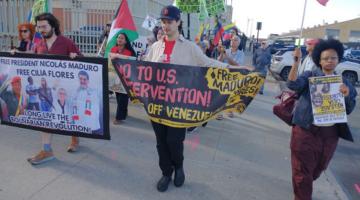 While Trump pardoned an actual drug lord president, he keeps a kidnapped Venezuelan president, Nicolas Maduro, and his wife, First Combatant Celia Flores, in a mold-infested Brooklyn jail on false…
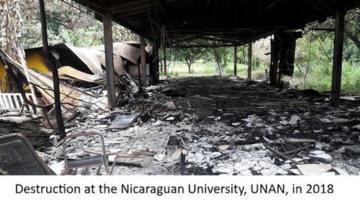 Jeffrey Isaac Jarquin was deported from the U.S. by ICE and upon arrival in Managua was sent to prison by Nicaraguan authorities. Corporate media has decried the detention of a “torture victim” and “…
 In this week’s segment, we discuss student protests by Black and brown youth in France against austerity measures and race-based inequality in the education system. But we begin with a discussion of…
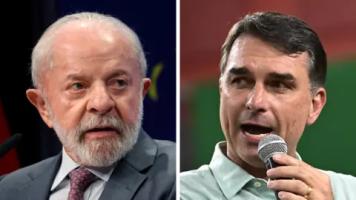 Brazil's incumbent president Lula da Silva finished second behind Flavio Bolsonaro in the first round of the presidential election. Because neither man received at least 51% of the vote, a run-off…
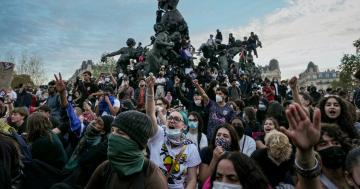 Students in France are engaging in mass protests. Hundreds of them have been arrested and injured by police, and many schools are closed. Annick Metefia joins us from Paris. She is a member of the…


