“Africans, as a last resort, may have to appeal to force in the effort to achieve Freedom, even if force destroys them and the world.”
The Fifth Pan-African Congress, held in Manchester, England, eighty years ago — from October 15th to 21st, 1945 — was a watershed moment in the history of African independence. Held following the conclusion of World War II, it came at a moment when demands for colonial freedom and self-determination within the Black world were getting louder, stronger, and increasingly militant. The Congress was a platform for these demands. Organized primarily by the Trinidadian radical George Padmore, with W.E.B. Du Bois taking pride of place as a sort of Pan-African godfather (Du Bois was the force behind the previous four Congresses), the congress hosted an extraordinary roster of individuals and organizations who played a critical part in the decolonization movements in the Caribbean and Africa, and the demands for Black rights in North America and Europe. It is a roster that includes Jomo Kenyatta, ITA Wallace Johnson, T. Ras Makonnen, Amy Ashwood Garvey, and Kwame Nkrumah— who would lead the Gold Coast to independence as Ghana by 1957—and many, many others.
In 1947, London’s Hammersmith Bookshop published proceedings of the Fifth Pan-African Congress. Edited by George Padmore, the proceedings were titled Colonial and Colored Unity: A Program of Action. At less than one hundred pages, Colonial and Colored Unity is a relatively short document. Yet despite its brevity, it is an incredible archival document that provides a vivid snapshot of those days in Manchester, a useful overview of the history of Pan-African organizing, alongside a remarkable geographic portrait of the global conditions of Black people – especially of African peasants and the African working classes – at the end of World War II. And, of course, alongside the comprehensive accounting of Black life under imperialism, colonial rule, and global whitesupremacy, there is the set of resolutions put forth by Congress participants demanding the end of imperialism, colonial rule, and global whitesupremacy. The tenor and tone of these demands are set forth in the opening statement of the conference, “The Challenge to Colonial Powers”:
The delegates to the Fifth Pan-African Congress believe in peace. How could it be otherwise when for centuries the African peoples have been victims of violence and slavery. Yet if the Western world is still determined to rule mankind by force, then Africans, as a last resort, may have to appeal to force in the effort to achieve Freedom, even if force destroys them and the world.
To mark the eightieth anniversary of the Fifth Pan-African Congress, we reprint “The Challenge to Colonial Powers” below. But we also encourage you to read and study all of Colonial and Colored Unity: A Program of Action as a way to remember the radical premise and urgent promise of Pan-Africanism.
The Challenge to the Colonial Powers
Delegates to the Fifth Pan-African Congress
The delegates to the Fifth Pan-African Congress believe in peace. How could it be otherwise when for centuries the African peoples have been victims of violence and slavery. Yet if the Western world is still determined to rule mankind by force, then Africans, as a last resort, may have to appeal to force in the effort to achieve Freedom, even if force destroys them and the world.
We are determined to be free. We want education. We want the right to earn a decent living; the right to express our thoughts and emotions, to adopt and create forms of beauty. We demand for Black Africa autonomy and independence, so far and no further than it is possible in this “ One World ” for groups and peoples to rule themselves subject to inevitable world unity and federation.
We are not ashamed to have been an age-long patient people. We continue willingly to sacrifice and strive. But we are unwilling to starve any longer while doing the world’s drudgery, in order to support by our poverty and ignorance a false aristocracy and a discredited Imperialism.
We condemn the monopoly of capital and the rule of private wealth and industry for private profit alone. We welcome economic democracy as the only real democracy.
Therefore, we shall complain, appeal and arraign. We will make the world listen to the facts of our condition. We will fight in every way we can for freedom, democracy and social betterment.
Declaration to the Colonial Workers, Farmers and Intellectuals.
The delegates of the Fifth Pan-African Congress believe in the right of all peoples to govern themselves. We affirm the right of all Colonial peoples to control their own destiny. All Colonies must be free from foreign imperialist control, whether political or economic. The peoples of the Colonies must have the right to elect their own governments, without restrictions from foreign powers. We say to the peoples of the Colonies that they must fight for these ends by all the means at their disposal.
The object of imperialist powers is to exploit. By granting the right to Colonial peoples to govern themselves that object is defeated. Therefore, the struggle for political power by Colonial and subject peoples is the first step towards, and the necessary prerequisite to, complete social, economic and political emancipation.
The Fifth Pan-African Congress therefore calls on the workers and farmers of the Colonies to organise effectively. Colonial workers must be in the front of the battle against Imperialism. Your weapons—the Strike and the Boycott—are invincible.
We also call upon the intellectuals and professional classes of the Colonies to awaken to their responsibilities. By fighting for trade union rights, the right to form co-operatives, freedom of the press, assembly, demonstration and strike, freedom to print and read the literature which is necessary for the education of the masses, you will be using the only means by which your liberties will be won and maintained.
Today there is only one road to effective action—the organisation of the masses. And in that organisation the educated Colonials must join.
Colonial and Subject Peoples of the World—Unite!



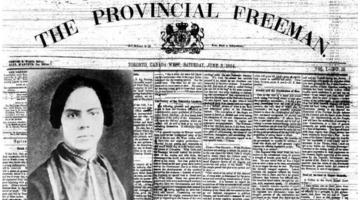
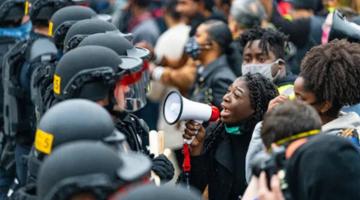 "Minnesota 9 — now say their names: pastor, lawyer, journalists and resistance leaders" is the latest from BAR's Poet-in-Residence.
 In this series, we ask acclaimed authors to answer five questions about their book. This week’s featured author is Marisa Solomon. Solomon is Assistant Professor of Women’s, Gender, and…
 The debate over the EPA's new math misses the point. The agency hasn't changed its values, it has simply stopped pretending to account for communities it was never built to protect.
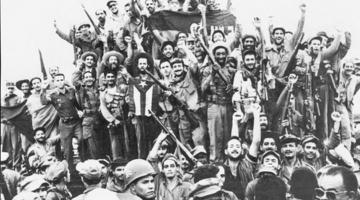 The survival of Cuba's socialist project remains one of the most critical holdouts against hemispheric domination, making its defense a global litmus test for sovereignty.
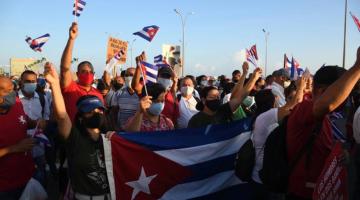 Branding Cuba an "extraordinary threat" on the anniversary of a regional peace declaration, the U.S. has escalated an assault designed to destroy hemispheric solidarity and justify hybrid war.


