The 1976 bombing of Cubana Flight 455 was part of a six-decade U.S.-orchestrated campaign of destabilization against Cuba, which has now escalated into a genocidal siege aimed at starving the Cuban people into submission.
Originally published by Isaac Saney on Facebook
October 6, 2016, marks the 50th anniversary of the horrific terrorist attack on Cubana Airlines Flight 455. In the Western Hemisphere, this was the first and is the only bombing of a civilian airliner during flight. This heinous act, which resulted in the deaths of all 73 passengers and crew on board, stands as one of the most notorious examples of anti-Cuban terrorism carried out by violent counterrevolutionaries. The downing of Flight 455 was masterminded by anti-Cuban terrorists Orlando Bosch and Luis Posada Carriles—both of whom had longstanding ties to the U.S. intelligence services. These individuals were motivated by a deeply rooted hatred of Cuba’s revolutionary project and a desire to punish the Cuban people for daring to chart an independent and sovereign course.
This terrorist attack was not an isolated incident but part of a broader, more than six decades-long campaign of destabilization and aggression against Cuba, orchestrated by forces determined to undermine the Cuban Revolution. Since the Cuban Revolution’s triumph in 1959, the United States has relentlessly attacked the Cuban people through both military and economic means. These actions have included orchestrating an invasion, assassination attempts, terrorist attacks targeting civilians, and systematic economic sabotage. Many of these acts were planned or launched directly from U.S. soil. To date, these acts of terrorism have resulted in the deaths of at least 3,478 Cubans and the injury of 2,099 others. In 1997, a series of hotel bombings in Havana claimed the life of Fabio Di Celmo, a young Montrealer of Italian descent.
As noted, the October 6, 1976, terrorist attack on Cuba was part of a larger campaign against the Cuban Revolution: assassination attempts, sabotage, attacks on civilian targets, armed incursions, biological and economic warfare, and an economic blockade designed to undermine the material foundations of Cuban society. This history is not merely one of isolated acts committed by individuals. The October 6, 1976, act of terror was part of Operation Condor, a larger regional campaign targeting progressive movements across Latin America, all supported by Washington. These efforts sought to subdue any challenge to U.S. hegemony in the region and crush the aspirations of people struggling for self-determination and justice. Declassified U.S. records themselves document the profound entanglement between the Cuban conflict, U.S. intelligence operations and the wider regional struggle over Cuba and its revolutionary example.
Normalized State Terror and Genocide
Unable to defeat the Cuban Revolution after more than 60 years of economic war and a campaign of destabilisation, this economic war and campaign of destabilization and has now translated into a genocidal siege. The U.S. strategy aims to deny and extinguish Cuba’s right to self-determination, sovereignty, and independence, with the ultimate goal of reimposing U.S. dominance, hegemony, and control. The strategy seeks to starve the Cuban population into submission by crippling the economy, creating shortages and hardships, and deepening social inequalities that the Cuban Revolution has persistently worked to address. The goal is to incite the social unrest Washington so desperately desires, which would provide a pretext for U.S. intervention in Cuba.
This intent was clearly outlined by Lester D. Mallory, then Deputy Assistant Secretary of State and one of the architects of U.S. policy toward Cuba. In a now declassified and infamous memorandum of April 6, 1960, he stated:
“[m]ost Cubans support Castro…The only foreseeable means of alienating internal support is through disenchantment and disaffection based on economic dissatisfaction and hardship. Every possible means should be undertaken promptly to weaken the economic life of Cuba, denying money and supplies to Cuba, to decrease monetary and real wages, to bring about hunger, desperation, and overthrow of the government.”
Thus, the significance of October 6, 1976, extends beyond Cuba. It compels us to ask a more fundamental question: their crimes before the international community. When a genocide is normalized, the doors open to others. This is how fascism reemerges.
The defining danger of our present moment is not simply that states commit acts of terror. States have done so throughout modern history. The danger is that practices once publicly condemned as extraordinary are increasingly presented as routine, legitimate and necessary instruments of foreign policy. Extrajudicial killing, collective punishment, siege warfare, mass displacement and the deliberate destruction of civilian infrastructure are now standardized, systematized and regularized across the world. Reminiscent of the Martinican poet and intellectual Aimé Césaire's observation of the spread and universalization of European colonial barbarism.
This is particularly stark in the Western imperial order. Imperial power reserves for itself the right to determine whose lives may be extinguished in pursuit of its political objectives.
That is precisely why the memory of Cubana 455 matters.
What happens when terrorism and genocide cease to be regarded as an exceptional violation of the international order and become normalized as an instrument of that order?
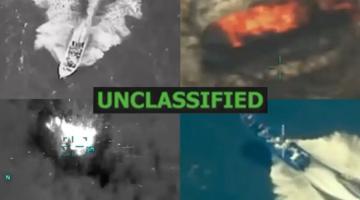
We now live in an era in which the Western imperial powers-particularly the United States - have normalized and routinized state terror (a clear example: the illegal blowing up of fishing boats in the Caribbean Sea and Pacific, killing more than 200 people) and the use of genocide to further imperial aims. Indeed, state terror and genocide are no longer open policy choices and practices but, in fact, are fundamental and inevitable features of imperialism in the 21st century. Cuban President Miguel Díaz-Canel underscored: “The executioners of Gaza, Iran, and Cuba cannot continue threatening, bombing, and plundering, and then boast of their crimes before the international community. When a genocide is normalized, the doors open to others. This is how fascism reemerges."
We should not remember October 6, 1976, simply as an atrocity belonging to a distant Cold War past. We should remember it as an ever-prescient warning.
Fifty years ago, a civilian airliner was destroyed because its passengers happened to be associated with a society that had chosen a revolutionary and independent path. Today, the technologies and institutions of coercion have become vastly more sophisticated. Financial systems, sanctions regimes, drones, surveillance, precision weapons, naval power and information warfare allow states to impose enormous violence while creating physical and psychological distance from its consequences.
And yet there is another lesson in the story of Cubana 455: Resilience, Resistance and Revolutionary Resolve. Cuba Has Not Surrendered. Terror did not destroy the Cuban Revolution. Neither did invasion. Neither did assassination attempts. Neither did sabotage. Neither did six decades of economic warfare.
The objective articulated in Washington more than sixty years ago—to generate hunger, desperation and political overthrow—has not been achieved. Instead, Cuba has continued to insist upon its sovereignty and its right to determine its own political and social future.
The enormous social and economic costs of Washington’s genocidal siege are enormous. No people should be subjected to economic strangulation because they have chosen a political path unacceptable to a foreign power. The right to self-determination cannot be conditional upon conformity with imperial interests.
We honour the memory of the victims of the October 6, 1976, tragedy by standing with the people of Cuba as they defend their right to self-determination, free from violence and external interference.
Justice for the victims of terrorism!
End the U.S. blockade of Cuba!
No to Genocide!
Long live the Cuban Revolution!
Isaac Saney is a Professor and Cuba and Black Studies Specialist in Black African Diaspora Studies and History at Dalhousie University, Halifax, Canada. He is also a member of the executive of the Canadian Network On Cuba.


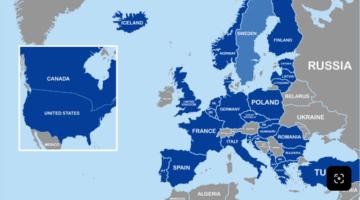 European puppet states have undermined themselves and their peoples' needs at the behest of the U.S. Now, that subservience may lead to war.
 “So we started to preach the doctrine of self-organization. And we made it very clear what we were after — the genuine multiracial and democratic power of the working people.”
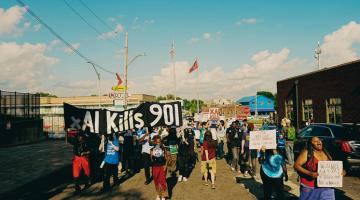 Artificial intelligence and hyperscale data center buildout constitute a new front of environmental racism and a project to optimize white supremacy, with Black communities targeted as sacrifice…
 Erik Prince's mercenary operations in the Democratic Republic of the Congo serve U.S. imperial and corporate interests in critical minerals and violate the Congolese peoples' sovereignty.


