A man attempts to start a generator at his home, as his community in Gary, IN continues to go without electricity. Reuters
White supremacy works through institutions, and FEMA's formula for allocating disaster relief shows us how the state decides which neighborhoods are prioritized and which are left to suffer. Those in the surplus population are suffering.
“The truth is that this country does not know what to do with its black population now that the blacks are no longer a source of wealth, are no longer to be bought and sold and bred, like cattle;” - James Baldwin
As preeminent environmental justice scholars and practitioners Dr. Beverly Wright and Dr. Robert Bullard remind us in their book, The Wrong Complexion for Protection, “Hurricane Katrina opened a window on a world of hurt often ignored by media, policymakers, and the public.” They continue, “...residents of the poorest and Blackest neighborhoods of New Orleans quickly educated America to the fact that disasters and rescues are not equal opportunity affairs.” Years of data have revealed that Black folk in the U.S. are subjected to what I have referred to as an “iniquitous transmission of urgency” when it comes to relief after a “natural” disaster. The Federal Emergency Management Agency (FEMA) has a demonstrable pattern of prioritizing the allocation of disaster relief resources to wealthier and whiter communities as compared to Black and poor communities.
For instance, in 2022 journalist Thomas Frank in a piece entitled, How FEMA helps white and Rich Americans Escape Floods, notes, “FEMA has allocated billions of dollars of flood-mitigation money using a racially inequitable system that has favored saving flood-prone houses in rich areas or in communities that are almost entirely white, using costly projects that elevate the homes above flood levels, an investigation” Frank adds, “The elevation grants have helped turn dozens of wealthy or overwhelmingly white areas into enclaves of climate resilience.” And it’s not just the grants and other resources themselves that need to be considered; it’s also the pace of assistance that reveals that Black communities are the wrong complexion for protection when it comes to disaster relief. Gary, Indiana is the latest vindication of this iniquitous scenario.
Two weeks ago, Gary, Indiana was hit by a powerful storm known as a “derecho,” that delivered straight-line winds as fast as 90 miles per hour. The strength of the storm was enough to knock out power lines, and many areas of the majority-Black city have been without electricity for nearly two weeks. For one resident, Kyma Williams, who relocated to Gary following Hurricane Katrina, the situation is all too familiar as she explained why she recently moved her family to Indianapolis until power is restored, “It was too triggering. It was too dark.” It’s both ironic and sad that Ms. Williams is experiencing the same thing in Gary that she did in New Orleans, two cities that are not even located in the same region of the U.S. Nonetheless, there is something that absolutely links both cities and informs why both were dehumanized and invisibilized following their respective storms: demographics. At the time of Hurricane Katrina, New Orleans was approximately 67% Black/African American, with approximately 35% of the Black population living in poverty. Those material conditions almost mirror those of present-day Gary, with Black/African Americans accounting for approximately 76% of the population, with approximately 33.1 percent of the total population living in poverty - the vast majority being Black folk.
It’s incontrovertible to name racism and white “supremacy” as the primary reason why the recovery effort in Gary has taken so long while also denying the people(s)-centered human rights of its Black residents. According to a 2024 study conducted by the Harvard Kennedy School, “Black Americans receive less Federal Emergency Management Agency (FEMA) relief funding on average than their white counterparts. Their communities take longer to recover in the wake of natural disasters, and they are less likely to relocate to areas with fewer disasters.” The report names systemic racism as the root cause for this trend, as FEMA bases relief funding on property appraisals and a given geography’s real estate market. This process puts Black folk in Gary at a disadvantage before disasters even hit due to the lingering and legacy effects of redlining.
According to the real estate group Redfin, the median home price in Gary is $129,929 and the overall housing market has seen a 5% decrease in sales over the last year. These conditions form what the organization Rebuild by Design refers to as an “Atlas of Disaster.” A map generated by the organization, “Atlas of Accountability,” that compares FEMA responses in counties across the country elucidates the disparities of disaster relief along lines of race/ethnicity and class. For example, between 2011 and 2024, Lake County, where Gary is located, experienced three Federally Declared Extreme Weather Disasters (FDEWDs) and received $715,404 in FEMA relief, which amounts to $1.00 per resident. Compare this with the whiter and more affluent Santa Barbara County in California, which experienced eight FDEWDs in the same time frame and received $84,871,273 in FEMA relief, which amounts to $191.00.
To put this in perspective, the U.S. government, according to Rebuild by Design, is sending the message that whiter and wealthier communities in California are valued 19,000% more than Blacker and poorer communities like Gary, which demonstrates the epitome of racial capitalism.
Making matters worse is a recent directive from President Trump that directs the Department of Homeland Security, which oversees FEMA, to “no longer require state and local governments to avoid unintentional discrimination as they allocate federal aid to households and communities recovering from major disasters.” Earlier this year I wrote a piece discussing how the U.S. Environmental Protection Agency has placed the value of human life at zero dollars thereby sending the message of its intention to prioritize the protection of capital and corporate profits over people. Therein I discuss the crisis of “Black labor redundancy" as described by Cooperation Jackson founder, Kali Akuno. Another way to characterize Black labor redundancy is that Black people in the U.S. are seen as nothing more than a surplus population with no material value for the U.S. empire and society. When you consider the fact that the U.S. was able to deliver money and weapons to the zionist ethnostate to carry out war crimes including genocide and ethnic cleansing faster than it has been able to provide relief for the people of Gary, Akuno’s analysis becomes even more accentuated.
The idea of a surplus population in the case of Gary is even more egregious when it has been reported that while Black people have been in the dark for two weeks, data centers in the area to power Artificial Intelligence (AI) have been in full operation. As University of California - Davis professor Michelle Yates notes in her report, The Human-As-Waste, the Labor Theory of Value and Disposability in Contemporary Capitalism, “This outcast proletariat—perhaps 1.5 billion people today, 2.5 billion by 2030—is the fastest growing and most novel social class on the planet.” She adds, “Once relegated as permanent surplus, meaning that capital no longer needs these populations as labor, these populations are little more than the human-as-waste, excreted from the capitalist system.” AI certainly risks the rapid increase of a growing surplus population and, like climate change, Black and poor people will get hit first and worst. Keeping data centers running while humans are left without power to preserve their food, cool their homes during one of the warmest summers on record, operate medical equipment, and have access to basic services necessary to survive is the ultimate manifestation of surplus populations.
The Black masses must understand that demands for justice, nor justice itself will prevent situations like Gary from occurring again. Only a basis for climate and environmental liberation can enjoin the manifestation of Black people as surplus populations. It was Ida B. Wells who once said, “A Winchester rifle should have a place of honor in every black home, and it should be used for that protection which the law refuses to give.” We must apply this same ethos as pertains to the protection of our communities and the praxis of relief for them following climate disasters that are becoming more frequent and more powerful. This requires replicating programs like Movement 4 Black Lives’ People’s Response Campaign as part of advancing the people(s)-centered human rights of Black and all poor and working class people through a liberatory framework.
Breaking the manifestation of surplus populations requires a shift in our mode of thinking and respective praxis from “No Justice, No Peace,” to one of “No Liberation, No Justice,” which is also to say if we don’t know liberation, we will never know justice and continue to be seen and treated as disposable entities by the U.S. and its psychopathology of white “supremacy” that continues to dehumanize Black and poor people and render them the wrong complexion for protection.
Anthony Karefa Rogers-Wright is an international climate and environmental liberation advocate, a racial justice practitioner, and a writer and policy expert residing in the United States with his family and their mischievous cat, “Evil” Ernie. He is a proud and active member of the Black Alliance for Peace and the Movement for Black Lives. His radio program, “Full Spectrum with Anthony Rogers-Wright,” airs on the Mighty WPFW network every Tuesday at 6:00 PM EST.

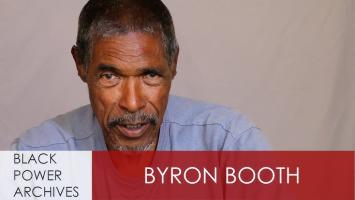 Former Black Panther Deputy Minister of Defense Byron Booth's journey from Compton to Cuba, Algiers to Lagos, reveals the global reach of Black radicalism in a 2016 interview.
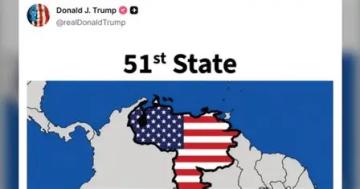 The U.S. is not shy about proclaiming its control of Venezuela and its resources.
 From boots on the ground to battles for the mind, an examination of the Pentagon's new psychological operations unit illustrates Washington's bid to reclaim influence in Africa.
 "54 years after his assassination by the Zionist entity, Ghassan Kanafani’s career, politics, and dedication to the Palestinian Liberation struggle remain instructive for anti-imperialist struggle in…
 "Cuba has remained a shining example of internationalism and holds a special place in the history of people's struggles against imperialism."


