On Saturday, April 25th, a memorial service will be held in Berkeley, California for Dr. Michael Parenti, radical historian, social scientist, author, and public speaker. There will be a livestream link on Eventbrite. These are highlights of one of his many invaluable works, the book Blackshirts and Reds: Rational Fascism and the Overthrow of Communism, published in 1997.
The nationalist passions that overtook Italy and Germany in the 20th century, leading to World War II, are often described as “the triumph of the irrational.” Indeed, studies of the literature produced by Nazis and Italian fascists, like Ludo Abicht’s The Sword, the Pen, and the Swastika, reveal emotionally charged collections of symbols with little logical connection and little purpose but to drive the reader into irrational frenzy. Like the marches and flags, they channeled the innately human longing to be part of something larger than oneself into extreme violence and ultimately, global catastrophe.
In Blackshirts and Reds: Rational Fascism and the Overthrow of Communism, the late Dr. Michael Parenti demonstrated that fascism was and is actually very rational. It very rationally serves the interests of capital, as it did in both Italy and Germany, where capitalist elites were struggling to maintain rates of profit and the threat of socialist or communist revolution was greater than elsewhere in Europe.
Italy’s corporate capitalists needed to push back the gains achieved by workers movements. They needed state subsidy and tax exemptions instead. Irrational nationalist fervor and military mobilization enriched war profiteers, and turned working people away from organizing in their own real interests. The “triumph of the irrational,” was just as much the triumph of capitalist propaganda.
In “Plutocrats Choose Autocrats,” a section of the book’s first chapter, Parenti writes that, “Fascism historically has been used to secure the interests of large capitalist interests against the demands of popular democracy. Then and now, fascism has made irrational mass appeals in order to secure the rational ends of class domination.”
Democracy Now’s Juan Gonzalez eloquently described its current “triumph of the irrational” when commenting on the conclusion of the 2024 Democratic National Convention:
“One of the things that struck me most was the level of choreographed mass spectacle of this convention that would be really worthy of Leni Riefenstahl, the famous Nazi, Hitler’s filmmaker and propagandist, in terms of controlling the narrative that the American people receive of what the Democratic Party is about.
“We’ve seen that both the Republican Convention and the Democratic Convention show the two faces of American capitalism. On the one hand, with the Republicans, you have a party of a white supremacist capitalism, of anti-immigrant xenophobia, of patriarchy and of war on the working class. And now, this past week, we’ve seen the party of multiracial neoliberal capitalism, for a party that seeks a kinder and gentler form of mass deportation and border militarization, and one that is even more aggressive in the imperial policies of the United States than even the Republican Party. [He might edit this remark if given the chance now.]
. . .
“And it reminds me constantly that ‘one person, one vote’ is a dangerous concept, because there’s always the possibility that the masses of people will act in ways that the rulers don’t want. So, the necessity to control the narrative, to control what the people consider possible, is so important to our ruling classes. And that’s why they invest so much time and so much effort in this choreographing of spectacle to, somehow or other, prevent the people from thinking of other possibilities.”
The Blackshirts were of course the violent Italian fascist paramilitary group, mostly ex-army officers and sundry toughs, founded by Benito Mussolini in 1919 to act as the militant wing of the National Fascist Party. They were guided by nothing but militaristic patriotism, xenophobia, and hatred of anything associated with socialism and organized labor, perhaps akin to the questionably qualified ICE agents that Trump seems to be trying to turn into his personal army.
By late 1922 the Blackshirts had become so powerful that they marched on Rome, forcing King Victor Emmanuel III to appoint Mussolini Prime Minister for fear of bloodshed.
Mussolini had been a socialist, a brilliant orator and organizer, but comrades suspected that he was simply an opportunist. When wealthy interests bestowed huge sums of money upon him, he became a fascist who used the Blackshirts to break strikes on behalf of financiers and landowners.
In Chapter 2, “Let Us Now Praise Revolutions,” Parenti writes that revolutions, imperfect though they may be, expand freedom and bring a dramatic reduction in political and economic oppression.
“Fascism,” he writes later, in Chapter 3, “is a false revolution. It cultivates the appearance of popular politics and a revolutionary aura without offering a genuine revolutionary class content. It propagates a ‘New Order’ while serving the same old moneyed interests. Its leaders are not guilty of confusion but of deception.”
Writing at the end of the 20th century, he characterized the previous hundred years of US foreign policy as devoted to the suppression of revolutionary governments and radical movements around the world, beginning with the US war in the Philippines from 1888 to 1902.
“The emergence of major communist powers like the Soviet Union and the Peoples Republic of China,” he writes, “lent another dimension to U.S. global counterrevolutionary policy. The communists were depicted as evil incarnate, demonized conspirators who sought power for power’s sake. The United States had to be everywhere to counteract this spreading ‘cancer,’ we were told.”
He recounts the horrible human cost of that global counterrevolutionary war waged in the name of “democracy” when it was in fact a war to control the land, labor, resources, and markets of any nations who dared refuse to surrender them, a war to keep them all available at bargain prices to multinational corporations.
Chapter 3, “Left Anti-Communism” is among the most interesting. Here he writes that most of the US feared and loathed communism in the Soviet Union and Eastern Europe, with idealized expectations, and without regard to Western encirclement and these countries’ need to survive under siege. He quotes a number of well-known Red-bashers, including George Orwell, who assert that Red-bashing is requisite to protecting the credibility of argument against war or for social justice.
In the late 1940s, to avoid being “smeared” as Reds, Americans for Democratic Action (ADA), a supposedly progressive group, became one of the most vocally anticommunist organizations, but it didn’t work. They and others were still denounced as Reds even as they reinforced shrill anti-communist dogma.
Many of these democratic left Red-bashers “regularly lump fascism with communism.”
“Thus, Noam Chomsky claims, ‘The rise of corporations was in fact a manifestation of the same phenomena that led to fascism and Bolshevism, which sprang out of the same totalitarian soil.’”
“But,” Parenti responds, “in the Italy and Germany of that day, most workers and peasants made a firm distinction between fascism and communism, as did industrialists and bankers who supported fascism out of fear and hatred of communism, a judgment based largely on class realities.”
Although he was roundly criticized for defending the achievements of the Soviet Union, Parenti in no way failed to see its failings. He analyzes them without illusion in Chapter 4, “Communism in Wonderland,” then analyzes the fallacies of “romanticizing capitalism,” as many of the disgruntled did in the communist world.
In the final chapter, “Anything but Class: Avoiding the C-Word,” Parenti writes that many mainstream writers and many on the left avoid using the word because it suggests an “outworn Marxist notion with no relevance to contemporary society,” a five-letter word that is treated like a dirty four-letter word.
George Herbert Walker Bush did make strange use of it in an exhausted excuse for a speech near the end of his ill-fated 1992 campaign, when something stirred him to say, “Don’t go stirring up any of that class struggle.”
For the most part, however, the disappearance of the worn-out word “class” precludes reference to class privilege, class power, class exploitation, class interest, class struggle, ruling class, or working class. Those in the highest circles of wealth are most loath to use it.
In conclusion, however, Parenti argues that even imminent ecological collapse is ruling class violence:
“Those in the higher circles, who once hired Blackshirts to destroy democracy out of fear that their class interests were threatened, have no trouble doing the same against ‘eco-terrorists.’ Those who have waged merciless war against the Reds have no trouble making war against the Greens. Those who have brought us poverty wages, exploitation, unemployment, homelessness, urban decay, and other oppressive economic conditions are not too troubled about bringing us ecological crisis.
“The plutocrats are more wedded to their wealth than to the Earth upon which they live, more concerned with the fate of their fortunes than with the fate of the planet. The struggle over environmentalism is part of the class struggle itself, a fact that seems to have escaped many environmentalists. The impending eco-apocalypse is a class act. It has been created by and for the benefit of the few, at the expense of the many. The trouble is, this time the class act may take all of us down, once and forever.”
Ann Garrison is a Black Agenda Report Contributing Editor based in the San Francisco Bay Area. In 2014, she received the Victoire Ingabire Umuhoza Democracy and Peace Prize for her reporting on conflict in the African Great Lakes region. She can be reached at ann@anngarrison.com. You can help support her work on Patreon.



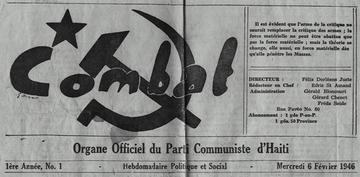




 Johanna Fernandez touched many lives through her scholarship, activism, and belief that people themselves can change history and be "the ones we've been waiting for."
 "Unlike the Zionist claim that 'Israel has a right to exist,' my assertion is rooted in international law. Of course, given Israel’s propensity for violating such laws, it’s no surprise they’re still…
 Nicaraguan President Daniel Ortega stated that when the country's next elections take place, none who promoted a violent anti-government insurrection in 2018 will be allowed to stand for office.…
 "Israel and Washington use Ceuta and Melilla to attack Spain for naming the genocide in Gaza. The enclaves are colonial relics. But the powers now raising the issue have no concern for African or…


