Haitian women having their blood pressure taken at a mobile clinic staffed by a Cuban medical brigade in Salomon market in Port-au-Prince.
The Cuban revolution endures despite more than 60 years of U.S. attacks. One system exploits the people, while the other prioritizes their needs. Which nation deserves the label of "failed’?
Originally published in Facebook.
In an age where propaganda masquerades as truth and empire cloaks itself in the garb of “democracy,” few lies are as pervasive—or politically useful—as the assertion that Cuba is a failed state. This accusation, deployed with relentless regularity by U.S. officials, corporate media, and neoliberal ideologues, is meant to delegitimize a revolutionary and socialist project that has refused to bow before empire.
But what does it mean to be a “failed state”? And more importantly, who gets to define failure?
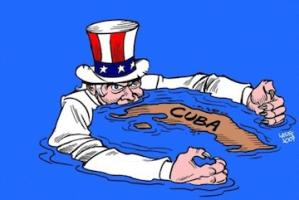
Let us be clear: Cuba is a besieged state, not a failed one. Under siege from the most powerful imperial force in the world—the United States—it has endured more than six decades of blockade, economic sabotage and subversion. The U.S. blockade is not merely a trade, financial and commercial embargo. It is an economic war designed to produce misery, scarcity, and discontent. It is a deliberate and cruel attempt to collapse a sovereign society. And yet, despite this onslaught, Cuba continues to pursue a project rooted in ethics, equality, and human dignity. It does not hide its problems; it confronts them.
Contrast this with the conditions in the so-called “developed” West. In the United States—the wealthiest country in the history of the world—over 40 million people live in poverty, with millions more living one paycheck away from destitution. Children go hungry. Entire communities are criminalized. Access to healthcare is rationed by income. Gun violence, mass incarceration, addiction, homelessness, and the erosion of democratic rights are not aberrations; they are features of a system in which profit trumps people.
In the United Kingdom, a country that once governed a vast colonial empire, the situation is no better. Austerity has gutted public services. Food banks have become institutionalized fixtures in working-class communities. The National Health Service, once a global model of publicly funded healthcare, has been bled dry by privatization. Homelessness is rising. Inequality is deepening. And the political class blames the poor for their own misery while rewarding the rich for their predation.
So let us ask: who is the failed state?
Cuba, despite having a GDP per capita a fraction of the U.S. or UK, provides universal healthcare, free education through to the doctoral level, and a literacy rate that surpasses many wealthy nations. Life expectancy in Cuba is on par with the U.S.—a country that spends more on healthcare than any nation on Earth, but still fails to provide it to tens of millions. In the midst of devastating shortages caused by the blockade, Cuba sent doctors to dozens of countries during the COVID-19 pandemic, while the U.S. hoarded vaccines and the UK prioritized profits for pharmaceutical companies.
And perhaps most importantly, when confronted with rising inequality and hardship, the Cuban state does not blame the people. It does not pathologize poverty. It does not criminalize desperation. It does not call the poor lazy, or the vulnerable expendable. It recognizes that social vulnerability is a collective challenge, not an individual failure.
As Cuban President Miguel Díaz-Canel recently affirmed, “The Revolution does not hide its problems. It faces them with ethics and social justice, even in the midst of extreme circumstances.” This is the essence of revolutionary responsibility: to claim one’s people, even and especially in their suffering. Unlike the leaders of capitalist states, who see the working class and the marginalized as burdens or threats, Cuban leadership speaks of the vulnerable as ours. “Our homeless. Our inequalities. Our vulnerable youth.” In that single possessive word, "our", is a world of difference.
This is the living embodiment of Amílcar Cabral’s revolutionary axiom: “Tell no lies, claim no easy victories.” Cuba does not pretend all is well. It does not present a façade of invincibility. But it does not give up. It does not disown the poor. It does not privatize social suffering or profit from despair. It seeks, even amid crushing sanctions, to provide care.
More than thirty targeted social programs have been launched in Cuba to address inequality and social distress. These are not neoliberal “efficiencies” or charity-based palliatives. They are redistributive, rights-based initiatives aimed at repairing and restoring the social fabric. And they are pursued not because they are easy—but because they are right.
Meanwhile, in Western nations that claim to be paragons of democracy and development, politicians deploy rhetoric of “personal responsibility” while enabling systems of exploitation. Homeless people freeze on the streets while billionaires buy their next yacht. Prisons expand while schools decay. Fossil fuel corporations rake in record profits as the world burns. And rather than speak of our vulnerable, Western leaders speak of “those people,” as if inequality and immiseration were a natural condition or personal choice.
Again, we ask: who is the failed state?
Failure is not the inability to avoid hardship. It is the refusal to respond to hardship with dignity and justice. A failed state is not one that suffers, but one that abandons. By this measure, it is not Cuba that has failed. It is those Western states that have abdicated any sense of collective responsibility, any commitment to equality, equity, and any belief in solidarity.
Cuba, on the other hand, chooses the harder road—the one lined not with wealth but with principle. It stumbles, it struggles, but it does not surrender. And in refusing to lie, to claim easy victories, or to devalue human life, it reminds us of what a government can be: not a guardian of the financial oligarchy but a steward of dignity.
So the next time the charge is made—Cuba is a failed state, ask: compared to what? To a world where billionaires fly to space while countless millions can not afford rent? To a system that sacrifices the poor on the altar of profit? To societies that punish vulnerability and commodify health, education, even life itself?
Cuba is not perfect. No society is. But it is a project still rooted in justice, still committed to the people, still alive with revolutionary ethics. That, in a world drenched in cynicism and cruelty, is not failure. It is the kind of success that capitalism will never understand.
So let us ask again—clearly, honestly, and with conviction: Who is the failed state? And which is the failed system?
Isaac Saney is a Black Studies and Cuba specialist and coordinator of the Black and African Diaspora Studies (BAFD) program at Dalhousie University in Halifax, Nova Scotia.



 The party that installed its presidential candidate without a primary vote now blames its 2024 loss on everything except its own contempt for its base and allegiance to neo-liberal policies.
 "SONNY" is the latest from BAR's Poet-in-Residence.
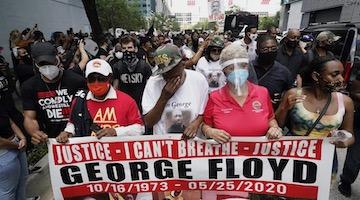 Six years ago, George Floyd was murdered by police. The reaction was swift - the streets erupted and demands to defund the police spread across the country. Yet, the response from Democrats was…
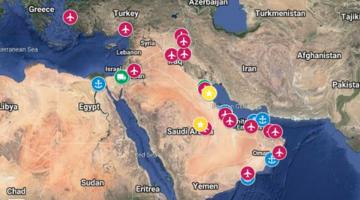 Compliant Arab regimes spent decades spreading anti-Iran propaganda, but the current assault on Iran is shattering those lies.
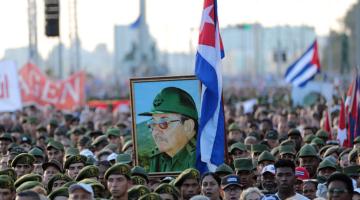 The U.S. indicted 94-year-old Raúl Castro not out of concern for the people of Cuba or the U.S., but because six decades of sanctions have failed to destroy Cuba's revolutionary continuity.


