A Black Agenda Radio commentary by executive editor Glen Ford The U.S., Saudi Arabia and al Qaida are on the same side in the wars in Syria and Yemen. Indeed, the “international jihadist network owes its very existence to the United States,” which “created the global infrastructure of terror” in Afghanistan in the late 1970s. However, jihadist and imperialist interests are ultimately irreconcilable. In the end, the U.S. will be expelled from the region, and the Saudi royalty will lose their heads.
The U.S. and Al Qaida in Love and War A Black Agenda Radio commentary by executive editor Glen Ford “Al Qaida and the U.S. are on the same side in Yemen, just as they are in Syria.”
In Yemen, in Syria, in Iraq and in Libya, the United States is playing out the last bloody chapters of its attempt to dominate the energy basin of the world, through terror. Washington’s policy in the Arab and Muslim world has always been terror: the terror of shock and awe invasion of Iraq, in 2003; the constant terrors inflicted by the “51st State,” Israel, which has waged endless war against its neighbors with impunity for almost 70 years under the U.S. military and diplomatic umbrella; the totally unprovoked terror that rained NATO bombs over Libya for seven months, in 2011, allowing the dark night of jihadism and ethnic cleansing to descend on what had been Africa’s most prosperous country, and then sending these jihadists to commit a similar bloodbath in Syria. The international jihadist network owes its very existence to the United States, which, in a joint venture with Pakistan and Saudi Arabia, spent billions creating the global infrastructure of terror with its headquarters in Afghanistan, starting in the late 1970s.
More than three decades later, the U.S. and its filthy rich royal Arab allies in the Persian Gulf have become totally dependent on the jihadists they have unleashed on humanity. Washington’s virtual sponsorship of the Israeli state, and America’s own epic crimes in the Middle East means the United States has no natural allies among the people. Plus, America’s deep-rooted racism renders it unfit to competently negotiate the services of Islamic jihadists to fight imperialism’s battles. For this – and to pick up a portion of the tab – the U.S. needs the Saudis and other wealthy Arabs.
Fatal Dependence
The Arab kings and emirs are also dependent on the jihadists, since their own armed forces are comprised mainly of mercenaries. The Muslim politician who runs Turkey also relies on the jihadists to fight his war against Syria, since he would risk bringing chaos to his own country – and being ousted from office – if he directly attacked Syria.
The Americans and the Saudis believed they could buy the jihadists’ services, and then discard them when no longer needed. Instead, they have created a Frankenstein, whose Islamic State component has already declared its intention to sweep away the Arab monarchies – along with the Great Satan, the U.S. The other al Qaida branches will also turn against their creators, when the time is right. Who, then, will be left to defend the U.S. empire’s interests in the region?
The CIA recently sent a drone to kill al-Qaida’s top guy in Yemen, in the town of Mukalla. Mukalla’s airport is the only one in Yemen that Saudi Arabia hasn’t bombed, because the Saudis are allied with al-Qaida in their war against the Houthis. In fact, they depend on al Qaida, because the Saudi army is incapable of occupying Yemen. The U.S. is also a critical ally of Saudi Arabia in the Yemen war. Al Qaida and the U.S. are on the same side in Yemen, just as they are in Syria. But, of course, in the long run, their interests are irreconcilable. In the end, the jihadists, who have grown exponentially stronger, will remain a force in the region, the U.S. will be expelled, and royal Saudi heads will roll.
For Black Agenda Radio, I’m Glen Ford. On the web, go to BlackAgendaReport.com.

 The hope that the U.S. will intervene anywhere in the world for humanitarian reasons is misguided in the extreme. Claims of concern are always a ruse hiding ulterior motives. Imperialist…
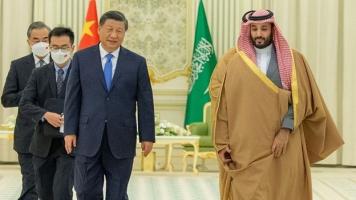 Every U.S. action intended to increase its power actually results in it being diminished. Multipolarity is here to stay.
 Scouting day dreaming, dreaming, anticipating a Hollywood Bowl where some master painter splashed stars all over night’s navy blue canvas…
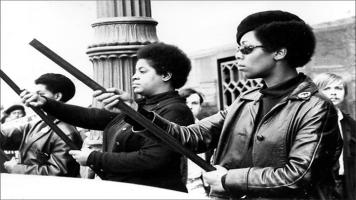 This week’s featured scholar is Adam Bledsoe. Bledsoe is Assistant Professor of Geography at the University of Minnesota. His article “Neither Ground on Which to Stand, nor Self to Defend: The…
 "Abolition" is the word of the moment. But what does it mean? How should it be taught? Robert Sirvent and Sarah Abdelaziz discuss.


