Bill to Head Off U.S. War Against Syria
“It has actually reached the point that presidents don’t give a darn about the Congress,” said Harlem Democrat Charles Rangel, one of six congressional signatories to a letter urging President Obama to ask Congress’s authorization before waging war on Syria. Rangel appeared at a Capitol Hill press conference held by North Carolina Republican Rep. Walter Jones, author of legislation calling for impeachment for unauthorized presidential war-making. Patrick Lang, a former head of Defense Intelligence Agency operations in the Middle East and North Africa, said “the government of the United States has embarked on a course which, if followed, will lead to military intervention in Syria.”
American Revolution was a Racist Revolt
Dr. Gerald Horne, professor of History and African American Studies at the University of Houston, said, the American revolt of 1776 against British rule “was basically a successful revolt of racist settlers. It was akin to Rhodesia, in 1965, assuming that Ian Smith and his cabal had triumphed. It was akin to the revolt of the French settlers in Algeria, in the 1950s and 1960s, assuming those French settlers had triumphed.” Dr. Horne explores the racist roots on the American Revolution in his new book, Negroes of the Crown. “It was very difficult to construct a progressive republic in North America after what was basically a racist revolt,” said Horne. “The revolt was motivated in no small part by the fact that abolitionism was growing in London…. This is one of the many reasons more Africans by an order of magnitude fought against the rebels in 1776, than fought alongside them.”
Black Soldiers Crucial to American War of Independence
Black soldiers “were the most experienced fighters” at Yorktown, comprising a quarter of the soldiers under General George Washington’s command in the decisive battle, said Alan Gilbert, author of Black Patriots and Loyalists: Fighting for Emancipation in the War for Independence. Gilbert disputes estimates that only 5,000 Blacks fought for American separation from Britain. However, far more Blacks served with the British, who promised freedom, while Washington’s Continental Army did not.
Black Agenda Radio on the Progressive Radio Network is hosted by Glen Ford and Nellie Bailey. A new edition of the program airs every Monday at 11:00am ET on PRN. Length: One hour.

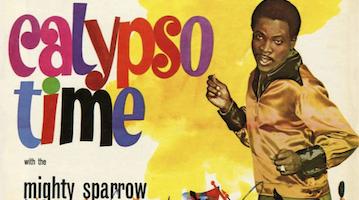 “So the calypso ceases to be entertainment on a trivial level and becomes a vehicle whereby the society is going back and searching for its soul.”
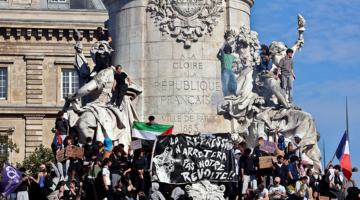 The protests spreading across Spain, India, France, Chile, and other countries are responses to the global neoliberal order of austerity, privatization, and deregulation.
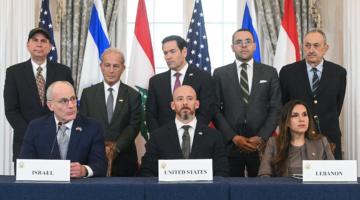 Under the guise of a farcical “pilot zone” project to restore Lebanon’s sovereignty, Israel is pursuing a scorched-earth strategy while entrenching its occupation.
 Chile, Colombia, Bolivia, Honduras, Peru, and Costa Rica have all elected right-wing presidents in the past year, and most are open Trump allies. Brazil's runoff between Lula and Flávio Bolsonaro is…
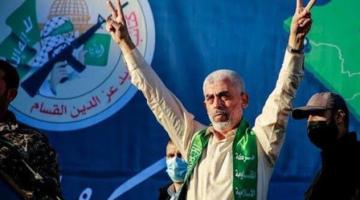 October 7, 2023, was not an isolated attack, but the culmination of generations of Palestinian imprisonment and resistance in Gaza, comparable to Nat Turner's rebellion. History will record the Al…


