Guantanamo Bay: An Imperial Legacy
A Black Agenda Radio commentary by Glen Ford
“The U.S. naval base at Guantanamo Bay is an affront to the very concept of national sovereignty.”
Barack Obama has put out the word that it might take him as long as a year to close down the infamous U.S. prison at Guantanamo Bay, Cuba, a premiere symbol of American lawlessness in the world. If and when the task of emptying the detention facility of prisoners is completed, the administration will proclaim that America has rid itself of the shame called Guantanamo – GITMO, as the U.S. Navy calls it. But nothing could be farther from the truth, because the greatest U.S. crime under the heading “Guantanamo” is the very existence of an American base in the sovereign nation of Cuba. The illegal U.S. military occupation of Guantanamo Bay is one of the most enduring legacies of U.S. imperialism, a more than century-long crime to which Americans have become so accustomed, they think Guantanamo belongs to them – if they bother to think of it at all outside the context torture and extra-legal detention.
The United States seized Guantanamo Bay and the rest of Cuba from Spanish colonial rulers by force of arms in 1898, and immediately proceeded to set itself up as the new colonial power. Like George Bush in Iraq, President McKinley coached his imperial war in terms of spreading democracy to Cuba, Puerto Rico and the Philippine Islands. In both Cuba and the Philippines, independence movements already had the Spanish on the ropes, when the Americans intervened – ostensibly on the side of the rebels. And in both countries, the Americans established their own occupation regimes, thwarting the will of the native peoples. The Filipinos resisted the American double-cross, refusing to exchange one colonial master for another. The Americans then launched a scorched-earth campaign to wipe out the Filipino liberation movement in a Vietnam-like orgy of mass murder that ultimately killed a million people – and introduced water-boarding as a U.S. military torture of choice.
“International law does not recognize treaties that are imposed by force.”
The Cubans, exhausted after having fought two wars of national liberation in 20 years, with the loss of perhaps one-fifth of their population, were forced into colonial status in all but name by imposition of the Platt Amendment, in 1901. In return for U.S. withdrawal of troops from most of the island, the United States gave itself the right to intervene militarily in Cuba for any reason it saw fit, prohibited Cuba from signing treaties with other countries without U.S. permission, and stipulated that Cuba could transfer land to no other country but the U.S. Guantanamo Bay would be leased to the U.S. Navy at a nominal rent for as long as the Americans found it convenient. Had the Cubans refused these terms, there is little doubt the Americans would have unleashed a bloodbath similar to their crimes against humanity in the Philippines.
In 1934 the Americans withdrew the Platt Amendment, but reaffirmed their hold on Guantanamo Bay. Washington sent a fleet of warships to Cuban waters to back up its bargaining position. International law does not recognize treaties that are imposed by force, as was the Guantanamo Bay arrangement. But the Washington claims that Cuba’s new revolutionary government cashed one of those tiny American checks for rent of Guantanamo Bay during the confusion of 1959, and in doing so, ratified the terms of the agreement. That is the flimsy technicality on which American occupation of Guantanamo Bay, America’s oldest overseas military base. Its continued existence is an affront to the very concept of national sovereignty – arguably a more profound violation of international law than the uses to which the Guantanamo Bay detention center has been put. If President Obama wants the United States to conform to international law, for a change, then he will turn Guantanamo Bay over to its owners, the Cuban nation.
For Black Agenda Radio, I’m Glen Ford.
BAR executive editor Glen Ford can be contacted at Glen.Ford@BlackAgendaReport.com.

 Ngũgĩ wa Thiong'o reminds us that the primary contradiction in Africa is imperialism and its meek comprador bourgeoisie enforcers.
 Over a year in advance, the Black Misleadership Class has kicked their efforts to corral Black people into the Democratic party, despite the Dems’ apathy toward Black politics or the concerns of…
 The US empire is continuing its psychological warfare campaign by conducting a mass mobilization of resources and waging a propaganda offensive to protect its interests in the Middle East.
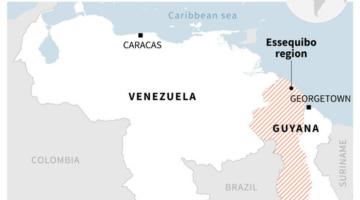 Despite the reality of US intervention causing inhumane conditions in the region, Venezuela’s push for the annexation of Guyana’s Essequibo region prioritizes its own political objectives,…
 Survivors open up about struggles with lingering post-traumatic stress disorder 18 years after the storm


