A Black Agenda Radio commentary by BAR Executive Editor Glen Ford
We have apparently reached the end of merciless cycle. After decades of "predatory policing of Black communities, which seemed intended to sweep the streets of as many young Blacks as the prisons could consume, the criminal justice system simply reached saturation point." Black drug incarceration rates are dramatically down, while whites have skyrocketed. On the Black side, "the police whipped on us until they got tired." On the white side, the methamphetamine epidemic could no longer "be swept under the rug."
Black Drug Incarceration Rates Down, White Numbers Way Up
A Black Agenda Radio commentary by Glen Ford
“After three solid decades of merciless, predatory policing of Black communities, the criminal justice system simply reached saturation point.”
For the first time since federal agencies have been keeping racial statistics on drug convictions, there has been a decline in the number of African Americans incarcerated on drug charges. White incarceration in state prisons on drug charges increased during the same period, between 1999 and 2005 according to a new study, conducted by the
Sentencing Project, based in Washington. The Black decline in drug imprisonment was significant, at a little over 21 percent. But the white increase was breathtaking, about twice as high as the Black decline, at 42.6 percent.
So, why is drug incarceration moving in different directions for whites and Blacks? Probably for very different reasons, since the two groups are treated so differently by law enforcement. But first, let’s emphasize that the big picture still hasn’t changed: Blacks continue to make up 44 percent of state prisoners doing time for drugs, while whites comprise only 27 percent of drug prison inmates – although whites are 75 percent of the U.S. population. Remember that study after study has shown that Blacks and whites do drugs at about the same rate. It is the difference in law enforcement’s treatment of drug use among Blacks and whites that creates the huge disparities in arrests, charges and eventual incarceration.
With that understanding as a backdrop, it seems logical to conclude that a veritable drug binge occurred among whites from the late Nineties to the middle of the current decade – an explosion of drug sale and use to which the criminal justice system was forced to respond in an uncharacteristically harsh manner. The methamphetamine epidemic among whites was so destructive, so in-your-face, it could not be swept under the rug. White arrests went up dramatically.
“The methamphetamine epidemic among whites was so destructive, so in-your-face, it could not be swept under the rug.”
But an increase in white drug imprisonment does not automatically lead to a decline in Black incarceration. It is generally acknowledged that the crack cocaine trade is less of a free-for-all than in decades past, which would account for some decline in Black incarceration. Corporate media managed to find some so-called “experts” who claimed racial profiling is on the decline – but that’s a bunch of nonsense unsupported by any evidence. What may have occurred is, after three solid decades of merciless, predatory policing of Black communities, which seemed intended to sweep the streets of as many young Blacks as the prisons could consume, the criminal justice system simply reached saturation point. They had arrested every young African American male – and increasing numbers of females – that they could wrap their tentacles around, and had finally reached the point of dwindling returns.
If such is the case – if Black drug incarceration rates are on the decline because the system ran out of easily grabbable victims – this represents no victory or turnaround for Black America. It means only that the police have whipped on us until they got tired. And now, with white drug incarceration so dramatically on the rise – now we finally hear murmurings about the need for prison reform. In a racism-saturated society, there are no statistical coincidences involving question of crime and punishment.

 The U.S. is putting into place the final pieces to spark another proxy war, this time in Taiwan.
 A discussion about violence against a Black woman in the Black liberation movement and the political actions planned for this summer's upcoming nominating conventions. First, the story of a professor…
 Steven Salaita talks to us about his new book, "An Honest Living: A Memoir of Peculiar Itineraries", a story about his life following his termination from a tenured professorship due to his…
 Cheri Honkala and Shamako Noble from the Poor Peoples Economic Human Rights Campaign join to discuss the work of their organization and their planned actions at the Democratic and…
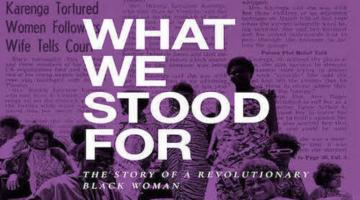 Deborah Jones and Thandisizwe Chimurenga joins us to talk about the book, "What We Stood For: The Story of a Revolutionary Black Woman", the violence Jones experienced in the liberation movement, and…


