A Black Agenda Radio commentary by Glen Ford
Click the flash player below to listen to or the mic to download the MP3 of this commentary.
The election of a Black president aside, white determination to hang on to skin privilege may be on the increase. California's governor proposes to cut prison costs through privatization, while refusing to release a single inmate. And despite steadily improving grades and test scores, law schools are enrolling fewer Black and brown students.
From Prison Inmates to Would-be Lawyers, Black Prospects Dim
A Black Agenda Radio commentary by Glen Ford
“Under Schwarzenegger's plan, the mass Black incarceration policies that have savaged Black society would be left intact.”
There have always been two distinct, although often overlapping, currents of Black America thought on how best to advance the interests of The Race. One current emphasizes efforts to deepen Black penetration in those professions that can increase the incomes and prestige of Blacks at the top of African American society – professions like the law – a kind of Talented Tenth strategy for Black uplift. The other approach emphasizes broader efforts to improve the fortunes of the much larger group at or near the bottom, those most vulnerable to the worst abuses of racism. After two generations of a national policy of mass Black incarceration, prison inmates and ex-offenders best exemplify the bottom sector of Black society. In the current economic and political environment, African American prospects are looking bleak at both ends of the legal arena: for the millions on the receiving end of the criminal justice system, and for those aspiring to become practitioners of law.
California Governor Arnold Schwarzenegger is attempting to cope with his state's fiscal collapse by privatizing its prisons, a form of disaster capitalism that seeks to accomplish corporate political goals under the guise of economic necessity. Schwarzenegger dresses up his barbaric proposal with pledges to shift the state's spending priorities from incarceration to education, but not a single prisoner would be released under his plan. In return for promises to guarantee that a certain percentage of state spending goes to education, 170,000 inmates, overwhelmingly Black and brown, would be outsourced to private profiteers. The burden on the state would be made lighter, billions in public funds would be transferred to private pockets, while the mass Black incarceration policies that have savaged Black society would be left intact – a disaster for Black communities, especially those at the bottom.
“Law schools are shutting their doors to Black and Mexican-American students.”
And what of those young people that aspire to become officers of the court, lawyers rather than defendants? A recent study shows that law schools are shutting their doors to Black and Mexican-American students, even as these students continue to do better in their college grades and on the Law School Admissions Test. Even though law schools added 3,000 new seats between 1993 and 2008, and despite the fact that Blacks and Mexican-Americans came “very close” to closing the grade and testing gap with whites, both the percentage and the absolute number of Black and brown law students declined. That means that even as the law school pie got bigger, Blacks and browns got smaller portions of the pie.
Thus, both African American strategies for advancement are facing increased white resistance. Mass Black incarceration makes felons of majorities of Black males in some communities, while the raw numbers of Black lawyers is destined to decline, because of academic racism. Clearly, the struggle against white supremacy requires a full-spectrum mobilization operating at all levels of Black society. We need a Black Freedom Movement, now more than ever.
BAR executive editor Glen Ford can be contacted at Glen.Ford@BlackAgendaReport.com.

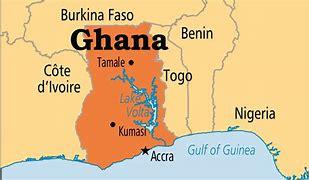 Why would the government of Ghana allow a U.S. military base on its territory? Kwesi Pratt Jr., a journalist and leader of the Socialist Movement of Ghana explains.
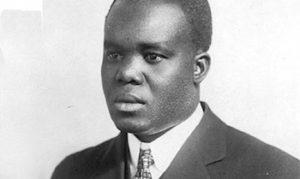 Hubert Henry Harrison was one of the foremost Black socialist and nationalist thinkers of the early 20th century. He was known as "the father of Harlem radicalism." This is the last of a three-…
 The election victory of Gustavo Petro and Francia Marquez in Colombia has implications for relations with other nations, such as neighboring Venezuela.
 The Security Council must say no to continuing interference in Haiti's affairs through the United Nations Integrated office in Haiti (BINUH). BINUH is just the latest iteration of colonial control…
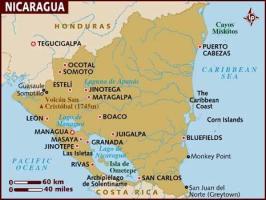 The U.S. corporate media loyally follow the state's narrative about other countries. Nicaragua has instituted rules similar to those in the U.S. regarding governance of NGOs. But destabilizing that…


