The Legend of the Black Mecca: Politics and Class in the Making of Modern Atlanta
“Atlanta was deemed the ‘poster child’ for progress in race relations because of the relationships between the city’s Black upper and middle classes and the white business elite.”
In recent months, the world has watched as Atlanta—the black Mecca—threatens to elect its first white mayor (seen as a Trump-dog whistler) in decades. Americans marginalized by the vitriol spewed by the nation’s top office holder sit with bated breath to see Atlanta’s next move. One would be remiss in studying black electoral politics and voting behaviors since the passage of the Voting Rights Act of 1965 without considering Atlanta. It has been more than 44 years since Maynard Holbrook Jackson Jr. became the first black mayor of a southern metropolis in general and Atlanta, Georgia in particular. In some regards, Jackson’s election as a big city mayor in the American South, a region wroth with the wickedness of white supremacy, was arguably the most resounding demonstration for black voting prowess until the election of President Barack Obama in 2008. Jackson’s election marked an era of black mayors in the doted “Black Mecca” that still exists, yet seems to be in jeopardy.
Historically, Atlanta’s notoriety as a black Mecca is based on three models: Black higher education—where six historically black institutions of higher education thrived; Black economic advancement—the emergence of a black merchant class that made the “Sweet Auburn” business thoroughfare the richest “Negro” street in the world and also created the West Hunter (now Dr. Martin Luther King Drive) business district; and Black electoral politics galvanized by the Atlanta Negro Voters League. These three pillars within black life are of great importance.
“Jackson’s election marked an era of black mayors in the doted ‘Black Mecca’ that still exists, yet seems to be in jeopardy.”
Development of Black Atlanta was partially due to tolerable relationships with the city’s white business elite. In this, Atlanta was deemed the “poster child” for progress in race relations because of the relationships between the city’s Black upper and middle classes and the white business elite.
Yet, the fruits of Atlanta’s black Meccadom were not, nor have ever been, shared equally. The Legend of the Black Mecca: Politics and Class in the Making of Modern Atlanta (2017, University of North Carolina Press) traces the rise of the Black elite and the bargains they made for prosperity, telling the story of the city’s transition, while keeping Atlanta’s poor and working-class communities at its center. Unconventional methods and analyses shift focus toward under-explored aspects of Atlanta’s history, such as the city’s informal economy, through oral interviews of working and poor Blacks. The Black elite speak to this as well. The rise of Hip Hop culture also gives voice to a sobering counter-narrative of Atlanta’s evolution. The Dirty South Hip Hop movement arose out of the legacy of Atlanta music and culture fostered under Black rule, and selected its subject matter from the daily lives of the Black poor who suffered under the same rule from the late 1970s to the mid-1990s. Artists like Atlanta’s own OutKast and Goodie Mob expressly rejected the Black Mecca and Olympic City imagery, instead portraying the experience of the working and poorer classes in Atlanta’s Black ghettoes. The music and lyrics of these artists demonstrate inherent tensions within Atlanta’s Black community as the city rose to new and unprecedented levels of prestige and status and created a Black nouveau riche steeped in Atlanta’s Black popular culture -- a culture that both shook the foundations of the existing elite, yet also became, in its own way, resistant to those who aspired to join.
“Artists like Atlanta’s own OutKast and Goodie Mob expressly rejected the Black Mecca and Olympic City imagery.”
In the lyrics, storytelling, and voices of protest of the Dirty South Hip Hop movement, segments of the Black working and poorer classes expressed their belief that the Black Mecca image cultivated by Mayors Maynard Jackson and Andrew Young came at the expense of ordinary working and poor people, who were frequently criminalized, segregated and divided along class lines. The Dirty South Hip Hop movement provides a crucial lens for contrasting Black upper and middle classes and Black working and poor classes’ sensibilities regarding Atlanta’s emergence into an international city.
The Legend of the Black Mecca is a critical response to current trends and tensions in the scholarly literature on the new African American urban history. Since the mid 1990s, historians have sought to explain the factors that catapulted Atlanta to its status as the capital of the New South. Until recently, most historians have focused on the city’s Black upper and middle classes and their role in creating the Black Mecca image and pushing Atlanta towards world-class status through their relationship with the city’s white business elite. Notable examples of this tradition include Alton Hornsby’s Black Power in Dixie: A Political History of African Americans in Atlanta (2009), which gives a synopsis of Black political ascendency within the city. Frederick Allen’s Atlanta Rising: The Making of an International City, 1946-1996 (1996), and Larry Keating’s Atlanta: Race, Class and Urban Expansion (2001) focus on Atlanta’s metamorphosis into the American South’s crowned jewel. Though these scholarly works showcase Atlanta’s ability to brand itself as a city that transcended stigmas of the American South, very little scholarship explores the on the ground impact of politics, urban expansion and globalization on the city’s Black communities. This manuscript investigates and analyzes the impact of Atlanta’s international status on the city’s Black working and poor classes. This story shows, simultaneously, Atlanta’s uniqueness and predictability.
“The Black Mecca image cultivated by Mayors Maynard Jackson and Andrew Young came at the expense of ordinary working and poor people.”
Through archival records, interviews, analysis of pop cultural sources, and qualitative textual analyses supported by quantitative methods such as mapping and demography, this book tells a history essential to understanding Atlanta’s transition from regional to world-class city while fashioning itself as a “Black Mecca” for the African diaspora and commercially branding itself as the most progressive city in the American South. The social history of Atlanta reveals a distinctively different picture. Grappling with the historiography of the new African American urban history and American Civil Rights/Black Power/Black Freedom movement while simultaneously reckoning with the rise of neo-liberalism, The Legend of the Black Mecca tells an intra-racial narrative history of Atlanta that details Black political and class tensions in the modern urban South.
Maurice J. Hobson, Ph.D., is Assistant Professor of African American Studies and Historian at Georgia State University. He is the author of The Legend of the Black Mecca: Politics and Class in the Making of Modern Atlanta with the University of North Carolina Press.

 Israel's genocide in Gaza is now a litmus test for Black voters, and clergy are warning Joe Biden that he risks losing their support as his approval rating continues to fall in an election year.…
 The Dominican Republic continues the disturbing pattern of mass expulsions and arbitrary detentions of Haitian and Haitian descended Dominicans, including the illegal separation of infants and…
 ECOWAS has long been condemned by West Africa’s popular movements as an agent of French imperialism. With the withdrawal of the three nations, it may usher in a new era for the region.
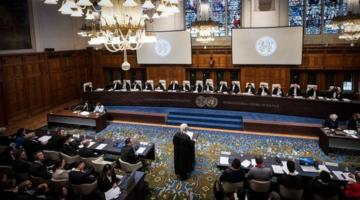 The Black Alliance for Peace is a leading member of a coalition formed to support the charge of genocide against Israel at the International Court of Justice.
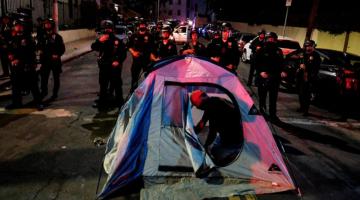 The Supreme Court will soon decide if unhoused people can be issued jail time or fines for sleeping on the streets. Black people experiencing homelessness would be disproportionately impacted.


