Ethiopia and Eritrea are on the brink of a war that could further destabilize the Red Sea, disrupt oil tanker traffic, and drive gas prices even higher.
Ethiopia and Eritrea simultaneously severed diplomatic ties on October 1st. It's a perilous situation. If one nation’s army crosses the other's border, it could draw in neighboring nations, creating a regional crisis from the Horn to the Gulf or, one might say, worsening the crisis that already exists with multiple civil and interstate wars.
The entire world, knowledgeably or not, is invested in containing this conflict because of its potential to further destabilize the Red Sea, a major oil shipping channel, driving the price of gas even higher and triggering more cascading inflation. Before Ansar Allah attacked Red Sea shipping associated with Israel in 2023, an estimated 12% of seaborne oil passed through the Bab el-Mandeb Strait, the Red Sea, and the Suez Canal.
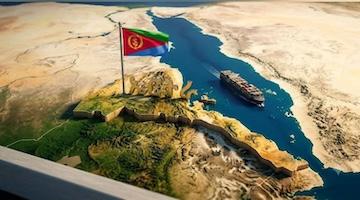
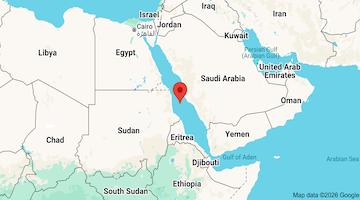
Eritrea has 700 miles of Red Sea coast and neighboring Ethiopia is landlocked. Ethiopian Prime Minister Abiy Ahmed wants a Red Sea port within the internationally recognized borders of Eritrea, which he can only gain by military force unless Eritrea is willing to negotiate away one of its two ports, Massawa and Assab, which it has no intention of doing.
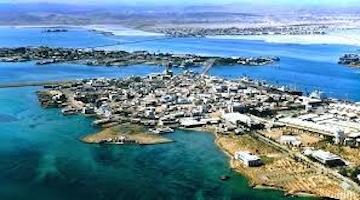
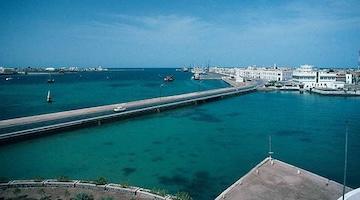
Massawa and Assab
Italy ruled Eritrea as a colony from 1890 until British forces defeated Italian troops there in 1941, during the Second World War. Britain then administered the territory until 1952, when the United Nations created a federation with Ethiopia, and Ethiopia annexed it outright in 1962.
The Eritrean people felt they had developed a distinct identity during the years of Italian and British rule, and therefore launched a war of independence against Ethiopian rule from 1961 until their military victory in 1991. A UN-supervised referendum in April 1993 produced a vote for independence from Ethiopia, which Eritrea declared on May 24, 1993. Eritrea’s independence left Ethiopia landlocked, separated from the two ports that were part of Italian Somaliland and are now part of Eritrea.
Massawa is Eritrea’s northern port. Assab is its southern port, located near the country’s southern edge on the Bab el-Mandeb Strait, just across from where Ansar Allah hold the Strait’s Yemeni coast.
When Eritrea was annexed to Ethiopia, Assab was Ethiopia’s largest, busiest port, linked to Addis Ababa by the main highway and equipped with a refinery. In the late 1980s it handled roughly 70 to 75 percent of Ethiopia’s seaborne trade, and with Massawa about 93 percent of export-import traffic. During the mid-1980s famine, the port backed up and ships waited at anchor.
Massawa was the older Red Sea port and a naval base, serving northern Ethiopia and Eritrea rather than the Addis Ababa corridor. In 1986-87 it handled about 470,000 tons of cargo. By 1988-89 Ethiopian dry-cargo imports through Massawa were only about 18,000 tons, against more than 1 million through Assab. It was still a working port, but its traffic had greatly declined as it became part of a war zone.
Massawa was the Ethiopian Navy’s main base; Assab was its secondary base. It had a ship-repair facility and became the last refuge of the fleet after Massawa fell. In May 1991, as Assab fell, Eritrean troops fired on seven ships that sank and the 14 that could still sail fled to Yemen and Saudi Arabia. Eritrea took the coast, and the Ethiopian navy ceased to exist.
Addis Ababa either did not or was not able to negotiate a permanent legal right to use the ports before recognizing Eritrea in 1993. Commercial use continued for a few years, then ended with the 1998–2000 border war, when Eritrea closed the ports to Ethiopian cargo. Since then Ethiopia has moved more than 90 percent of its seaborne trade through Djibouti, with some use of Berbera Port on Somalia’s Gulf of Aden coast.
For most of the next two decades Ethiopia’s port issues were cost and dependence. Governments under Meles Zenawi and Hailemariam Desalegn treated access though the Djibouti Port as the workable fix.
The 2018 peace deal seemed to open a new path to port collaboration
Ethiopia and Eritrea went to war again from 1998 to 2000, and then sustained an undeclared conflict until the 2018 peace deal that inspired the Nobel Committee to award Prime Minister Abiy the Nobel Peace Prize. The much heralded peace promised a new era of regional cooperation and integration. Ethiopian Prime Minister Abiy, Eritrean President Isaias Afwerki, and then Somali President Mohamed Abdullahi Mohamed, aka Farmaajo, signed the Joint Declaration on Comprehensive Cooperation Between Ethiopia, Somalia and Eritrea, which still resides in the Peace Agreements Database at the University of Edinburgh.
The Western-aligned press screamed, in one op-ed after another, that this agreement was the worst thing that had ever happened to the Horn of Africa, even as Prime Minister Abiy arrived in Eritrea’s capital, Asmara, and was met by jubilant crowds celebrating the end of hostilities between Ethiopia and Eritrea.
Negotiations to restore Ethiopia’s access to Massawa and Assab began. The International Institute for Strategic Studies reported, “As part of the rapprochement, landlocked Ethiopia will gain access to Eritrea’s Massawa and Assab ports, important gateways to international trade via the Red Sea.”
Partnership, including collaborative port use, might have been part of regional integration leading to development throughout the Horn. The two ports were underutilized, and Assab was in disrepair, after Eritrea suffered decades of war, US sanctions, and UN sanctions engineered by the US.
What happened? Future historians will likely look up that joint declaration on the Peace Agreements Database and try to tease out the details, the negotiations behind the scenes, which ultimately led to, for one, the emergence of a US proxy war launched in 2020, when the Tigray People’s Liberation Front (TPLF), the longtime US client that had made Ethiopia an “anchor state” in the Horn, attacked the nation’s Northern Ethiopian Command Base, starting the 2020-2022 Northern Ethiopian Conflict that ravaged the country’s northern Tigray, Amhara, and Afar Regions for the next two years.
In 2022, Somalia’s President Farmaajo, one of the signatories to the 2018 peace agreement, lost an election that the US obviously wanted him to lose. A deadline for holding an election suspiciously coincided with a deadline for receiving an IMF loan.
After the devastating two-year war, when the Ethiopian army was about to claim victory by taking Mekelle, the capital of Tigray, PM Abiy mysteriously stopped the army from going all the way and Mike Hammer, then US Special Envoy to the Horn of Africa, swept in on a US Air Force jet to fly TPLF leader Getachaw Reda off to Pretoria for peace talks with the Ethiopian government.
Neither the Eritrean nor Amhara Forces, both of whom had been principle forces in the war, were included in the talks, central issues were not resolved, and the peace agreement was a resounding failure. Now, four years later, Ethiopia is again caught up in a civil war that may be even worse and may draw in neighboring nations.
What is most likely to draw in neighboring nations? A war between Ethiopia and Eritrea that threatens the security of the Red Sea.
Prime Minister Abiy accuses Eritrea of supporting the ethnic militias who have declared war on the central government. He could conceivably use that as an excuse to fire on Eritrea, claiming to act in accordance with international law, which guarantees the right to self-defense, and then the two countries could be at war yet again.
The real issue, however, which is plain for everyone to see and repeated in headline after headline, is Ethiopia’s determination to reclaim what Prime Minister Abiy calls its historic right to the Red Sea.
Egypt, Sudan, Somalia and Saudi Arabia are all aligned with Eritrea, Israel and the United Arab Emirates (UAE) with Ethiopia.
Turkey is allied with Ethiopia, but competing with Israel and the UAE for expanding influence and investment in the Horn.
Ethiopia has no right to suddenly claim the ports within its neighbors’ internationally recognized boundaries. International law, ripped and ravaged though it may be, is of course on Eritrea’s side.
Ann Garrison is a Black Agenda Report Contributing Editor based in the San Francisco Bay Area. In 2014, she received the Victoire Ingabire Umuhoza Democracy and Peace Prize for her reporting on conflict in the African Great Lakes region. She can be reached at ann@anngarrison.com. You can help support her work on Patreon.


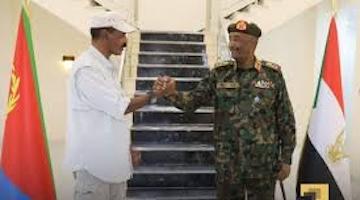
 The Trump administration's new sanctions on Cuba, are part of a dual strategy to create unendurable hardship while simultaneously making Cuba financially dependent on the United States.
 The armed groups in Haiti are not a spontaneous wave of banditry but a scheme orchestrated by imperialist powers in concert with a reactionary and subservient Haitian political class. The…
 A coalition of Pan-African and socialist organizations has launched an international campaign to defend Cuba, arguing that African peoples must remember the sacrifices Cuban internationalists made…
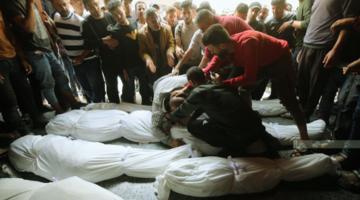 If international law and justice are buried in the rubble of Gaza, the global community will ultimately be digging its own grave.
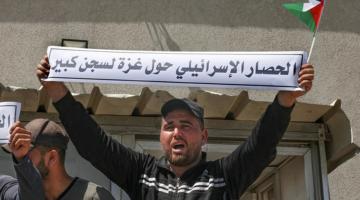 Three years into Israel's genocide in Gaza, the consequences of a decision driven by siege, settlement expansion, and assaults on Al-Aqsa are still unfolding.


