Baba Akili and Thandiwe Abdullah returned from Havana with an eyewitness account of empty streets, failing hospitals and a people enduring the latest chapter of a long U.S. campaign against Caribbean self-determination.
Originally published in LA Progressive.
When I sat down with Baba Greg Akili and Thandiwe Abdullah of Black Lives Matter Grassroots, I expected to hear about their recent trip to Cuba. What emerged was something larger: an eyewitness account of what economic warfare looks like after it leaves the offices of presidents, diplomats and sanctions lawyers and enters hospitals, kitchens, buses and human bodies.
Akili had visited Cuba at least four times. For Abdullah, this was the third trip. Both had seen Cubans struggle under the decades-long U.S. embargo. But neither had seen conditions like these.
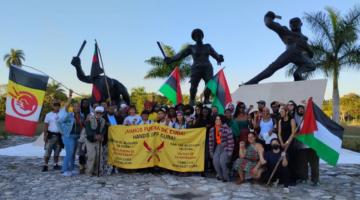
They traveled to Havana from May 26 through May 30 as part of a 25-member delegation organized by the Institute of the Black World 21st Century and the Pan-African Unity Dialogue. The delegation included Black journalists, organizers, economists, faith leaders, healthcare professionals and civil rights advocates. Its purpose was to investigate conditions firsthand, meet with Cuban officials and community leaders and build support for humanitarian assistance and normalized relations.
“What made this trip different,” Akili told me, “was the recent oil embargo.”
On earlier visits, he had seen shortages and restrictions, but he had also seen people filling the streets, socializing and making life work.
“They were thriving. They were making it,” he said. “They were out in the streets. They were living their lives.”
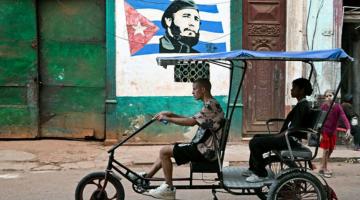
This time, Havana felt subdued.
“People were not out on the streets. They were not doing the same things. They were not being festive,” Akili said. “It was much more tragic. It was much sadder.”
Abdullah saw the same transformation. Their visits had been separated by roughly two-year intervals, allowing them to see how abruptly life on the island could change according to political decisions made in Washington.
“As a young person, I think I was just a bit naive about the world,” Abdullah said. “Getting to see how much control American politics has over what is supposed to be a sovereign nation—it was extremely shocking.”
When the Doctor Began to Cry
The most painful moment came during a visit to Havana’s Hospital Clínico Quirúrgico Hermanos Ameijeiras, one of Cuba’s principal medical institutions.
Sanctions are presented as clean alternatives to bombs and invading armies. But when sanctions prevent fuel from reaching a country, they also prevent ambulances from running, water from being pumped, food from being refrigerated and medical workers from reaching their patients.
Among the delegation members were leaders of the Association of Black Psychologists and the National Association of Black Social Workers. During a discussion with hospital personnel, a member of the delegation asked a Cuban doctor how the crisis was affecting his mental health.
He began to cry.
The doctor described watching patients die from conditions that should have been treatable. He spoke about medical equipment that could not operate reliably, medicines and replacement parts that were unavailable and healthcare workers struggling to reach the hospital because there was no fuel for transportation.
“He talked about how they have to plan, how they have to manage, how they have to struggle to do simple things,” Akili recalled.
The delegation’s official communiqué describes doctors facing what it called “gut-wrenching and traumatic” choices over who might live or die when electricity, medicines or functioning equipment were unavailable. Residents described living for days without power, buying food in tiny quantities because refrigeration was unreliable and missing dialysis or urgently needed operations.
“Listening to a doctor talk about the work he does and how he could save people from preventable death was impactful,” Akili said. “He cried. Everybody else in the room, I think, did. I know I did.”
The tears mattered because they exposed the dishonesty at the heart of economic sanctions. Sanctions are presented as clean alternatives to bombs and invading armies. But when sanctions prevent fuel from reaching a country, they also prevent ambulances from running, water from being pumped, food from being refrigerated and medical workers from reaching their patients.
The violence does not disappear. It is simply dispersed throughout society.
The New Fuel Blockade
Cuba’s crisis cannot be blamed on one cause. Its electrical infrastructure is old and deteriorating. The government has made serious economic mistakes, including policies that fueled inflation and investment decisions that favored tourism while basic systems weakened. Cuba also lost major sources of foreign income during and after the COVID-19 pandemic.
But acknowledging those failures does not erase the deliberate role of the United States.
On January 29, 2026, President Donald Trump issued an executive order threatening additional tariffs against products from any country that directly or indirectly supplied oil to Cuba. The order allowed the administration to target not simply Cuba, but third countries attempting to keep the island supplied with fuel.
A second executive order, issued May 1, expanded the sanctions structure to reach foreign people, companies and financial institutions working in Cuba’s energy, banking, mining and other sectors.
The result has been described as an effective oil blockade. Cuba produces only about 40 percent of the crude oil it needs. When Venezuelan deliveries stopped and Mexico suspended shipments amid fears of U.S. retaliation, the island was left without dependable external fuel supplies. Because most of Cuba’s water-pumping systems depend on electricity, the fuel shortage also became a water and sanitation crisis.
Recent blackouts have forced hospitals to prioritize emergency services while diagnostic equipment, refrigeration and transportation fail. Cuba’s electrical grid has suffered repeated nationwide collapses, adding to shortages of medicines, food and clean water.
This is not an accidental side effect of an unrelated policy. The suffering of the population is the pressure mechanism.
“They Called It Genocidal”
Abdullah said one word kept surfacing during the delegation’s conversations with Cubans: genocidal.
The delegation did not conduct a legal proceeding or issue a judicial finding of genocide. But Abdullah wanted Americans to understand why Cubans themselves were using that language.
“Every facet of life in Cuba is under attack,” they said. “Babies, the elderly, food, water, basic things, building materials—all of these facets of life that are super important for just human dignity.”
For Abdullah, the word described a process in which a population’s access to the necessities of life is deliberately constricted to force political surrender.
“If the United States really cared about the Cuban people, if it was really about saving lives, they could have done that yesterday,” Abdullah said. “They could have done that months ago, years ago, multiple administrations ago.”
The demand placed before Cubans, as Abdullah sees it, is a false choice: accept deprivation or overthrow the government and political system produced by the Cuban Revolution.
“We will either starve you and kill you,” Abdullah summarized the message, “or you can overthrow the popular movement that created the socialist state you have.”
The Cuban people have not done so. The embargo has continued for more than six decades without producing the political result Washington has demanded.
The Policy Was Never a Secret
The intention to use deprivation against Cuba is not speculation invented by Cuban officials or American solidarity activists.
In an April 1960 memorandum, Deputy Assistant Secretary of State Lester D. Mallory acknowledged that most Cubans supported Fidel Castro and that there was no effective political opposition. He recommended weakening Cuba’s economic life by denying it money and supplies, reducing wages and producing “hunger, desperation and overthrow of government.”
That memorandum strips away the humanitarian language later used to defend the embargo. The objective was not simply to express disapproval of the Cuban government. The objective was to make ordinary life so painful that Cubans would turn against it.
Sixty-six years later, the machinery has become more sophisticated, but the underlying logic remains recognizable.
Make the economy fail. Intensify shortages. Encourage public desperation. Then present the suffering as proof that the targeted government—and perhaps the targeted people—are incapable of governing themselves.
Cuba and Haiti: The Punishment of an Example
During our conversation, Abdullah compared Cuba with Haiti. Akili added Grenada.
The connection is not that the histories of these countries are identical. They are not. The connection is that each challenged an imperial system by asserting a form of Black or Caribbean self-determination that powerful nations considered dangerous.
Haiti’s revolution delivered the most radical challenge imaginable to the Atlantic world. Enslaved Africans defeated Napoleon’s forces, abolished slavery and founded an independent Black republic in 1804.
The 1959 Cuban Revolution rejected a subordinate relationship. Cuba nationalized property, aligned itself with socialist countries and claimed authority to determine its own political and economic future. That defiance has never been forgiven.
For slaveholding empires, Haiti was not simply another new country. It was a contagious example.
France refused to recognize Haitian independence until 1825, when King Charles X demanded 150 million gold francs to compensate former French colonists for the land—and human property—they had lost. Haiti was forced to pay reparations to the former enslavers it had defeated. France’s own national library describes the arrangement as recognition of Haitian sovereignty in exchange for indemnifying the former colonial owners.
The United States withheld diplomatic recognition from Haiti until 1862. It later occupied the country from 1915 until 1934, forced the selection of a pro-American president and assumed control over customs revenue and major financial decisions.
Cuba’s relationship with the United States developed differently, but the presumption of superior authority was similar. After Spain’s defeat in 1898, the United States occupied Cuba and made acceptance of the Platt Amendment a condition of withdrawal. The amendment restricted Cuban sovereignty, authorized U.S. intervention and created the foundation for the continuing American naval presence at Guantánamo Bay. U.S. interventions followed in 1906, 1912 and again from 1917 to 1922.
The 1959 Cuban Revolution rejected that subordinate relationship. Cuba nationalized property, aligned itself with socialist countries and claimed authority to determine its own political and economic future.
That defiance has never been forgiven.
The distinction between the two countries might be expressed this way:
Haiti was punished into dependency. Cuba has been punished for refusing dependency.
Haiti was burdened by debt, occupation and foreign administrative control. Cuba has faced isolation, sabotage, invasion attempts, financial restrictions and an embargo designed to force political transformation.
The methods differ, but the imperial proposition is the same: Caribbean independence is acceptable only when it does not interfere with the strategic, racial, political or economic order preferred by the dominant powers.
Who Is Allowed to Speak for Cuba?
Abdullah raised another important question: Which Cubans are treated by the American political and media establishment as the authentic voice of Cuba?
Americans are repeatedly told that “the Cuban people” oppose the revolution and are waiting for the United States to rescue them. But the Cubans most amplified in U.S. political debate have often come from affluent, politically conservative and disproportionately white exile communities whose families lost property or status after the revolution.
That does not make their grievances imaginary. Nor does it mean that every Cuban who opposes the government is wealthy or white. Cuba has genuine dissidents, serious restrictions on political expression and hundreds of people whom human rights organizations describe as political prisoners.
But exile opinion is not synonymous with the opinion of an entire nation.
“We often hear that the Cuban people hate their government, that the Cuban people don’t support the revolution,” Abdullah said. “But the United States has been very deliberate about which Cubans are allowed to be the voice of the Cuban people.”
A credible position does not require romanticizing the Cuban state. One can condemn political imprisonment, demand greater freedom of expression and question government policy while also rejecting the proposition that the United States has the right to starve a population until it adopts Washington’s preferred political system.
Human rights cannot be defended through the collective punishment of human beings.
Democracy by Whose Definition?
Akili challenged the assumption that there is only one legitimate institutional form of democracy.
From Washington’s perspective, Cuba is undemocratic because it does not reproduce the American multiparty electoral system. Cubans describe a different system of local participation, mass organizations and national assemblies.
“There are a number of ways to measure democracy,” Akili said. “They have a different approach. They have a different process. They have a different way of including and engaging their people.”
He was not arguing that Cuba should be immune from scrutiny. He was arguing that difference does not give a superpower the right to destroy another country’s economy.
“They deserve the right of self-respect and self-determination,” he said. “They deserve the respect due a sovereign country. If they don’t choose to govern themselves like we do, we should not punish them for that.”
Cuba’s 1961 national literacy campaign reduced illiteracy to approximately 3.9 percent in less than a year and became an international model for mass education.
Those achievements coexist with political restrictions and economic failures. Nations are complicated. Their successes and failures belong first to the people who live within them—not to a foreign government claiming the authority to engineer their future through deprivation.
Resilience Should Not Be Romanticized
Near the end of our conversation, I asked Abdullah whether they had seen Cuba’s famous old American cars.
They had.
The delegation even encountered a vehicle that had been adapted to run on coal.
Cuban ingenuity is real. So is Cuban resilience. People repair machines long after replacement parts have disappeared. They organize community support, improvise transportation and stretch scarce food and medicine.
But resilience is frequently romanticized by those who are not required to practice it.
People should not have to be endlessly ingenious merely to survive policies deliberately designed to make survival difficult. The ability to endure suffering does not excuse those who impose it.
Lift the Blockade, Open the Door, Leave Cuba Alone
I asked Akili what he hoped to see during the next five years.
His answer was direct.
First, lift the blockade. Much of the embargo has been codified by Congress, meaning that fully ending it will require congressional action rather than a temporary change in presidential policy.
Second, restore open communication based on mutual respect.
Third, respect Cuba’s sovereignty and allow Cubans to determine their own future.
“Every time I’ve gone to Cuba, I’ve asked myself: Where would this country be if we had just left them alone?” Akili said. “Once they had their revolution in 1959, if they could have failed or succeeded on their own, what would have happened?”
That is the question the United States has spent nearly seven decades preventing Cuba from answering.
If socialism is destined to fail, it should not require the most powerful country in the hemisphere to spend generations sabotaging it. If the Cuban government lacks legitimacy, Washington should not need to manufacture hunger to prove it.
And if the United States truly cares about the Cuban people, it should begin by ceasing to punish them.
Lift the blockade.
Restore diplomacy.
Respect Cuban sovereignty.
Then leave the Cuban people free to determine what comes next.
Sharon Kyle is the publisher of LA Progressive and a longtime civil rights and democracy advocate. A former law professor, she writes and speaks on race, power, and the structural forces shaping American democracy. https://linktr.ee/laprogressive


 Fergie Chambers is an American philanthropist who was arrested on July 10 in Ibiza, Spain, by order of the Trump Administration.
 In this week’s segment, we hear about the crisis in northwest Indiana, including the city of Gary, where some residents have gone more than two weeks without power after a storm. As in the rest of…
 Our guest is Sam Husseini. He’s a veteran independent journalist and senior analyst at the Institute for Public Accuracy. He is now running for Congress in Maryland’s 4th district as a Green Party…


