Mutual aid tends to expose the reality that people lack what they need, while also creating spaces to meet those needs and build a shared analysis.
“Spade drives home the characteristics that distinguish mutual aid from charity.”
Mutual Aid
Building Solidarity During This Crisis (and the Next)
Dean Spade
Verso
ISBN: 9781839762123
Out of both compassion and necessity, the COVID-19 pandemic prompted many of us to engage in mutual aid projects — such as signing up to buy groceries for an immuno-compromised neighbor, or helping tutor a child struggling with remote learning — even if we don’t fully understand the concept. Fortunately, Dean Spade has written an accessible primer with practical tips for people who want to start mutual aid projects or who are already in them and want to see them flourish.
At just over 150 pages, his book can easily live in your day bag in order to be consulted regularly. It is broken into two parts. The first defines mutual aid as “collective coordination to meet each other’s needs’’ and examines key elements. Mutual aid tends to expose the reality that people lack what they need, while also creating spaces to meet those needs and build a shared analysis. As one historical example, Spade explains how the Black Panthers welcomed many people into their struggle through survival programs like free breakfasts for school-age children as well as a free ambulance program, free medical clinics, a service offering rides to elderly people doing errands and schools aimed at providing a rigorous liberation curriculum for children.
Like the projects people started more recently after Superstorm Sandy to clean out homes and share food, mutual aid efforts focus on solidarity, not charity that is designed to “improve the image of the elites” and “put a tiny, inadequate Band-Aid on the massive social wound that their greed creates.” They aim to be participatory and solve problems through collective action, while building movements. In a four-page chart, Spade drives home the characteristics that distinguish mutual aid from charity, such as supporting people who face dire conditions without imposing eligibility criteria that divide them into “deserving” and “undeserving.”
“The Black Panthers welcomed many people into their struggle through survival programs like free breakfasts for school-age children as well as a free ambulance program.”
If practiced sustainably, Spade argues mutual aid can be an on-ramp for people who want to get to work right away on the things they feel urgent about. He devotes most of his attention to explaining how to “work together on purpose,” and perhaps even more importantly, ways to avoid common pitfalls like saviorism and cooptation, noting that mutual aid projects “have to work hard to remain oppositional” to the neoliberal status quo, and cultivate resistance to privatization and criminalization.
Spade is a lawyer and longtime trans activist who, with eyes wide open, acknowledges in the wonderfully named chapter “No Masters, No Flakes,” that many challenges mutual aid projects face come from within, like overwork and burnout. Paraphrasing civil rights activist and author Tonie Cade Bambara, he emphasizes we must “make resistance irresistible.” But since most of us are not used to participating in decision making, he uses more charts to summarize tendencies that can harm groups and lead to conflict, such as secrecy and exclusiveness. Other charts detail the difference between domineering and cooperative leadership, or between working compulsively versus working joyfully. His discussion of conflict as “pervasive” feels validating. His tips for addressing it, as well as tendencies like perfectionism — both as a group and as an individual — seem in somes cases like therapy for those of us in the trenches.
The abolitionist activist and author Miriam Kaba said she “cheered after I read this book,” and other readers may join in her enthusiasm for its helpful guidance and useful framework for our mutual aid projects. If we improve our ability to focus on “solving problems through collective action rather than waiting for saviors,”we can better face the challenges presented by this pandemic, and the next crisis. As Spade argues, “more people are learning how to organize mutual aid than have in decades. This is a big chance for us to make a lot of change.”
This article previously appeared in The Indypendent and Portside.
COMMENTS?
Please join the conversation on Black Agenda Report's Facebook page at http://facebook.com/blackagendareport
Or, you can comment by emailing us at comments@blackagendareport.com

 Liberalism impacts every movement in the U.S. and climate justice organizations are not exempt.
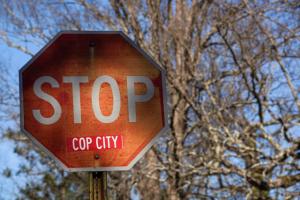 The state of Georgia has doubled down on criminalizing protest against the Cop City militarized policing project. Domestic terrorism charges and a statute meant for organized crime prosecution are…
 Haitians have no protection from their puppet government and are at the mercy of racist Dominican Republic policies, even within their own country. The closing of the border between the two countries…
 The Caribbean Community (CARICOM) should be working with Haitians to resolve their country's problems. Instead, CARICOM works with the US and other nations to undermine Haiti's sovereignty. …
 Corporate media war propaganda against Nicaragua, New York City mother wins judgement after her child was illegally removed, and the state of Georgia uses RICO and domestic terrorism charges against…


