jBlack Agenda Radio for Week of March 26, 2018
Baraka on Leftists That Collaborate with Empire
“We have not made a revolution in the U.S., but we have all these ‘revolutionary theorists’ that know exactly how to do that,” said Black Alliance for Peace national organizer Ajamu Baraka, sarcastically. He recently returned from a conference in Caracas in solidarity with Venezuela. Baraka called “collaboration” with U.S. aggressions against Venezuela and Syria “really shameful on the part of people who call themselves leftists or radicals or whatever.” Any genuine left must oppose imperialism. “Our position, as citizens of empire, is to put a brake on empire.”
U.S. at Peace? Some Americans Think So
The U.S. Senate voted down, 55 to 44, a bill co-sponsored by Bernie Sanders that would have ended U.S. involvement in the Saudi Arabia-led war against Yemen. However, veteran anti-war activist David Swanson saw the action as a sign of progress, given that the Senate has never conducted such a vote based on the War Powers Act. Swanson, publisher of the influential web site WarIsACrime.org and director of World Beyond War, has found that Americans “around the country think that the U.S. is at peace, or think it’s engaged in a war somewhere, but can’t remember the name of the country.
Outlaw Poverty, Says Activist
Nyle Fort, an activist with the Poor People’s Campaign, was among the speakers at a New York City event designed to bring Black and immigrant communities together on issues of mass incarceration and deportation. Fort urged the crowd to “dream of a world where poverty is illegal.” The event, held at Manhattan’s Holy Rood Church, was titled “Break Down Walls and Prison Plantations: Mumia, Migrants and Movements for Liberation.”
Theft is Part of U.S. DNA
You can’t understand the present-day United States if you don’t know its bloody history, said Roxanne Dunbar-Ortiz, author of An Indigenous People’s History of the United States and her new book, Loaded: A Disarming History of the Second Amendment. The nation’s roots in organized theft of labor and land explains “why we have a real estate broker as president, just like our first president, the land speculator George Washington.”
Black Agenda Radio on the Progressive Radio Network is hosted by Glen Ford and Nellie Bailey. A new edition of the program airs every Monday at 11:am ET on PRN. Length: one hour.

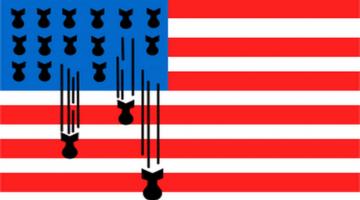 The liberal news media treat U.S. violence and oppression as aberrations from the country's founding ideals rather than expressions of its fundamental character as a settler colony, empire,…
 The U.S. relocation of MQ-9 Reaper drones from Africa to Latin America is not a drawdown of imperial aggression but a strategic reallocation, with the drones likely to be used against Cuba, Venezuela…
 Race is a sociopolitical construct, not a biological truth. The real determinants of health are structural factors such as zip code, environmental pollution, and access to resources.
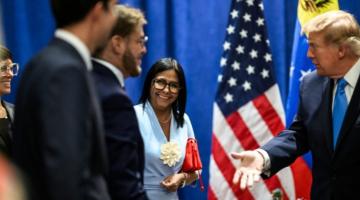 A photograph of Delcy Rodríguez smiling with Donald Trump after the U.S. kidnapped Nicolás Maduro is evidence of subordination to the United States. These images cannot be reconciled with the dignity…
 Imperialist competition and wars that facilitate extractivism have long shaped the use of seaports for access to resources, markets, and devalued labor. In the last decade, countries in the chain of…


