Slam and spoken word poetry created their own spaces and voices, and may one day provide a blueprint for making new worlds.
“Communities that strive for justice often replicate the very power structures we are fighting against.”
In this series, we ask acclaimed authors to answer five questions about their book. This week’s featured author is Javon Johnson. Johnson is an Assistant Professor and Director of African American & African Diaspora studies and holds an appointment in Gender & Sexuality Studies in the Interdisciplinary, Gender, and Ethnic Studies Department at the University of Nevada, Las Vegas.His book is Killing Poetry: Blackness and the Making of Slam and Spoken Word Communities.
Roberto Sirvent: How can your book help BAR readers understand the current political and social climate?
Javon Johnson:I hope Killing Poetry reminds readers of the importance of creativity in our strive for justice, equity, and equality. More still, I hope it is a reminder of how communities that strive for justice often replicate the very power structures we are fighting against.In this way, Killing Poetrytries to unpack the promises and pitfalls of a community’s work toward a more just world, which can be used as a kind of map, or something to build on, for those who endeavor towards safer worlds.
What do you hope activists and community organizers will take away from reading your book?
That world building is not only necessary but very possible, that we do the work of world building every day, and that we can use that everyday work as strategic blueprints to build on a larger scale. Additionally, that world building is difficult and fraught with all kinds of problems.
We know readers will learn a lot from your book, but what do you hope readers will un-learn? In other words, is there a particular ideology you’re hoping to dismantle?
That we do not always have to fix systems. That opting out is a political choice, complete with promises and pitfalls of course, that allows for yet another kind of tactical maneuvering. What would it look like if, instead of always desiring to fix problematic systems (e.g. capitalism, racism, our current democratic process), we commit to the idea that these systems are not only in service of domination but they are created in, with, and alongside politics of domination? What if we committed to the idea that because those problematic systems are so intimately related to subjugation that they cannot be separated and instead found ways to opt out and demand and/or engage in separate practices? I am not calling for a trite, “I don’t see myself as black” or “I don’t vote,” rather I am asking how can we opt out and opt in to something else? I am asking what might that look like? I think about this because I do not see the value in convincing those who wish not to be convinced (literary elites in the case of Killing Poetry) of my humanity and worth.
Who are the intellectual heroes that inspire your work?
There are entirely too many names to state here. I will start with my first teachers, those who gave me my first theories and tests; my mother, Valerie Cannon-Mijares, as well as my grandmothers Gwendolyn Cannon and Emma Walker. Certainly E. Patrick Johnson, my doctoral advisor who continues to produce groundbreaking work in the areas of Performance Studies, African American Studies, Gender and Queer Studies, and who, among imparting theory, taught me to “Be still and know.” D. Soyini for teaching me the nuance and political complexities of doing ethnographic fieldwork. Bryant Keith Alexander, my MA advisor who first urged me to write about slam and spoken word poetry communities. Judith Hamera who, ever relentless, refused to allow me to cut corners by always demanding me of me than I knew possible of myself. I love Audre Lorde, Octavia Butler, James Baldwin, Langston Hughes, Zora Neal Hurston, Fred Moten, Michel Foucault, Dwight Conqeurgood, Tupac Shakur, Patricia Hill-Collins, Kimberle Crenshaw, Kendrick Lamar, Chance the Rapper, Robin D.G. Kelly, Michel de Certeau, Amiri Baraka, John Jackson, Augusto Boal, Ngugi Wa Thiongo, and, I would be remised if I didn’t mention bell hooks, the first critical thinker of whom I was introduced. She made me fall in love with theory, radical thinking, black feminism, and the politics of love.
In what way does your book help us imagine new worlds?
What I have tried to show is how slam and spoken word poets, who were denied access into “legitimate” literary spaces, created their own literary voices, practices, canons, values, and worlds, and how that creation might provide a blueprint for world making practices. While I do not think we have all the answers, or always did/do it well, Killing Poetry offers up our successes and failures in such a way that someone can imagine their own new and more just world and be working toward that space.
Roberto Sirventis Professor of Political and Social Ethics at Hope International University in Fullerton, CA. He also serves as the Outreach and Mentoring Coordinator for the Political Theology Network. He is co-author, with fellow BAR contributor Danny Haiphong, of the forthcoming book, American Exceptionalism and American Innocence: A People’s History of Fake News—From the Revolutionary War to the War on Terror.
COMMENTS?
Please join the conversation on Black Agenda Report's Facebook page at http://facebook.com/blackagendareport
Or, you can comment by emailing us at comments@blackagendareport.com




 BAR Poet-in-Residence, Raymond Nat Turner, joins us from New York City to talk about his work and an upcoming performance with his group, Upsurge New York City.
 Gerald Perreira of Organization for the Victory of the People in Guyana joins us to discuss the long running territorial dispute with neighboring Venezuela and the increasing activity of U.S. in the…
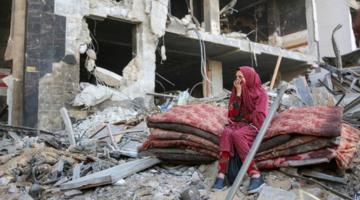 Any sign of even tiny opposition is enough to send Israel into a frenzy of bloodletting. Hospital attacks, murders of aid workers, violations of the sovereignty of embassies, are all par for the…
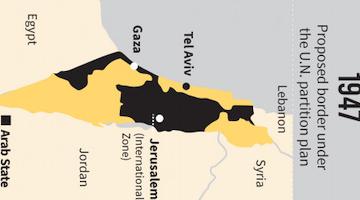 The statement on the UN Partition of Palestine by the Arab Higher Committee is a reminder of the sordid history of the U.S. in the expropriation of land and the attempted ethnic cleansing of the…
 The totalitarian state of Rwanda is guilty of many forms of transnational repression, including the lawfare exemplified in the case of Eric Nshimiye.


