A Black Agenda Radio commentary by executive editor Glen Ford Charging the United States with serious violations of Black people’s human rights, a UN panel of experts endorsed Black community control of the police and reparations for descendants of slaves. Washington is under no obligation to comply, but “even a corporate-ruled, imperialist superpower, born in slavery and genocide, can be embarrassed when its crimes are revealed on the world stage.”
Going “International” on Racist Uncle Sam A Black Agenda Radio commentary by executive editor Glen Ford “When activists go the UN offices in Geneva, Switzerland, to document the barbarity and racism of the U.S. criminal justice system, Washington is compelled to respond.”
Advocates of reparations and Black community control of the police got a boost from a panel of the United Nations, last week. The UN’s “Working Group of Experts on People of African Descent” heard testimony in five cities on violations of Black Americans’ human rights. The experts will issue a full report to the United Nations Human Rights Council, in September, but their preliminary statement paints a picture of endemic racial oppression in criminal justice, education, housing, employment, health care – virtually every aspect of life in the USA.
Of course, the United Nations is not going to force the U.S. to pay reparations to its Black citizens, or compel America to remove its blue-uniformed army of occupation from Black communities. Only Black Americans, themselves, can make that happen. However, the UN’s critique of U.S. racial policies and practices is important. Even a corporate-ruled, imperialist superpower, born in slavery and genocide, can be embarrassed when its crimes are revealed on the world stage. President Eisenhower was a segregationist, but he could not act like one when the world was watching the Black American struggle against Jim Crow segregation in the 1950s. In the Sixties, Malcolm X urged Black people to take their human rights grievances to the United Nations, where the seats in the General Assembly were filling up with delegates from the formerly colonized countries of the world. Under the gaze of global humanity, the United States pretended to welcome the end of official American apartheid.
“The African American reputation in the world has been in dire need of rehabilitation.”
Nowadays, President Obama attempts to convince the world that the U.S. would really like to get rid of mass Black incarceration – although he’d have to release 7 out of every 8 prisoners to bring U.S. incarceration rates down to 1970 levels . Still, when activists go the UN offices in Geneva, Switzerland, to document the barbarity and racism of the U.S. criminal justice system, Washington is compelled to respond.
Half a century ago, Black Americans earned the respect and admiration of struggling peoples all over the world, because we were perceived as waging a heroic fight for justice and human rights, here in the belly of the beast. And, although the Black Panther Party has been defunct in the U.S. for two generations, people in places like India and even New Zealand still proudly call themselves Black Panthers.
However, the Black American reputation has suffered over the years. The world has seen us represented by the likes of Colin Powell and Condoleezza Rice, and now the mad bomber in the White House and his genocidal national security advisor Susan Rice, the individual most closely identified with the slaughter of six million Congolese. With all of these Black American war criminals and fiends strutting around the world stage, the African American reputation has been in dire need of rehabilitation.
But then Ferguson intervened , and Black America seemed like it might have rediscovered its soul. Black folks are actually making demands of power – and the United Nations is paying attention. There is hope for us, yet.
For Black Agenda Radio, I’m Glen Ford. On the web, go to BlackAgendaReport.com.

 Memories of a sovereign Venezuela collide with the reality that it is now a U.S. vassal state.
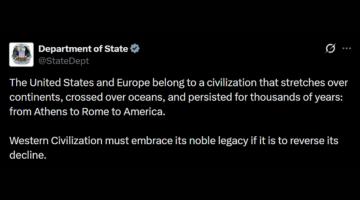 The crisis of late-stage capitalism has stripped away the liberal disguise and revealed white supremacy as the official ideology of the U.S. state.
 “It is perfectly clear that the war of aggression waged by Morocco against the [Western] Saharan people is a purely colonial war.”
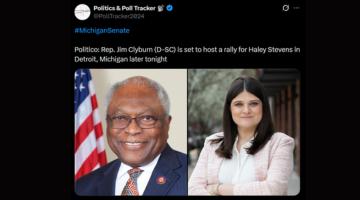 The Congressional Black Caucus electoral strategy has turned the 2026 midterm elections into a dumpster dive for corporate interests and Zionist approval.
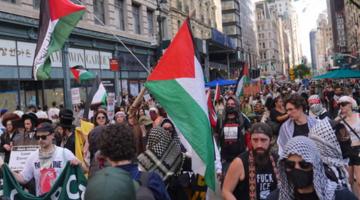 The Democratic Party's continued support for Israel's genocide is not just a moral and political liability but also an economic one which impacts its voters, yet the party refuses to frame it as such.


