Unilateral coercive measures, sanctions, are weapons of mass suffering. This new international day marks a global rejection of the West’s economic warfare against sovereign nations.
Originally published in Popular Resistance .
In June of 2025, the United Nations General Assembly designated December 4 as the annual International Day against Unilateral Coercive Measures, urging States to stop using such measures (commonly called “sanctions”) because they violate international law and impose collective punishment. Last night, the SanctionsKill campaign and partners honored the day by inviting speakers to discuss the impact of these measures on children in four countries during a webinar called “Blockades and Coercive Measures: Stop the War on Children!”
VIDEO
The occasion was also the launch of a campaign in which health workers are asking the United States Congress and Executive Branch to stop applying these coercive measures because they kill as many people as armed conflict—mostly children. A 2025 study published in The Lancet found that sanctions imposed by the United States and its Western allies during the 50-year period of 1971 to 2021 caused more than 550,000 deaths each year, similar to the total annual deaths due to wars (both military and civilian) in the same period. Children and the elderly were impacted the most with children under five years of age making up 51% of the deaths.
The webinar, organized by Americas Without Sanctions, a project of SanctionsKill, featured speakers from Cuba, Nicaragua, Venezuela, and Palestine. It was moderated by Dr. Margaret Flowers of Popular Resistance and SanctionsKill, and Dr. Adlah Sukkar of Doctors Against Genocide.
The program opened with a clip from a new documentary about Cuba, Healthcare Under Sanctions
The health system cannot maintain medical equipment due to a lack of parts because it is blocked from making purchases on the global market.
Pharmaceutical companies and other countries refuse to sell essential supplies and medicines for fear of retribution by the US.
Financial losses from the sanctions limit the amount of funds available to purchase medicines and other supplies.
As a result of the recent tightening of the economic blockade, infant mortality in Cuba, which has been lower than in the United States, is now increasing.
Although the United States frequently claims that carveouts in its sanctions programs prevent the purchase of medications and other essentials, such as food, from being impacted, the reality is that humanitarian carveouts in sanctions regimes do not work. Sanctioned nations are blocked from purchasing necessities abroad, including not only what is needed for the healthcare system but also inputs needed for farming and producing other essentials.
Following the film, the first speaker on the panel, Zeiad Abbas Shamrouch, a Palestinian refugee from the West Bank and Executive Director of the Middle East Children’s Alliance (MECA), gave heart-wrenching testimony of the trauma Palestinian children have experienced since 1948. He said “There is no childhood for Palestinian children,” who are born into families barely surviving the collective punishment imposed on them by Israeli sanctions, curfews, and human rights violations. Shamrouch stressed that before the visible genocide began on October 7, 2023, a silent genocide was taking place in Gaza due to the 16-year blockade, in which tens of thousands of people died because they were unable to leave the strip to receive medical care or even get COVID-19 vaccines.
Currently the Palestinian population faces an ineffective ceasefire during which 365 people have been killed by guns and bombs so far. In addition, 9,600 children under age five are in imminent danger of dying from starvation while they are blocked from receiving food and medical assistance. And 32,000 people injured by Israeli aggression will soon die because they are prevented from leaving Gaza to seek medical care, including 5,000 children. Meanwhile, the US government, which is overseeing the “ceasefire,” does nothing to hold Israel accountable.
The next speaker, Yorlis Luna of Nicaragua, spoke of the collective punishment her people have suffered due to the US’ coercive economic measures. She was born just after the period when a US proxy war and sanctions had devastated her country, and a new US-friendly government was not providing healthcare or education to the population, which impacted her health. As a teenager, she saw the return to power of a popular government and witnessed tremendous improvements in daily life. But the socialist-leaning government of Nicaragua, with an independent foreign policy, has been targeted with unilateral coercive measures (aka sanctions) from the US since 2018. Yorlis says that while increasing sanctions seek to demoralize people, the country is resisting by becoming food sovereign and relying more on indigenous medicines and other local products to make themselves less vulnerable to economic aggression.
Dr. Mariuska Forteza Sáez, Chief of Pediatric Oncology at the National Institute of Oncology and Radiobiology of Cuba, sent video greetings because Zoom is not allowed in her country due to the blockade. Dr. Forteza spoke with pride of Cuba’s achievement of a 65% cancer survival rate—remarkable for a low-income country. However, these good outcomes are hindered by new coercive measures from the US. Cuban medical teams must be creative in finding solutions for their patients since it is increasingly difficult to obtain the first-line medicines and supplies needed for treatment, such as endoprostheses. These highly specialized treatments also require continuous training outside the country, which is often forbidden to Cuban doctors because of the blockade. Still, Dr. Forteza’s clinic has had many success stories with their young patients, including a teen who overcame osteosarcoma, and went on to become a paralympic athlete.
The final panelist was Alison Bodine, a founding member of the Venezuela Solidarity Network, who spoke about the impact of sanctions on the South American country. Venezuela has been facing a tremendous US military buildup in the Caribbean over the past few months, which has a psychological impact on the whole population, including children. But the country has faced unilateral coercive measures since President Obama first imposed them in 2015, and to date these are estimated to have caused over 100,000 excess deaths in the country. The sanctions target Venezuela’s oil industry, thus taking away funding for the Bolivarian revolution’s programs to provide food, medicine, and housing to the population. This not only impacts poor children, but difficulties with banking transactions due to sanctions, for example, have prevented Venezuelan children from receiving life-saving medical treatment such as specialized cancer treatment overseas.
While the webinar subject matter was heavy, the audience was left with an effective way to work together to change this dire situation. Drs. Flowers and Sukkar explained the Health Workers Letter campaign in which all health workers—including public and mental health workers, currently in training, working or retired—are invited to sign on to ask the US government to stop applying these child-killing measures.
Please read the Health Workers’ Letter here , sign it if you are health worker, and share it with all the health workers you know! Also, please stay tuned as this campaign develops over the coming months, including the opportunity for constituents to take the signed letter to Congress.
We leave you with the words of the Cuban Ministry of Foreign Affairs on this first International Day against Unilateral Coercive Measures: “Once again we call for dialogue and respect for human rights and for the self-determination of peoples.”

 “So the calypso ceases to be entertainment on a trivial level and becomes a vehicle whereby the society is going back and searching for its soul.”
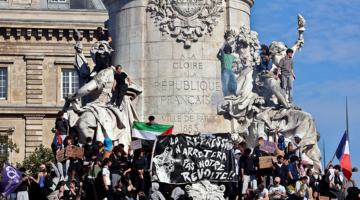 The protests spreading across Spain, India, France, Chile, and other countries are responses to the global neoliberal order of austerity, privatization, and deregulation.
 Chile, Colombia, Bolivia, Honduras, Peru, and Costa Rica have all elected right-wing presidents in the past year, and most are open Trump allies. Brazil's runoff between Lula and Flávio Bolsonaro is…


