Residents walk through Santa Cruz, Jamaica on Wednesday after Hurricane Melissa passed
Hurricanes might have natural causes, but the tragedy that follows is entirely human-made and a consequence of capitalist greed, asserts Roger McKenzie.
Originally published in Morning Star.
As the extent of the devastation Hurricane Melissa has caused across the Caribbean begins to emerge, at least one thing is clear: this is the new normal.
Melissa, as the highest level Category 5 hurricane, was the second-strongest Atlantic storm ever recorded. But, according to experts, it will be something we are likely to see more frequently.
The even worse news is that future storms may be even more intense than this one. There is now talk that we now need a new Category 6.
Scientists currently classify storms by the five-level Saffir-Simpson scale. The infamous Hurricane Katrina in 2005 was a level 5. The storm devastated New Orleans and killed almost 1,400 people and left thousands of already very poor and struggling people homeless and stranded in the birthplace of jazz.
This is a fate many thousands in the Caribbean are likely to find themselves as the full picture emerges.
To be classed as a Category 5 storm, a hurricane needs a sustained wind speed of 157 miles an hour.
Jamaica, the island where my parents were born and to which my ancestors were enslaved, already has poverty levels around 8.2 per cent.
Some of this, particularly in the area hardest hit by Melissa, and where my parents were born and raised, is some of the most grinding poverty imaginable.
This is kept far away from the holidaymakers who form the most important part of the Jamaican economy.
This poverty sits well away from the tightly guarded resorts from which holidaymakers are cautioned against leaving and visitors are largely barred.
The poverty rate in Jamaica has been reduced to the lowest on record 8.2 per cent in 2023 but the situation facing Jamaicans is always subject to climate events such as Melissa.
When Hurricane Beryl hit in July 2024, agriculture, which employs a disproportionate share of the poor, was among the hardest-hit sectors.
Beryl also caused a surge in food prices in Jamaica with less food produced and fewer people with the means to buy.
Around 32 per cent of all households and 60 per cent of the country’s poorest faced moderate to severe food insecurity in 2024, according to the Food Insecurity Experience Scale.
So when Melissa hit, the island could hardly be said to be starting from a now washed away level playing field.
Measures such as the Programme of Advancement Through Health and Education have helped provide temporary assistance to vulnerable households.
But programmes such as these need money, which is something that Jamaica has little of after decades of debt accumulated at the hands of the International Monetary Fund and the World Bank.
Many countries have already jumped in with pledges of support for Jamaica in the nation’s hour of urgent need.
The country’s external debt was around £11.5 billion in 2023. Debt repayments constantly make up more than a 20 per cent of the Jamaican government’s revenue.
Like other parts of the world, debt has been used by the West to restructure the economy of the island.
After independence on August 6 1962, Jamaica inherited a legacy of dependence on exporting cash crops such as sugar, coffee and cocoa.
As an oil importer, in 1973 the economy crashed due to the oil price shock, rapidly pushing up the costs of imports.
Jamaica also faced economic punishment from the world’s policeman, the US, when one of its leaders, Michael Manley (prime minister of Jamaica between 1972-80 and 1989-92), was considered to be moving too close to countries such as Cuba.
But Jamaica has always been vulnerable to external economic shocks such as when US dollar interest rates rose at the start of the 1980s, debt payments soared; from 16 per cent of government revenue in 1977 to 40 per cent by 1984.
Foreign debt payments have remained above 20 per cent of government revenue ever since.
The IMF and World Bank began lending large amounts of structural adjustment bailout loans in the 1980s, with the inevitable austerity that follows.
The most drastic adjustment took place between 1989-93, with large increases in inequality and poverty.
Since 1990, the percentage of children completing primary school has continually fallen, from 95 per cent in 1990 to 73 per cent in 2010.
During the 1990s, government debt began to fall, but the truth is most Jamaicans were still having to eke out a living where they could.
In 2011-12, a quarter of government revenue was spent on foreign debt payments. But in 2010, Jamaica borrowed a further £632 million from the IMF. One of the IMF’s conditions was for wage freezes for public-sector workers in 2010 and 2011, which amounted to a 20 per cent real-terms cut in pay.
I dare say that the pledges of support will, for the most part, also have conditions attached by the lenders even in these disaster circumstances.
But pledges of support will be rather more muted in the case of another island nation hit by Melissa — Cuba.
Cuba has been hit by six decades of US-imposed sanctions for having the audacity to break away from the notion that it should be a playground for the US and become a socialist society wanting to stand on its own two feet.
Alongside the unilateral and without foundation US designation of Cuba as a so-called “state sponsor of terrorism” these measures mean the Cubans are unable to buy the very basic components necessary to keep the island’s infrastructure going.
Again, as with Jamaica, the full extent of the storm will emerge in the coming days in Cuba. But Melissa and the “new normal” for the region makes it even more urgent for sanctions to be lifted against Cuba — something the UN reiterated again earlier this week — with only the US and Israel voting against.
Haiti was also hit hard by Melissa. At least 20 people, half of them children, are thought to have been killed by the storm in the conflict-ridden nation.
So what exactly is the new normal in the Caribbean?
Poverty, debt, failing economies, attempts by the West to make it subservient — either directly or by proxy — are the old normal.
Sure, we can have a new category to determine the extent that the climate change emergency is hitting. That is likely to be needed, although adding another category will likely prove inadequate given the climate catastrophe that has already hit the planet.
Global warming is making storms more intense, with rising sea temperatures driving the winds faster and faster.
The Caribbean is 2-3 degrees warmer than normal, so the destruction left behind by Melissa is more than a message — it is red flashing lights that things are about to get a whole lot worse and that it won’t be confined to far away places like the Caribbean alone.
But when you are already all but knocked out, measuring the impact of the next punch is all but meaningless. Your only option is to hit back and land your own knockout blow.
Capitalism will always by its nature only be interested in exploitation for the accumulation of wealth for the few on the backs of the many.
We need to change the circumstances by hitting back and landing our own knockout punch before it’s too late.
Roger McKenzie is the international editor of the Morning Star and author of African Uhuru: The Fight for African freedom in the Rise of the Global South.





 Ajamu Baraka of the Black Alliance for Peace joins Dimitri Lascaris on BettBeat Media for a conversation about something Western publics have not yet come to terms with — the fact that resistance to…
 Progressive candidates rarely remain so after winning public office. Zohran Mamdani is no exception, but his capitulation to New York zionists angered his supporters, and the people he hoped to…
 “Between October 2 and October 8, 1937, between 15,000 and 40,000 Haitians and Black Dominicans were slaughtered by Dominican troops…”
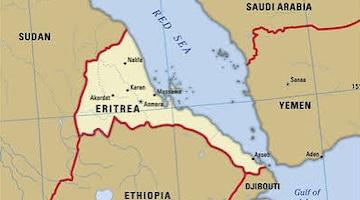 Ethiopia and Eritrea are on the brink of a war that could further destabilize the Red Sea, disrupt oil tanker traffic, and drive gas prices even higher.


