Mali, Burkina Faso, and Niger are leading the way toward the realization of Pan-Africanism and the struggle against imperialism in the 21st century.
Originally published in Fighting Words.
Note: These remarks were delivered at the Black Alliance for Peace (BAP) Africa Team webinar inaugurating an annual month of action against the United States Africa Command (AFRICOM). Other panelists were Suad Abdel Aziz, human rights lawyer and Executive Director of Decolonize Sudan, along with Blanchard Kiyongo of the League of Young Peasants of the Democratic Republic of Congo (DRC). The webinar was moderated by Halle and Josh of BAP.
Three landlocked and mineral-rich states in West Africa: Mali, Niger and Burkina Faso have provided hope and political guidance during the third decade of the 21st century.
Since 2020 much has taken place within the African world where on the continent and throughout the Diaspora people have risen up against institutional racism, national oppression, neo-colonialism, fascism and imperialism. From the George Floyd uprising which began in the United States city of Minneapolis and spread throughout the international community to revolutionary developments in what became known as the Alliance of Sahel States (AES).
Mali, Burkina Faso and Niger during the period since the advent of the United States Africa Command (AFRICOM) in 2008 were targeted for imperialist intervention under the guise of strengthening and enhancing the security apparatus of various nation-states on the continent. Yet, what was not revealed by the US and other imperialist states during the period leading up the deployment of AFRICOM troops was that the underdevelopment which existed in the post-colonial period in the Sahel region was a direct result of continuing unequal distribution of wealth and economic power.
All three of these states were colonized by France which has a long history of enslavement and imperialist domination over African and Asian territories. Haiti in the Caribbean was the most profitable slave colony in the world leading up to the revolutionary uprising beginning 1791. Algeria was occupied as a settler-colony from 1830 to 1962 where some of the largest deposits of petroleum and natural gas exist. Mali, Burkina Faso and Niger all have massive resources which are indispensable to the world economic system.
Transforming the Neo-colonial Economies
Mali has large amounts of mineral and metallic resources most of which remains largely unexploited. Gold is the largest export which brings in foreign exchange. They also have iron, manganese, bauxite, lithium, uranium and other important resources. Approximately 80% of the people are involved in agricultural, fishing and livestock production. Cotton exists in abundance and is a major source of national income.
Burkina Faso is a major source of gold production similar to neighboring Mali. Just recently a gold refinery was opened to generate more national income and to keep the earnings inside the country.
In a report published by Business Insider Africa, it says of these recent events that:
“President Ibrahim Traoré inaugurated the Raffinerie Nationale d’Or du Burkina Faso in Ouagadougou, saying the country wanted to move beyond extracting minerals and develop the full value chain locally. Built at a cost of about 11 billion CFA francs ($19 million), the state-backed refinery will initially process 164 tons of gold annually. A second phase is expected to increase capacity to 515 tons a year. The facility will handle refining, assaying, certification and secure storage, allowing activities that have largely been carried out outside Burkina Faso to take place domestically. The government expects the refinery to create about 100 direct jobs and more than 5,000 indirect jobs. ‘Our ambition goes beyond gold,’ Traoré said at the inauguration. ‘We want to make the mining sector a driver of industrial transformation.’”
Niger is a major source of uranium internationally ranking as the eighth largest deposits in the world. On the African continent it is the second largest deposit of the strategic metal only behind the Republic of Namibia in Southern Africa.
At present Niger is restructuring the ownership of its uranium industry. For many years it was controlled by Orano, a French corporation which provided negligible benefits to the people living inside the country.
In a recent report from mining.com, it emphasized the changes in ownership by noting:
“The decision underscores Niger’s increasingly assertive approach to its uranium industry since soldiers seized power in the West African nation three years ago. It allows mining of the nuclear fuel to continue under the new Nigerien-controlled structure and marks another step in the military government’s push to increase state control of the industry. Niger seized control of Somaïr in June 2025, after accusing Orano of extracting more uranium than its agreement with the state allowed. Orano has opposed the nationalization of the mine and sued Niger in multiple commercial courts following the takeover.”
These cursory assessments of the national economies of the Alliance of Sahel States (AES) illustrate the role of neo-colonialism in the 21st century. Since the seizure of power by the revolutionary forces in all three states, they signed the Liptako-Gourma Charter in September 2023 aimed at further consolidation of the transformative process.
During this time period, Niger along with Mali and Burkina Faso were under threat of a western imperialist backed invasion aimed at reimposing governments which are favorable to international finance capital. These threats are continuing on a daily basis.
Efforts aimed at the overthrow of the governments in Mali was exemplified in a combined attack by the JNIM and the FLA. The armed forces fought these rebels to maintain control of the state.
It was revealed that the imperialist-backed fascist regime in Ukraine provided weapons and logistical support to the attempted coup. The growing cooperation between the Russian Federation and the AES administrations has fueled efforts to undermine and replace the existing AES governments.
There have also been attempts to assassinate the leaders of Burkina Faso and most recently Niger. What was described as a “mutiny” in Niamey recently was aimed at overthrowing the government of the Committee for the Safeguard of the Homeland (CNSP) and therefore reverse the transformation process.
Consequently, the international solidarity movement must amplify its efforts to politically educate people about the processes taking place in the AES region. Organizations and coalitions committed to Pan-African consolidation and the spread of socialism on a global scale must focus on the defense of the AES.
The Founding of a Joint Communications System is Essential
One of the most promising announcements in the recent period is the founding of Tafouk Television jointly owned by Mali, Burkina Faso and Niger. Communications remain a key element in maintaining the neocolonial control over Africa, its resources and people.
These efforts can counter the psychological warfare and misinformation which is designed to foster confusion, inertia and demoralization among the masses of people. African people throughout the continent and across the world must be informed about the revolutionary processes taking place within the AES.
 AES launches Tafouk TV.
Even Radio France International (RFI) reported recently on the establishment of this Pan-African media outlet saying:
“Burkina Faso, Mali and Niger are stepping up their joint media push with Tafouk TV, a new television channel aimed at challenging Western coverage and promoting the three military-led Sahel states’ own account of events. Broadcasting from Bamako and available through Canal+, the channel is part of a wider media network being developed by the Alliance of Sahel States – or AES – as its members deepen ties with Russia and distance themselves from France and other Western partners. ‘We had to strike back… to ensure that these platforms could spread our own narrative,’ Malian Foreign Minister Abdoulaye Diop said this month. Tafouk TV, whose name means ‘Sun’ in Tamasheq, the language spoken by many Tuareg communities across the Sahel, began official programming on 16 September. Its presentation draws heavily on regional imagery. The opening theme is inspired by the music of traditional Dozo hunters, while the logo of its Communication Intervention Brigade program features a shield incorporating a camera, microphone and pen.” ()
These efforts by the AES are reminiscent of the previous work of networks such as Radio Moscow during the period of the Soviet Union, Radio Havana Cuba, Ghana National Television under the First Republic of Dr. Kwame Nkrumah which was created and directed by Shirley Graham Du Bois, Voice of the Revolution in Guinea under Ahmed Sekou Toure, Radio Freedom in Zambia during the anti-apartheid struggle, and other outlets. It is essential that the revolutionary forces convey their messages clearly on a domestic and international level.
We must spread this information across Africa as well as within the imperialist states. With the crisis of imperialism in the contemporary era, we know that total recolonization and genocide are already being implemented in Palestine and other areas of West Asia. Every state in the Horn of Africa is now under grave threat.
Consequently, there is a sense of urgency. Let us move scientifically towards the liberation of Africa and all oppressed and working peoples throughout the globe.
Abayomi Azikiwe is the Editor of Pan-African News Wire. He is a Research Associate of the Centre for Research on Globalization (CRG).

 Students in France are engaging in mass protests. Hundreds of them have been arrested and injured by police, and many schools are closed. Annick Metefia joins us from Paris. She is a member of the…
 Ajamu Baraka of the Black Alliance for Peace joins Dimitri Lascaris on BettBeat Media for a conversation about something Western publics have not yet come to terms with — the fact that resistance to…
 Progressive candidates rarely remain so after winning public office. Zohran Mamdani is no exception, but his capitulation to New York zionists angered his supporters, and the people he hoped to…
 “Between October 2 and October 8, 1937, between 15,000 and 40,000 Haitians and Black Dominicans were slaughtered by Dominican troops…”
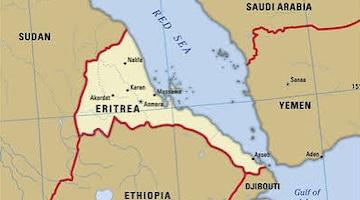 Ethiopia and Eritrea are on the brink of a war that could further destabilize the Red Sea, disrupt oil tanker traffic, and drive gas prices even higher.


