 by Linn Washington Jr.
Despite the High Court's recent decision, options remain for the defense of the former Black Panther Party member. A lower court must now “reexamine the issue of whether the judge at Abu-Jamal's 1982 trial provided faulty jury instructions regarding death penalty deliberation procedures.”
Will Supreme Court Ruling Help Mumia Abu-Jamal's Case?
“The U.S. Supreme Court made a mockery of its duty to ensure equal justice under law.”
In a perverse way, the recent U.S. Supreme Court ruling reinstating the death sentence of Mumia Abu-Jamal could ultimately benefit the world's most recognized death row inmate.
This ruling orders the federal 3rd Circuit Court of Appeals to reexamine the issue of whether the judge at Abu-Jamal's 1982 trial provided faulty jury instructions regarding death penalty deliberation procedures.
The 3rd Circuit had found those judicial instructions flawed and voided Abu-Jamal's death sentence, prompting an appeal from Philadelphia prosecutors that the Supreme Court granted.
Returning this controversial case back to the 3rd Circuit enables new legal maneuvering which Philadelphia prosecutors concede could include examination of issues federal courts have not considered in this matter that draws attention internationally arising from the explosive intersection of racism and politics.
Although the case against former Black Panther Abu-Jamal arguably contains compelling elements, this case is circumstantial, centered on testimony from criminally flawed eyewitnesses and lacking conclusive forensic evidence.
Those demanding a new trial for self-proclaimed revolutionary journalist Abu-Jamal consistently cite credible evidence of egregious improprieties by police, prosecutors and jurists as corrupting the quest for justice of this once award-winning radio reporter who's authored six books while on death row for over 25-years.
“This case is circumstantial, centered on testimony from criminally flawed eyewitnesses.”
Amnesty International, in its seminal 2000 report on the Abu-Jamal case, detailed "a pattern of events" comprising Abu-Jamal's fair trial rights including irregularities by police and prosecutors plus "hostility by the trial judge and the appearance of judicial bias during appellate review."
The least scrutinized aspect of Abu-Jamal's case is unusual rulings issued by appellate courts - federal and state - often creating new standards seemingly crafted to deny this convicted cop killer the legal relief granted to others including a few convicted of murdering police.
When the Pennsylvania Supreme Court first upheld Abu-Jamal's conviction in March 1989 it eliminated an ancient legal standard permitting defendants' to make statements before sentencing that it had reinforced in a ruling issued just one month earlier.
Curiously, the same Philadelphia and Pennsylvania courts that found major flaws in 86 Philadelphia death penalty convictions between Abu-Jamal's December 1981 arrest and October 2009 declare that not a single error - evidentiary or procedural - exists anywhere in the Abu-Jamal case.
Despite Pennsylvania state and federal courts voiding 22 death penalties because of defense lawyer failures to present any mitigating evidence for their clients during death penalty hearings, courts found no fault in Abu-Jamal's trial lawyer failing to present any mitigating evidence during the penalty hearing.
“Appellate courts often created new standards seemingly crafted to deny this convicted cop killer the legal relief granted to others.”
When the 3rd Circuit Court upheld Abu-Jamal's conviction in 2008, it created a new standard for defendants challenging racist jury selection practices by prosecutors - a standard more stringent than the standard used by that Circuit and the U.S. Supreme Court.
Abu-Jamal's appeal of that 3rd Circuit ruling highlighted 11 separate rulings where federal and Pennsylvania state courts specifically faulted Philadelphia prosecutors for engaging in intentional discrimination during jury selection.
Six of those 11 rulings cited in that appeal came from the 3rd Circuit yet the U.S. Supreme Court rejected Abu-Jamal's appeal in April 2009 without comment.
The U.S. Supreme Court engaged in contradictory rulings related to Abu-Jamal in the early 1990s making a mockery of its duty to ensure equal justice under law.
That Court granted a new hearing to a Delaware murderer who challenged prosecutorial reference to his current membership in a violent white racist prison gang, citing the racist's First Amendment free association rights.
Following favorable ruling for that avowed racist, Abu-Jamal unsuccessfully sought Supreme Court reconsideration of its rejection of his challenge of prosecutors violating First Amendment protections by referencing his teenaged membership in the Black Panther Party.
“Disparate rulings in the Abu-Jamal case raise real questions about courts acting in accordance with America's bedrock principle of equal-justice-under-law.”
Months after spurning Abu-Jamal's request, the Supreme Court granted relief to a white Nevada murderer challenging prosecutorial reference of his membership in a devil worshipping cult - citing its prison racist ruling precedent.
Equal protection of laws seemingly should have provided an ex-Black Panther with the same protection of rights extended to a racist gang member and devil worshipper given similarities in their respective appeals.
While it's true that courts enjoy wide discretion in interpreting law as those courts deem appropriate, disparate rulings in the Abu-Jamal case raise real questions about courts acting in accordance with America's bedrock principle of equal-justice-under-law.
The most disturbing aspect of the Abu-Jamal case is that evident improprieties by police, prosecutors and jurists ignored in this matter are deprivations endured daily by defendants nationwide, undermining equal justice under law - that phrase chiseled above the entrance to the U.S. Supreme Court building.
Linn Washington Jr., columnist for The Philadelphia Tribune, is a former Yale Law Journalism Fellow who writes frequently about the Abu-Jamal case and other issues involving race-based inequities in America. He is author of Black Judges on Justice: Perspectives from the Bench, published by The New Press.

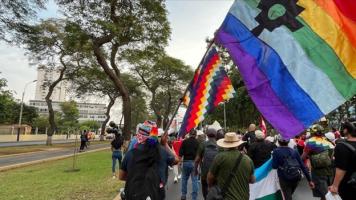 The people of Peru continue to protest the coup which ousted President Pedro Castillo Terrones. Clau O'Brien Moscoso reports from Peru.
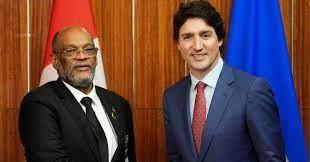 The U.S. and Canada are using Caribbean and Latin nations to act as fronts, willing dupes, in their plans for the next occupation of Haiti. Travis Ross explains in the second of a three-part report.
 The attack by Israeli settlers on the town of Hawwara was no aberration. It was just one example of the violence inherent in an apartheid state.
 It is important to understand the truth about the 222 people recently released to the US who were convicted of treason in Nicaragua for savage acts of violence against their people.
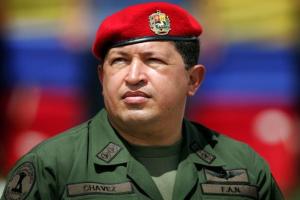 The tenth anniversary of the death of Venezuelan president Hugo Chavez reminds us of his commitment to serve the people of his country, and to fighting for sovereignty for his nation and all the…


