The right to vote is under a persistent, many-sided and sustained siege. In an era of hostile courts, complicit media, and big money dominating all the legislatures in the land, how can we launch a movement that will actually establish and defend the right to vote for ourselves, our children and grandchildren? An almost forgotten 2001 book by Jesse Jackson Jr. and Frank Watkins contains some serious clues....
Voting As A Constitutional Right: What A Real “Protect The Vote” Movement Would Look Like
by BAR managing editor Bruce A. Dixon
Anyplace black or brown people, or students or the elderly gather this election season , -- anyplace frequented by the groups the Democratic party likes to call its base come together, the political air is full of talk about protecting the vote. “Dont't let them steal your vote” has become the rallying cry of Democratic leaning preachers, pundits and TV shows, independent reporters like Greg Pallast and Brentin Mock, and just about everybody outside the orbit of the Republican party.
To be sure, the right wing vote stealers are well-practiced, in many jurisdictions, in tactics like sending the most broken down voting machines to the poorest areas, ruling millions of would-be voters off the rolls with felony-conviction restructions. Lazy pundits like Michael Eric Dyson lean on the discredited myth that Ralph Nader's Green vote in 2000 cost Al Gore the election. But Gore's home state of Tennessee alone, which George Bush carried, ruled half a million ex-felons, most of them black and all of them poor, off the ballot, and more than a dozen other states where his margin was thin did the same. There's vote caging, in which categories of voters are identified and targeted with misleading information about their eligibility to vote or selectively challenged. And in addition to all these, voter ID laws have been enacted in twenty or thirty states specifically aimed at lowering the number of eligible voters among the demographic groups least likely to vote Republican.
The lazy black political class, which we sometimes call the Black Misleadership Class, was unaccountably slow to wake up and openly challenge these restrictions. In Georgia where I live, we have the second largest concentration of African descended people in North America, and our state was one of the earliest to adopt a restrictive voter ID law. Georgia is one of the states where any state law affecting who can vote and how votes are cast is subject to Justice Department review, thanks to the Freedom Movement era Civil Rights Act of 1965.
One might have expected our local black political class to mount a loud and insistent campaign to get the first black attorney general, serving under the first black president to aggressively intervene on the side of extending, not restricting the right to vote. Perhaps because they were unwilling to upstage the black attorney general, and reluctant to pressure the black president on anything that affected black people, they were silent. And in the months that followed, state after state passed similar laws, some even worse than Georgia's.
This isn't the sixties or seventies. The courts can no longer be presumed friendly to the voting rights of the poor and minorities. An incredible number of federal judges are former members of the extreme right-wing Federalist society, an outfit committed pretty much to repealing the 20th century. These are likely to be reliable votes to uphold most if not all the onerous restrictions new and old that encumber the franchise.
The US Constitution guaranteed white men, the only citizens at the time, the right to own guns so they could be drafted into slave patrols and militias to steal land from local natives. The 24th amendment banning the poll tax indirectly infers a right to vote, but not explicitly. And the Constitution guarantees no rights to full employment, medical care, a clean environment, a quality public education or other eminently sensible measures. If it did, the Constitution being the supreme law of the land, it would permanently render all the vote-stealing measures illegal.
Instead of leaving it to the officials of two thousand independent counties and cities, a constitutional right to vote amendment would require the same federal standards applied across the country for how voting machines are tested, purchased and operated, and a uniform standard for how votes cast are counted. It would establish the legal grounds for lawsuits against electronic voting regimes that don't contain paper trails and cannot be audited.
A constitutional right to vote would establish the same standards across the country for who can vote, and require that whatever measures officials undertake to positively identify voters do not measurably infringe on the rights of legitimate voters who might lack photo ID, and make almost inevitable the end of felony disenfranchisement as well as opening the way to federal interference in the currently widespread practice of legislative gerrymandering.
The courts will not overrule the blizzard of assaults in dozens of states and local jurisdictions against the right to vote. There are really no other legal remedies. Call it unrealistic for the next two or four or ten years, a campaign to amend the US Constitution and include the right to vote is the only way to address the many-sided drive to bar millions of left-leaning voters from the polls.
The idea was spelled out in an insightful 2001 book by Rep. Jesse Jackson Jr. and Frank Watkins, titled Toward A More Perfect Union, Advancing New American Rights. Jackson and Watkins note that the fact the US Constitution does NOT award the right to vote, the right to an education, the right to a job, a clean environment, the right to organize unions and strike and so on, makes all these basic human rights contingent on the whims of courts and legislators at any given moment.
Of course, the US Constitution is almost amendment-proof, requiring a supermajority of state legislatures and both houses of Congress to make it happen. But almost is only almost. It's the kind of decade-long project that today's corporate-oriented black misleadership class is entirely unwilling to undertake, even to envision. That's a shame. The activists who envisioned the end of Jim Crow, most notably Charles Hamilton Houston, crafted and executed a legal and political strategy that unfolded over a generation. They had a vision longer than the next funding cycle, or the next two elections, unlike our current black political class.
Some will also note that if the left can propose and organize support for Constitutional amendments, so can the right, and suggest that alone is reason to bury the idea permanently. A preacher would call these people of little faith, faith in their own organizing abilities, or faith in the intelligence and self-interest of the majority of the American people, or both. It's OK to have a faint heart, really it is. But that's not how leaders lead. The question is whether anybody is up for the serious challenges of real, not pretended, leadership.
It's time for us to open Jackson and Watkins' 2001 book again, and take a long and serious look at what it will take to defeat the right's assault on the right to vote, once and for all. The courts and legislators, and corporate media won't let us do it piece by piece. They've got the microphones, and they've got the money. The only thing that trumps organized money and organized violence is organized people. And the only thing that organizes is leadership. We won't find it in today's Democratic leadership. Can we find it in ourselves? Are we even willing to look?
Bruce A. Dixon is managing editor at Black Agenda Report and a member of the state committee of the Georgia Green Party. He can be reached at bruce.dixon(at)blackagendareport.com.

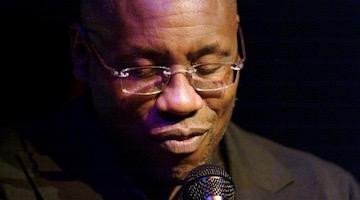 BAR Poet-in-Residence, Raymond Nat Turner, joins us from New York City to talk about his work and an upcoming performance with his group, Upsurge New York City.
 Gerald Perreira of Organization for the Victory of the People in Guyana joins us to discuss the long running territorial dispute with neighboring Venezuela and the increasing activity of U.S. in the…
 Any sign of even tiny opposition is enough to send Israel into a frenzy of bloodletting. Hospital attacks, murders of aid workers, violations of the sovereignty of embassies, are all par for the…
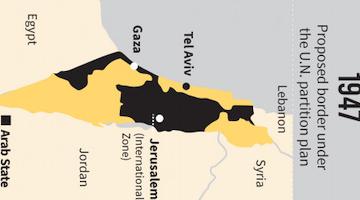 The statement on the UN Partition of Palestine by the Arab Higher Committee is a reminder of the sordid history of the U.S. in the expropriation of land and the attempted ethnic cleansing of the…
 The totalitarian state of Rwanda is guilty of many forms of transnational repression, including the lawfare exemplified in the case of Eric Nshimiye.


