Towards a Reconstruction of the Freedom Movement
by BAR executive editor Glen Ford
"Elimination of all health, education, home ownership, and social justice disparities must form the foundation of every plank of any acceptable political and economic platform."
 Before we can build a viable movement for justice, we must relearn how to describe the world as it is, and to define in clear language the new circumstances we are attempting to create.
The events of the current presidential campaign season show beyond doubt that much of Black America has lost the language of true social change - the ability to coherently express the near-universal African American desire for fundamental transformation of society, and to distinguish empty, purposely ill-defined promises of "change" from actual programs to alter conditions of life. Just as all human language evolves to serve the changing circumstances of social and economic life, so does the language of social change reflect the communications needs of peoples involved in struggle.
In the absence of organized, purposeful struggle, the language of social change atrophies from disuse. People who have been stripped - or starved - of language necessary to recognize and defend their interests, are helpless to resist charlatans skilled at obfuscation and linguistic diversion.
The rulers of society know exactly what they want: to keep and expand their power. Their control of the means of communication allows the rich and their servants to impose the assumptions on which U.S. political discourse is built, assumptions that effectively preclude conversation that can lead to actual social change. For example, the assumption that the American "free enterprise" system is the great "genius" of the country (Barack Obama), that a list of designated, demonized nations are America's "enemies" (Obama, most Democratic Party luminaries, and virtually all Republicans), and that race-specific remedies are outmoded and counterproductive (Obama's core belief, shared with corporate America and its media mouthpieces). Once these assumptions are accepted as the basis of legitimate debate, the discussion is straitjacketed.
The only result that can emerge from such stilted discourse is some variation on the power status quo. The people's energies and aspirations are channeled into meaningless - and, in the end, dangerous - celebrations of false victories on the road to nowhere.
"The language of social change atrophies from disuse."
Celebrations of half-won victories accompanied the demise of the Sixties Freedom Movement, as Black society at-large reveled in the belief that "ain't no stopping us now, we're on the move!" City after city came under nominal control of Black mayors who had no vision for city planning that would serve the interests of their own constituents. A Black corporate class emerged that measured racial progress by the size of their own bank accounts. The "white backlash" fueled the explosion of a Black Prison Gulag that strangles hope in its cradle. The Congressional Black Caucus steadily deteriorates in usefulness, even as it grows in size.
And then Katrina hit, shattering any illusion that fundamental power relationships had changed in America. The catastrophe "could very well shape this generation of young people in the same way that the assassinations of Malcolm X and Martin Luther King shaped our generation," said Dr. Michael Dawson, the University of Chicago political scientist who conducted a study of Black and white responses to Katrina in the latter part of 2005. "It suggested to Blacks the utter lack of the liberal possibility in the United States."
That lesson was brought most painfully home to survivors of Katrina and their allies. The savagery (not "incompetence," as Barack Obama frames the issue) of corporate-governmental Disaster Capitalism and total Dred Scott Decision-like contempt for Black life and citizenship rights forced activists to rethink - everything. (Or, to remember that which had been forgotten.)
Out of the cauldron of devastation and forced exile was born a largely South-based coalition of strugglers, forced to confront Power-in-the-Raw. Katrina had revealed the actual agenda of the rulers: to disperse and politically neutralize African Americans at every possible opportunity. Katrina proved that the political crisis for Black people was general, not just limited to the Gulf. The response must be much more definitive than Kanye West's "George Bush doesn't care about Black people." A Movement is needed, and a party whose central goal is creation of that Movement.
"Katrina revealed the actual agenda of the rulers: to disperse and politically neutralize African Americans at every possible opportunity."
Two years after the deluge, activists created the Reconstruction Party, a national formation to do battle with the forces that the Sixties Movement failed to overcome - and whom Barack Obama tells us are our friends. In its Manifesto, drawn up in late January in collaboration with former Georgia Congresswoman Cynthia McKinney, the Reconstruction Party declares it "encompasses all communities in need of reconstruction."
Point One of the Manifesto proclaims, "We Want Freedom Now!" and includes within that demand
"...the rights to education, health care, housing, living wages, and freedom from racism, sexism, homophobia, Islamophobia, gentrification, and police terror. Therefore, elimination of all health, education, home ownership, and social justice disparities must form the foundation of every plank of any acceptable political and economic platform that seeks to address the real concerns of the peoples of the Americas."
Nine other points are detailed in the Reconstruction Party's straightforward "What We Want; What We Believe; What We Need" presentation:
We Want Full Employment Now!
We Want Reparations Now!
We Want Resources for Human Needs Now!
We Want to Stop the War at Home Now!
We Want an End to the War on Drugs Now!
We Want to End Prisons for Profit Now!
We Want an Environmental Protection Policy that Works Now!
We Want an End to Militarism Now!
We Want Peace Now!
"Let us not fail," concludes the Manifesto, "to speak out in our own name and to organize around these fundamental programmatic planks so that we can forge and win solutions to the problems facing our communities, our country, and our world."
The Reconstruction Party is reclaiming from the dustbin the language of struggle, suited to current conditions. We desperately such clear language, to confront the cacophony of nonsense that passes for political speech in the Age of Obama and his corporate sponsors.
It will be a long struggle, but we'll debate and strategize and fight our way through it.
BAR executive editor Glen Ford can be contacted at Glen.Ford@BlackAgendaReport.com.

 In this week’s segment, we discuss the 80th anniversary of victory in Europe in World War II, and the disinformation that centers on the U.S.'s role and dismisses the pivotal Soviet role in that…
 Roger McKenzie is the international editor of the UK-based Morning Star, the only English-language socialist daily newspaper in the world. He joins us from Oxford to discuss his new book, “The…
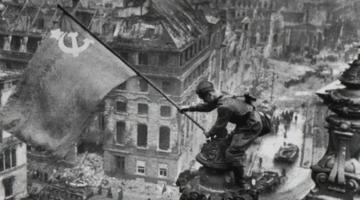 The late Bruce Dixon was a co-founder and managing editor of Black Agenda Report. In 2018, he provided this commentary entitled, "US Fake History of World War II Underlies Permanent Bipartisan…
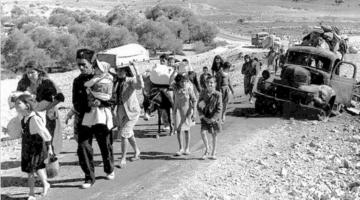 Nadiah Alyafai is a member of the US Palestinian Community Network chapter in Chicago and she joins us to discuss why the public must be aware of the Nakba and the continuity of Palestinian…
 Black people who are among the rich and famous garner praise and love, and so do those who are in distress. But concerns for the masses of people and their struggles are often missing.


