Hope is not a plan. Barack Obama was carried into office on the hopes of ordinary people. But his plans seem to come from the same people that brought us multiple overlapping wars and crises in the environment, in education, in the economy.
So Now We Know A Black President Is Possible. What Does That Mean?
by BAR Managing Editor Bruce Dixon
I can't really say I always knew a that black president was possible. But as someone who's spent a lot of time working in and more recently writing about politics, I can say that I've known a black president was very possible, even likely since at least late 1992 or early 1993, and that it might well be Barack Obama.
You see, back in 1992, I worked with Barack Obama in Chicago. Project VOTE was, in keeping with the campaign finance laws of those days, a national soft money funnel which concentrated resources in one or two locations each election cycle where a big spike in black registration and turnout would have national impact. In 1992 that spot was Illinois, Chicago in particular.
"When a mutual friend told me soon after the 1992 election that Barack would eventually be a candidate for national office it seemed entirely plausible, almost natural. And now it has come to pass."
Fresh out of Harvard Law, Barack Obama was named state director of Project VOTE Illinois. I was one of the project's three field organizers, so Obama was my direct supervisor from June to November of that year. We registered about 130,000 voters that season, mostly blacks, Latinos and gays, thus contributing to the lopsided total by which Bill Clinton carried the state, and accounting for many times the narrow margin of Carol Moseley Braun, the first African American to be elected to the US Senate in more than a century. It was a foregone conclusion that Barack would launch a political career after the record breaking voter registration drive.
Anybody plugged in and paying attention to the local political scene in those days knew that Barack was headed for Congress at the least, and likely statewide office or higher. I never met any candidate or official with a firmer grasp of the organizing fundamentals involved in running a winning campaign. He knew how to talk to ordinary people about their needs without seeming to patronize, had proven an able fundraiser, capable of building and holding together a team long enough to get something done. And in status-ridden America, where connections are everything, nothing beats an ivy league and Harvard Law pedigree. When a mutual friend told me soon after the 1992 election that Barack would eventually be a candidate for national office it seemed entirely plausible, almost natural. And now it has come to pass.
"Hope is better than nothing, but it's not a plan."
So what does Barack Obama's career mean for ordinary African Americans? Since the mid-century Freedom Movement and the Voting Rights Act thousands of African Americans have been elected to county boards and city councils, to school boards and state legislatures, to congress and statewide offices. The black elite now includes thousands of black millionaires and corporate figures as well as elected officials and traditional figures like preachers. But the percentage of black children in poverty is roughly what it was forty years ago when Dr. King died. The proportion of black and Latino children in underfunded and segregated schools is as high as it was in the late 1950s and the dropout rate may be higher, and the percentage of African Americans in prisons and jails dwarfs anything we could have imagined in 1969. Black incomes did not rise as much as those of whites in good economic times, and have been falling faster in bad times.
Barack Obama, just like the waves of black elected officials before him, carries on his back the dreams and aspirations of the descendants of enslaved and exploited people. Although his career is built upon their hopes, his record does not indicate a willingness to take political risks for the locked out, the locked up, the left behind. Hope is better than nothing, but it's not a plan.
Obama's supporters among ordinary people invested their energy, their enthusiasm, their volunteer time in his campaign without having extracted any specific promises from the new president. They supplied the hope. Obama's plans, it seems, will be supplied by his campaign contributors on Wall Street and elsewhere who gave us the current wars and overlapping crises in the environment, energy, education, and more. It's going to be a long four years.
For Black Agenda Radio, I'm Bruce Dixon

 Corporate media peddle the myth of a pre-Trump economic golden age, but for working-class Americans, especially Black families, the struggle began long before he took office.
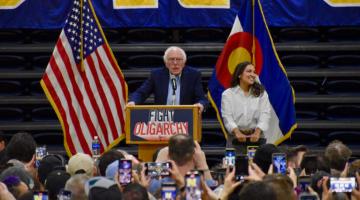 Lenin called out Kautsky’s fake socialism more than a century ago—today, Bernie and AOC are playing the same game, trading radical change for liberal theatrics.
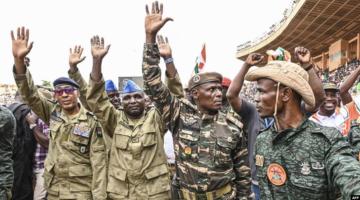 African Command's (AFRICOM) heavy-handed tactics in Africa have backfired, exposing U.S. arrogance and fueling a wave of resistance. As Sahel nations reject neocolonial bullying, Washington’s…
 NATO’s depleted uranium weapons leave a deadly legacy—cancer, birth defects, and environmental ruin in war-torn regions. The silent genocide continues long after the bombs stop falling.
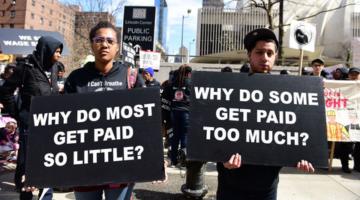 For millions, a job is no longer enough to afford housing—yet the myth that homeless people don’t work still dominates public opinion.


