by Seth Sandronsky
The Weather Underground waged armed struggle against the U.S. state and “white skin privilege” – a war that put David Gilbert in prison for life. “Gilbert’s memoir in part corrects the historical record with insights on fighting power and wealth with like-minded others for a more humane way of life for all.”
Remembrances from the Weather Underground: Reviewing Love and Struggle
by Seth Sandronsky
This article previously appeared in Z Magazine.
“Black power and war in Vietnam are the two driving forces of Gilbert’s political awakening in the 1960s.”
David Gilbert came from comfort in a Boston suburb. But as a Jewish lad, he felt the pain of those in discomfort, and there were scores of them among national minorities. Gilbert took that sentiment and ran with it as a liberal initially and then a radical in the temper of those days when revolution became a part of the national consciousness. His memoir, Love and Struggle: My Life in SDS, the Weather Underground, and Beyond (PM Press, 2012), traces that trajectory.
It spans the author’s growth from empathy for to solidarity with people oppressed for reasons of race, gender and class at home and abroad. Black power and war in Vietnam are the two driving forces of Gilbert’s political awakening in the 1960s, propelled in no small measure by Third World Marxism.
The memoir’s first and longest part covers his coming to understand and act against the trio of empire, male and white supremacy. Written from Auburn Correctional Facility in upstate New York where he is serving a life sentence after conviction for a 1981 robbery of an armed Brink’s truck that resulted in multiple deaths, Gilbert’s memoir, which author Terry Bisson edits, is open and honest on many levels.
“Decolonization struggles shape Gilbert.”
One is his personal accounts of changing relations with family members: mother, father and sisters. Then there are the evolving conditions in and out of the Students for a Democratic Society and Weather Underground Organization and the groups they collaborated with.
Decolonization struggles shape Gilbert. He comes to see them in light of African Americans fighting Jim Crow discrimination stateside. The WUO, in prosecuting a strategy of “armed propaganda,” aims to spur whites into solidarity with non-white foreign and domestic freedom fighters.
That’s no small motive given whites’ past and present roles as racial oppressors in the U.S. Gilbert never loses sight of why he fights against this race-making: to liberate its perpetrators and victims and overturn a salient feature of class society, U.S.–style.
Class struggle is the motor force of history, according to Karl Marx, which Gilbert agrees with. But he fits patriarchy and white-skin privilege into that social analysis.
His section on life underground opens a window to clandestinely battling the state apparatus such as the Pentagon that facilitates war and waste. Gilbert acts and writes to strengthen revolutionary practice and theory, or praxis, no small feat during his six years of hiding.
“’Criticism and self-criticism” of white-skin privilege and nonwhites’ struggles was relevant then and remains so today.”
Further, he and WUO members grappled with a gendered division of labor. That and other “internal weaknesses” plus government repression such as the FBI's COINTELPRO counter-insurgency policy that destroyed the Black Panther Party, herald the WUO’s demise.
Aboveground in Denver, Gilbert works for wages and continues his activism. As comrades arrive and depart, he arrives at new insights about the WUO’s break-up. It’s a complex process amid complicated times. Suffice it to say that “criticism and self-criticism” of white-skin privilege and nonwhites’ struggles was relevant then and remains so today.
As the 1970s end, Gilbert goes back underground. Allied with the Black Liberation Army, he and Kathy Boudin, Gilbert’s partner and mother of their son, Chesa, participate in a failed and fatal armored truck heist. He narrates his and co-defendants’ arrest and prosecution process. Here, Gilbert’s answers raise further questions about that time.
Then and now, media attention to such alleged crime and punishment is lurid, fogging more than it clarifies. Gilbert’s memoir in part corrects the historical record with insights on fighting power and wealth with like-minded others for a more humane way of life for all.
“He and Kathy Boudin participate in a failed and fatal armored truck heist.”
As occupations and revolutions erupt worldwide over the past three years, it is instructive to contrast them with the author’s experience before his three decades of imprisonment where he becomes an AIDS activist. The U.S. government’s war-making continues in the post-9/11 era, but with an all-volunteer armed force. The military draft of the 1960s that sparked resistance from Gilbert and scores of Americans, mainly white youth but also other folks, to their government’s air and ground operations in Vietnam does not exist.
Boots Riley’s appreciation to Gilbert is short and sweet. A glossary of acronyms helps readers sort out the varied groups he discusses.
Wrapping up, Gilbert reveals how delicate it is to work with individuals for collective liberation against a mix of oppressions. This is my main take-away from his thoughtful book.
Email FODGWest@gmail.com to contact his friends in the SF Bay Area.
Seth Sandronsky lives and writes in Sacramento. Email sethsandronsky@gmail.com.

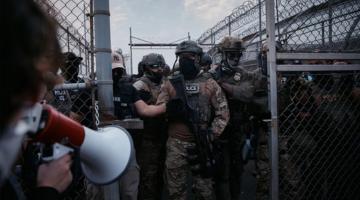 The staggering increase is ICE enforcement is difficult to process. These numbers will help.
 This past week, the U.S. Senate and House of Representatives passed Donald Trump's signature budget bill, which Trump dubbed "One Big Beautiful Bill Act". Dimitri Lascaris spoke with Margaret…
 In this week’s segment, we discuss navigating celebrity culture and liberation politics. Also, organizers will convene in Philadelphia to mobilize on behalf of Mumia Abu Jamal. But first, we learn…
 On Inauguration Day, Donald Trump issued an Executive Order which stated that the federal government would require proof of parental citizenship or permanent residency in order to grant birthright…
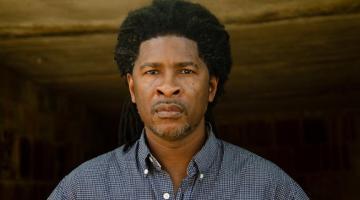 We are joined by Kalonji Changa, who is a co-founder of Black Power Media, founder of the FTP Movement, and co-author of the book Beyond Cop Cities: Dismantling State and Corporate-Funded Armies and…


