by BAR editor and columnist Marsha Coleman-Adebayo
U.S. decline in the world is no longer just a trend, but a fact. Cold statistics tell us that our young people “will never experience the prosperity we, their parents, did.” Yet, amidst growing misery, the American electoral process is flush with cash. “GOP candidates spent $12.5 million on television ads in Iowa alone, and Obama is raising a $1 billion war chest to fight the election.” Rich people’s money buys silence on poverty.
Poverty in America: The Subject Presidential Candidates Would Prefer to Ignore
by BAR editor and columnist Marsha Coleman-Adebayo
“Not a single presidential candidate from the Republicans or the Democrats is talking about poverty.”
This week in Johannesburg, South Africa a mother was trampled to death as thousands of young people surged, desperate to register for university, because there are no jobs and studying seems a way of waiting out the recession.
No work makes people desperate. Just the week before a young friend in Boston who graduated last year with a management degree told me he was going back to college because he could not find work, so the hopes of young people there and here are similar. Indeed this recession is making young people poorer than older folk, and as we age and the burden on economies increases from so many gray hairs, they will never experience the prosperity we, their parents, did.
An hour before I read of the South African tragedy I listened to Tavis Smiley and Cornel West on NPR discussing poverty in America; one in two are now poor, 42 percent of American children don’t get adequate nutrition, 41 percent of African American youth can’t find work. Those figures now parallel poverty measures in South Africa.
A South African friend told me of meeting a trade unionist in Washington D.C. who represented the construction industry and was bemoaning how wages had barely inched up in the last two decades; they were effectively lower than 20 years ago and worker’s rights had been eroded. He talked of how companies working with asbestos regularly flouted safety provisions. He mentioned how at the mega-Homeland Security building site in D.C. African Americans who live in the area, some of them veterans, couldn’t get jobs. “The contractors are getting cheap Latino workers from Virginia and Maryland,” he claimed. Worker rights in America, he sighed, were now “third-world.”
“One in two are now poor, 42 percent of American children don’t get adequate nutrition, 41 percent of African American youth can’t find work.”
My South African friend was offended, “no they are not,” she said, “Most African countries would not tolerate such a lack of worker rights. In the United States workers can be summarily dismissed, often without reason, they can be made to work 12-hour days, they rarely get overtime pay, they would never get away with that in South Africa. No worker can work for longer than eight hours, and if they do, they get double pay. There is a slow process of warnings and counseling before dismissal. Maternity leave here is scant but in South Africa women get three to six months on full pay and men are entitled to paid paternity leave.”
We, who once led the world in worker rights, and whose management thinkers were considered gurus, now lag the world with many citizen rights.
And yet not a single presidential candidate from the Republicans or the Democrats is talking about poverty. None have presented plans. They say they’ll create jobs; we seem to have heard that song before. They say they’ve run companies (that closed factories and moved jobs to China) and that means they’ll be able to run the economy. Yeah, right.
President Obama has presented a Jobs Plan that when scrutinized has as much depth as a goldfish pond. The GOP candidates spent $12.5 million on television ads in Iowa alone, and Obama is raising a $1 billion war chest to fight the election. It is probably fair to say that people who can throw that sort of cash around don’t have a clue of what it is to be hungry, or to wait in a job line, or to fear foreclosure.
“We now lag the world with many citizen rights.”
And what about us? Those of us with the education, skills and passion to be reading reports on BAR, what are we doing? I was shocked when someone I consider to have similar political views to mine said she wouldn’t shop in certain supermarkets, “because you’re likely to get in line behind people with food stamps, they slow the process.” She said it without a blush, or a thought of what her words meant.
Smiley and West believe the Occupy Movement will re-emerge in the Spring and present a more potent force. I agree, but Spring is some months away. Many see the Occupy Movement as the actualization of Dr. Martin Luther King’s Resurrection City, a component of the Poor Peoples Campaign. Dr. King, a staunch critic of US foreign policy, called the US “the greatest purveyor of violence in the world”. As we celebrate Dr. King’s birthday, the question that Gandhi posed remains the most essential: are we committed to implementing the change we all want to see?
Dr. Marsha Coleman-Adebayo is the author of No FEAR: A Whistleblowers Triumph over Corruption and Retaliation at the EPA is available through amazon.com and the National Whistleblower Center. Dr. Coleman-Adebayo worked at the EPA for 18 years and blew the whistle on a US multinational corporation that endangered vanadium mine workers. Marsha's successful lawsuit lead to the introduction and passage of the first civil rights and whistleblower law of the 21st century: the Notification of Federal Employees Anti-discrimination and Retaliation Act of 2002 (No FEAR.)

 Anti-imperialist unity has long been sought by African people but has been thwarted by outside forces. The people still struggle to reach this goal, and the West African Peoples Organization is the…
 The first in a three-part series analyzing African politics in 2022.
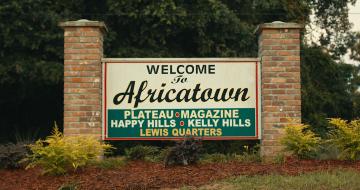 The trans-Atlantice slave trade did not end with the 1808 ban. The Clotilda arrived in 1860 and the descendants of those enslaved people are impacted by that history, as are all African people in the…
 The U.S. imposes unilateral coercive measures, sanctions, against millions of people around the world. Sanctions are war by other means, creating as much damage as bombs and bullets do.
 Black people are disproportionately convicted of felonies across New York State. In Manhattan, a Black person is 21 times more likely to be convicted of a crime than a white person.


