 by Kwasi Anokye
Americans – including some African Americans – rant about political prisoners held in countries they cannot even identify on a map, yet seem oblivious to the fact that fellow Americans languish in U.S. prisons for political reasons. Others know full well the plight of political prisoners, but fear to be associated with them, or despair that they will ever be freed.
Political Prisoners: What Will We Do About It?
by Kwasi Anokye
“A movement that fails to materially support its warriors is a sham.”
A State Department spokesman recently called for the “unconditional” release of “all” Cuban political prisoners. The US government regularly makes this demand of the Cuban, Burmese, Chinese, North Korean, Iranian and other “unfriendly” governments. This creates the impression that there are no political prisoners and prisoners of war (PP/POWs) paying a steep price for their involvement in liberation struggles within the United States’ own borders. Our challenge is to seize control of the conversation and communicate from the standpoint of the PP/POWs that sustained the liberation struggle.
The recent small victory in pressuring prison authorities to release Romaine “Chip” Fitzgerald from isolation into general population is an indication of the potential of people power. But for now, the former Black Panther Party member and other PP/POWs who were captured during the liberation struggles of the 1960s, ‘70s and ‘80s continue to be denied parole on the grounds of the “seriousness of the crime.” Their advocates consistently refute the criminality charge, asserting the prisoners’ past actions were political, not criminal. But cynics ridicule the freedom fighters' expectation that justice can triumph against entrenched power. And as if they have wholeheartedly tried to help and failed, some “supporters” declare that the PP/POWs will not be released in our lifetime, as was said about South African freedom fighters during the 1970s and '80s. Meanwhile, the work of global alliances in the campaign to free all PP/POWs gathers momentum. Success depends on massive public support.
“They fear to seem to justify political acts that the state deems ‘criminal.’”
Like other liberation formations, the U.S. freedom fighters’ operations involved some confrontations with law enforcement officers resulting in casualties on both sides. These casualties of war notwithstanding, far-reaching lessons have been learned from these painful losses. The FBI and police unions have seized the initiative, emphasizing the police lives lost and lobbying against the PP/POWs’ release. They minimize the incessant deaths and trauma inflicted on blacks by arbitrary police excesses, and use their dominant media access to argue that the police deaths nullify the PP/POWs’ political purpose. The pro-PP/POW campaign has so far responded by generally narrowing its scope to proving the innocence of the many PP/POWs who were framed. It is pragmatic and commendable to work towards exoneration of individuals, who deserve our fullest support. But that should not detract from a clear defense of those who have struggled outside of the bounds of “legality.” What the oppressor calls a “crime” is, in fact, protected under international law. UN Resolution 3103, for example, enshrines the “legal status” of formations engaged in armed struggle against “racist regimes.” U.S. freedom fighters were fighting a racist regime. And if it was a scandal for the South African apartheid regime to imprison Mandela for 27 years, dozens of U.S. freedom fighters have been held for as long or longer (some as long as 40 years).
It is no accident that the US regime supported apartheid SA’s criminalization of black freedom fighters. What sets the two racist regimes apart is the latter’s candor. The former’s uncanny ability to normalize false narratives has created a minefield of public confusion that many supporters of PP/POWs find it difficult to navigate – they fear to seem to justify political acts that the state deems “criminal.” Thus, there is a disturbing silence about those who, in the course of their political work, actually did engage in the “offenses” they are charged with.
Also overlooked are those prisoners who began their political work only after they were incarcerated. This neglect mars public appreciation of the prison human rights movement and global liberation struggles. Such silence strengthens the regime’s hand in demanding renunciations of revolutionary politics as a condition for release. Yet Dr. Mutulu Shakur (who was convicted in 1986 on flimsy evidence and is presently being held at the “Alcatraz of the Rockies,” Florence ADMAX) speaks for many when he says he “will not capitulate or distance [him]self from struggle in order to be free.” Should we then continue to skirt the issue? The PP/POWs did not work for personal gain. It is our duty, therefore, to reciprocate by providing them with massive political and media protection. This issue lies at the heart of the self-determination struggle.
“The 1960s uprisings forced the state to make Civil Rights concessions aimed at appeasing the black majority who were demonstrably disenchanted with strict nonviolence.”
The public’s indifference deepened in the Individualistic ‘80s when the state’s anti-revolution propaganda, along with the lure of individual upward-mobility after generations of economic and social marginalization, and the bait of integration fragmented the movement. And, as all war is psychological warfare, the regime diligently deploys its media, academia and military apparatus to dissuade total struggle. “Approved” opinion shapers effectively reproduce the hegemonic narrative that offers false choices between equal access and autonomy; nonviolence and total struggle.
Our silence obscures the role of black armed formations in protecting black voters in 1966 Lowndes County, Alabama and their protection of nonviolent protesters in the March Against Fear (on the invitation of SNCC and with the approval of SCLC’s Dr. King and CORE’s Floyd McKissick). This silence denies crucial human rights victories. The 1960s uprisings forced the state to make Civil Rights concessions aimed at appeasing the black majority who were demonstrably disenchanted with strict nonviolence. Armed struggle – as in slave insurrections – was key to ending slavery. The work of the Reconstruction-era black armed units, and later, the Black Armed Guard, the Deacons of Defense, etc. was central to discouraging and officially criminalizing white terrorism. The public should be made familiar with this context from which the PP/POWs emerged.
It must be sweet music to the regime’s ear to hear black commentators equate armed struggle with white terrorism or express pessimism about the PP/POWs release. Self-respecting people are expected to feel alienated by holistic struggle. But on the occasion of a 1959 debate with total struggle advocate Robert F. Williams, nonviolence icon Martin Luther King admitted that, “When the Negro uses force in self-defense he does not forfeit support – he may even win it, by the courage and self-respect it reflects.”
Total struggle is a unifying cultural expression. Among every people there will always be warriors by temperament and talent needing cultivation and direction. There will also be those who will never take up arms, yet find strict nonviolence in the face of violent racism nonsensical. In a hostile environment of police terror, there will always be visceral, if fleeting, support for armed self defense and retaliation. Williams maintained that strict nonviolence “will confuse the large uncommitted middle group” and “fail to attract Negroes to a real collective struggle.”
“Martin Luther King admitted that, ‘When the Negro uses force in self-defense he does not forfeit support – he may even win it, by the courage and self-respect it reflects.’”
The fractured movement and PP/POWs’ continued detention is an indictment of opinion shapers who have failed to put forth a coherent political philosophy. As Ojore Lutalo asserts, a movement that fails to materially (and politically, one might add) support its warriors is a “sham.” It is pointless to dismiss the PP/POWs work on account of faulty strategy or tactics, as no organization (including Wall Street and the federal government) or movement is flawless. Such rejection diminishes their legacy. In the language of Fred Hampton Jr., their legacy must be “protected, respected and never neglected.” Dr. John Henrik Clarke said, “the black freedom fighters who resisted militarily in the 1960s, ‘70s and ‘80s follow in the tradition of Denmark Vesey, Nat Turner and Malcolm X.” In the absence of political and media protection however, they continue to be exposed to the regime’s whims: parole denials, the refusal to honor Veronza Bowers’ stipulated release date, sensory deprivation, inadequate medical treatment and other forms of torture. Warren William Wells, Merle Austin Africa, Albert Nuh Washington, Teddy Jah Heath, Kuwasi Balagoon and Bashir Hameed have died in prison. It is time for writers, speakers and organizers to act decisively. Our “task now," Clarke insists “is to have the international laws and international community recognize and protect the just struggle of black freedom fighters within the US.”
The freedom fighters have already won the moral victory. World opinion inscribed in international law supports liberation struggles (not killer-cops and racist regimes). It is up to us to seal the political dimension and ensure their immediate release. While we wait, our silence contributes to immunizing those who kill and incarcerate freedom fighters. But as it was in South Africa, there is no doubt that the public will lead a successful campaign to release US PP/POWs when communicators tactfully and consistently mainstream total struggle. We owe this to those who risked their lives for our liberation: It is time to deploy our material, intellectual and spiritual resources in defense of total struggle to enrich the public's political education and to realize the immediate, unconditional release of all PP/POWs.
Kwasi Anokye can be contacted at k7ank@yahoo.com.

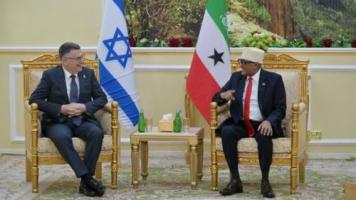 Abayomi Azikiwe, editor of the Pan-African Newswire, discusses Israeli recognition of the Somaliland region, the US reduction of sanctions on Eritrea, a new anti-government alliance in Ethiopia, and…
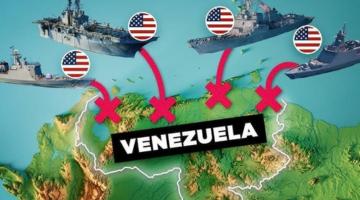 The trope of the United States being in a state of decline is a common one, but it should not be accepted without scrutiny. The U.S. faces crises but remains dangerous, powerful, and single-minded in…
 The "Antifa summit" and the NSPM-7 represent another institutional step toward consolidating fascism in the United States by criminalizing opposition to fascism itself.
 “...the science for revolutionary change…is forged by human persuasion and building social consciousness based on the class analysis which sees the struggle against racism as central.”
 Symone Sanders interview with Hasan Piker exposed her as a bad-faith interlocutor who uses identity as a cudgel while remaining silent on the poverty, pollution, and police violence that plague the…


