 A Black Agenda Radio commentary by BAR Executive Editor Glen Ford
Click the flash player below to hear or the mic to download an MP3 copy of this Black Agenda Radio Commentary.
"The 21st century began with a kind of ritual burial of racial profiling. Suddenly, nobody was in favor of it." Then cam 9/11, and racial profiling became a national imperative, the "patriotic thing to do." Both incarnations of racial profiling played out dramatically in New Jersey, where the Turnpike became a symbol of official racism on the road, later repudiated. The state now aggressively uses local police to question people about their immigration status, adding another layer of burden to people of color confronting arbitrarily intrusive police power.
People of Color Beset by Layers of Racial Profiling
A Black Agenda Radio commentary by Glen Ford
“New Jersey was a battleground state on the issue of racial profiling, back in the bad-old-days before 9/11 was used to mask racial profiling behind a veil of national security.”
In 2007, the New Jersey attorney general issued a directive to the state’s police officers, requiring them to question people arrested for indictable offenses or for drunk driving, about their immigration status. In the first six months of the directive, New Jersey cops referred 10,000 people to immigration authorities, although in the end less than 15 percent of those persons were charged with violating any immigration laws. Immigration rights activists have from the beginning warned that giving police the authority, or even duty, to question people about their legal status in the country, was an invitation to massive racial profiling. A new study out of Seton Hall University’s Law School seems to indicates those warnings were well-founded.
The study focuses on 68 cases in which police interrogated people about their immigration status for no apparent reason. None of the 68 had been stopped for drunk driving or carrying false documents. Sixty-five of the people questioned were Latino; the others were a Haitian, a Spaniard and a man from Kazakhstan. Seven of the incidents were in direct violation of the Attorney General’s order that no victims or witnesses to crimes be questioned about their immigrant status. For example, a woman who called police to complain about domestic violence was threatened with being reported to immigration authorities. A man who reported to police the loss of his passport was turned over to Immigration. A man who couldn’t produce a train ticket at a train station was held for seven days by police, and then handed over to Immigration.
“Profiling became the patriotic thing to do.”
There are several large ironies, here. New Jersey is number three in the nation in terms of immigrant population, and was a battleground state on the issue of racial profiling, back in the bad-old-days before 9/11 was used to mask racial profiling behind a veil of national security. The New Jersey Turnpike became nationally known as a stretch of road where Black and Latino drivers ran a gauntlet of state policemen armed with racial profiles. The embarrassment finally wore New Jersey officials down and they agreed to allow in federal monitors.
It was a great victory for civil rights forces. The 21st century began with a kind of ritual burial of racial profiling. Suddenly, nobody was in favor of it. Racial profiling was a shame, a national disgrace, a relic of the past. And then came 9/11, and racial profiling – which had never really gone away, but had only become, briefly, politically out-of-season – returned with a vengeance. Now, profiling was the patriotic thing to do. Rather than curtailing profiling by police, state officials, like New Jersey’s attorney general, were ordering them to become more aggressive in demanding proof of immigrant status.
The final irony is that the New Jersey order was a reaction to a triple murder attributed to an undocumented immigrant in a neighborhood of Newark. It is an overwhelmingly non-white neighborhood, whose residents are already effectively profiled by police and government officials of all kinds. It is this institutional profiling that creates ghettos and barrios across America. Profiling is as ancient as Black slavery and Indian-hunting. Now the so-called War on Terror adds another layer of profile, another burden that only people of color must bear.

 In this series, we ask acclaimed authors to answer five questions about their book. This week’s featured author is Crystal Eddins. Eddins is Assistant Professor of Africana Studies at UNC Charlotte.…
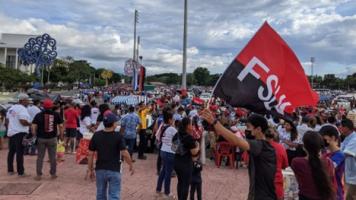 Genuine peoples holidays are hard to come by in the U.S. But in Nicaragua the ongoing revolutionary process is widely celebrated.
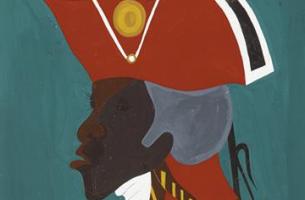 In 1929, Black radical Cyril Briggs penned an essay on Toussaint L’Ouverture and the Haitian Revolution. For Briggs, both provided inspiration for the fight against the U.S. occupation of Haiti. We…
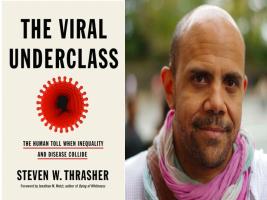 This week’s featured author is Steven W. Thrasher. Thrasher holds the inaugural Daniel H. Renberg chair at Northwestern University’s Medill School, the first journalism professorship in the world…
 The ineffective and unpopular UN Mission to Haiti must end.


